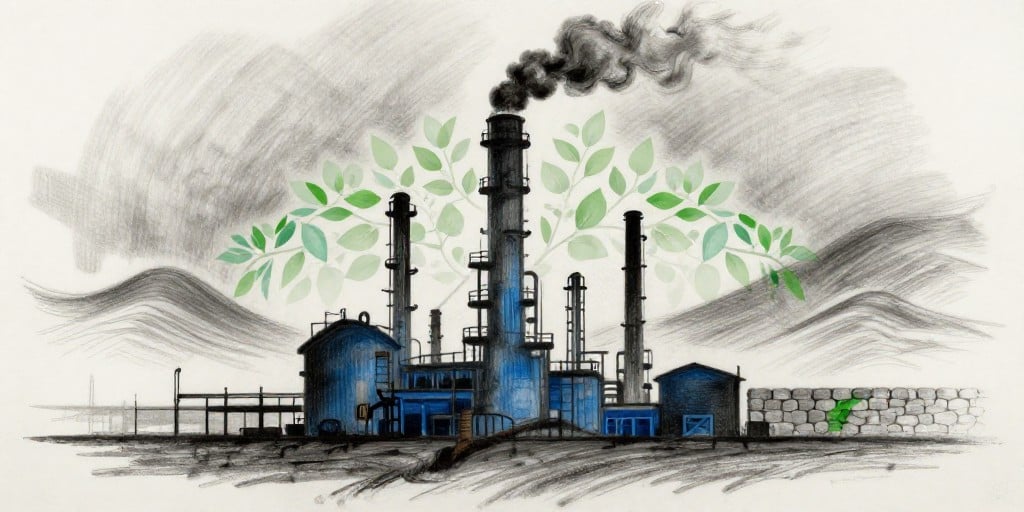
BP PLC to Announce Q3 2026 Results at Upcoming Conference
BP PLC has scheduled a presentation of its financial results for the quarter ended 30 September 2026 at a conference to be held on 30 October 2026. Market analysts are positioning the company to report earnings per share (EPS) in the upper single‑digit range, with revenue projected to exceed the comparable period a year earlier by a notable margin. Consensus estimates for the full fiscal year indicate a strong upside in EPS and a revenue growth rate that surpasses analyst expectations.
Market Context and Share Performance
BP’s share price has exhibited a modest upward trajectory throughout the calendar year, aligning with broader market dynamics observed in the STOXX 50 index. Within that index, energy‑related equities have contributed significantly to recent gains, reflecting the sector’s resilience amid a complex macro‑economic backdrop. BP’s performance is frequently benchmarked against other leading oil and gas operators such as Shell and TotalEnergies, both of which have posted favorable results driven by elevated crude prices and robust refining margins.
Energy Market Fundamentals
The current energy landscape remains shaped by a blend of supply‑demand fundamentals and geopolitical factors:
- Commodity Price Volatility
- Crude oil prices have remained buoyant, supported by constrained supply from OPEC+ and geopolitical tensions that continue to restrict output in key regions.
- Natural gas markets have experienced a similar tightening, driven by limited LNG supply and high winter demand in Europe.
- Supply‑Demand Imbalances
- Refining capacity utilization rates remain high, especially in the United States and the Middle East, underpinning margin expansion.
- The transition to lower‑carbon fuels has not yet fully offset the demand for conventional hydrocarbons, creating a window of opportunity for integrated energy companies.
- Technological Innovations
- Advances in hydraulic fracturing and horizontal drilling have further unlocked unconventional reservoirs, enhancing production profiles.
- Renewable energy technologies—particularly offshore wind and battery storage—are maturing, offering new revenue streams and hedging options for traditional operators.
- Infrastructure Developments
- New pipeline projects in North America and the expansion of LNG terminal capacities in Asia are improving supply chain resilience.
- Upgrades to refinery infrastructure, including carbon capture and utilization (CCU) units, are being adopted to meet tightening emission targets.
Regulatory and Policy Impacts
Governments worldwide are tightening regulatory frameworks to accelerate the energy transition:
Carbon Pricing and Emissions Targets
The European Union’s Emissions Trading System (ETS) continues to impose higher carbon prices, influencing operational decisions in refining and petrochemical units.
The United States has seen state‑level initiatives aimed at decarbonizing transport and industry, creating incentives for fuel switching and electrification.
Renewable Energy Mandates
Several jurisdictions have introduced feed‑in tariffs and tax credits to expedite deployment of wind, solar, and hydrogen projects.
These incentives are encouraging BP and peers to diversify portfolios, balancing conventional revenue with long‑term renewable investments.
Environmental, Social, and Governance (ESG) Reporting
Investors increasingly demand detailed ESG disclosures, impacting capital allocation and valuation.
Companies that align operational metrics with ESG benchmarks may attract lower cost of capital and improved market perception.
Short‑Term Trading Versus Long‑Term Transition
For traders, the immediate focus remains on commodity price swings, refinery margin movements, and the timing of strategic investments. Short‑term catalysts include:
- Oil‑price spikes resulting from geopolitical unrest or supply disruptions.
- Natural‑gas price fluctuations tied to seasonal demand cycles.
- Capital expenditure (CapEx) releases for renewable projects and infrastructure upgrades.
Conversely, the long‑term trajectory is increasingly dictated by:
- Energy transition momentum, which necessitates a gradual shift from fossil‑fuel dependence to a diversified energy mix.
- Technological breakthroughs in storage and carbon management that could redefine cost structures and operational efficiencies.
- Regulatory alignment that may accelerate or decelerate the pace of renewable adoption.
Outlook and Investor Interest
Investors are keen to assess BP’s capacity to sustain profitability amid volatile commodity markets and evolving regulatory regimes. The forthcoming results presentation will likely shed light on:
- Revenue composition across upstream, downstream, and renewable segments.
- Margin drivers, including refining utilization rates and cost control measures.
- Strategic initiatives targeting carbon neutrality, renewable portfolio expansion, and CapEx allocation.
By reconciling short‑term earnings dynamics with its long‑term energy transition strategy, BP aims to reinforce investor confidence and maintain a competitive edge in the evolving global energy landscape.