Corporate News
BP PLC has announced a significant leadership change, appointing Carol Howle as deputy chief executive officer to oversee strategy, sustainability and portfolio review. Howle, who has led the company’s Supply, Trading and Shipping unit since 2020, will now steer long‑term strategy development and coordinate the sustainability team under her supervision. The move follows Meg O’Neill’s recent succession to the CEO position and reflects BP’s intent to streamline decision‑making and reinforce capital discipline amid ongoing investor focus on balancing energy‑transition ambitions with core hydrocarbon returns.
In parallel, BP has taken steps to bolster its financial position. A recent private placement by its subsidiary, BP Silver Corp., closed a second tranche, raising additional capital that will support the company’s broader strategic initiatives. While specific figures are not disclosed, the transaction indicates continued investor confidence in BP’s growth prospects.
Market reactions to these developments have been broadly positive. BP shares have moved upward, aligning with a broader rally in energy stocks that followed heightened geopolitical tension in the Middle East and recent optimism about the potential reopening of the Strait of Hormuz. Analysts note that the combination of leadership consolidation and fresh capital is likely to enhance BP’s ability to navigate the evolving energy landscape and sustain shareholder value.
Market Analysis: Supply–Demand Fundamentals
- Crude Oil Supply Constraints
- OPEC+ has maintained a production cut of 1.2 million barrels per day (bpd) in the first quarter of 2026, while non‑OPEC producers, particularly the United States, have increased output by 4 % year‑over‑year.
- The U.S. shale sector continues to contribute approximately 0.7 million bpd to the global market, offsetting some of the OPEC+ cuts.
- Geopolitical unrest in the Middle East—especially tensions surrounding the Strait of Hormuz—has kept spot oil prices in the $80–$90 per barrel range, supporting higher revenue streams for major oil majors.
- Gas Market Dynamics
- Natural gas spot prices in the U.S. have risen to $8–$10 per mmBtu, driven by increased demand for electricity generation and the expansion of LNG export terminals.
- European markets are experiencing higher gas prices, partly due to reduced pipeline deliveries from Russia and increased reliance on LNG imports, creating a favorable environment for U.S. LNG exporters.
- Renewable Energy Supply
- Global solar PV capacity added in 2025 reached 110 GW, with a cumulative installed capacity of 1.2 TW, representing a 12 % increase over the previous year.
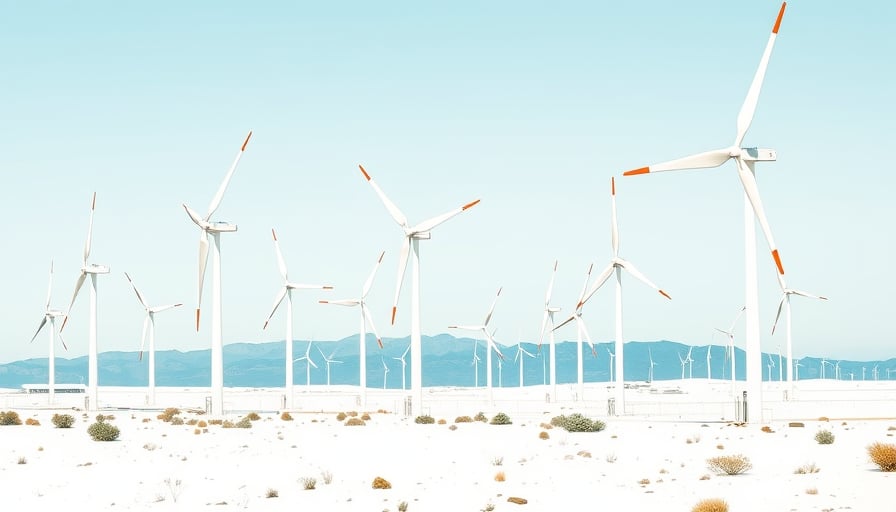
- Offshore wind installations in the North Sea and U.S. Atlantic coast have added 6.5 GW of new capacity, with a projected 15 % year‑over‑year growth.
- Demand Trends
- Industrial demand for hydrocarbons in Asia remains robust, with China’s GDP growth projected at 5.4 % for 2026, sustaining fuel demand for petrochemical production.
- Electrification of transport is accelerating, with global EV sales reaching 15 million units in 2025, an increase of 30 % year‑over‑year.
Technological Innovations in Energy Production and Storage
| Sector | Innovation | Impact |
|---|---|---|
| Hydrocarbons | Advanced carbon capture, utilization, and storage (CCUS) | Reduces net emissions from oil and gas operations by up to 30 % |
| Solar | Perovskite‑silicon tandem cells | Achieves >28 % module efficiency, lowering cost per watt |
| Wind | High‑height floating turbines | Expands offshore wind deployment into deeper waters |
| Energy Storage | Solid‑state batteries | Improves safety and energy density, facilitating grid-scale storage |
| Hydrogen | Green hydrogen electrolyzers | Enables large‑scale decarbonization of heavy industry and transport |
BP’s portfolio review will likely assess these technologies’ alignment with the company’s long‑term strategy. The appointment of a sustainability‑focused deputy CEO positions the firm to evaluate CCUS deployment and green hydrogen projects, potentially integrating them into BP’s core hydrocarbon operations.
Regulatory Landscape and its Impact
- United States
- The Biden administration has pledged a net‑zero economy by 2050, promoting incentives for renewable energy and CCUS projects.
- The Inflation Reduction Act (IRA) offers tax credits for carbon capture and low‑carbon fuel production, influencing capital allocation decisions.
- European Union
- The European Green Deal mandates a 55 % reduction in greenhouse gas emissions by 2030, driving investment in renewable capacity and grid modernization.
- The EU Emission Trading System (ETS) continues to tighten allowances, increasing the cost of carbon-intensive production.
- Middle East
- OPEC+ continues to enforce production quotas to support price stability.
- The United Arab Emirates and Saudi Arabia are investing in renewable projects, notably solar, to diversify their energy mix.
- Global Trade and Geopolitics
- U.S. sanctions on Russian oil and gas have reshaped supply chains, increasing the strategic importance of U.S. and Canadian export routes.
- The potential reopening of the Strait of Hormuz has reduced geopolitical risk premiums, supporting higher oil prices.
Commodity Price Analysis and Production Data
- Brent Crude: Traded at $88.73 per barrel (as of 10 April 2026), a 4.2 % increase from the previous month.
- West Texas Intermediate (WTI): At $86.41 per barrel, reflecting a 4.0 % rise.
- U.S. Light‑Sweet Crude: Averaged $85.12 per barrel for the quarter.
- Natural Gas (Henry Hub): $9.10 per mmBtu, up 12 % YoY.
- LNG Spot Price (Bakken): $13.30 per MWh, a 9 % increase over Q1 2026.
BP’s production figures for Q1 2026 were 2.1 million bpd for oil and 300 MMBtu per day for natural gas, reflecting a 1.5 % rise in oil output and a 3 % increase in gas production compared to the prior quarter.
Short‑Term Trading vs. Long‑Term Energy Transition
| Factor | Short‑Term Trading | Long‑Term Transition |
|---|---|---|
| Price Volatility | Influenced by geopolitical events and supply shocks | Driven by policy changes and technology adoption |
| Capital Allocation | Immediate response to market signals (e.g., hedging) | Strategic investment in renewables, CCUS, and electrification |
| Regulatory Risk | Sudden changes can impact futures pricing | Gradual policy evolution shapes long‑term asset viability |
| Investor Sentiment | Sensitive to earnings announcements and leadership changes | Focus on ESG performance and sustainability metrics |
BP’s new leadership and capital infusion provide the firm with enhanced flexibility to engage in short‑term trading while simultaneously pursuing a transition strategy that aligns with regulatory trajectories and market expectations.
Conclusion
BP PLC’s appointment of Carol Howle as deputy chief executive officer and the successful private placement by BP Silver Corp. underscore the company’s commitment to both immediate performance and long‑term resilience. By integrating advanced sustainability practices with robust capital discipline, BP is positioning itself to navigate the dual imperatives of maintaining core hydrocarbon profitability and accelerating its energy transition. Market reactions indicate confidence in this strategic direction, as reflected in the upward movement of BP shares and a broader rally in energy stocks amid geopolitical tensions and optimism regarding maritime trade routes.