
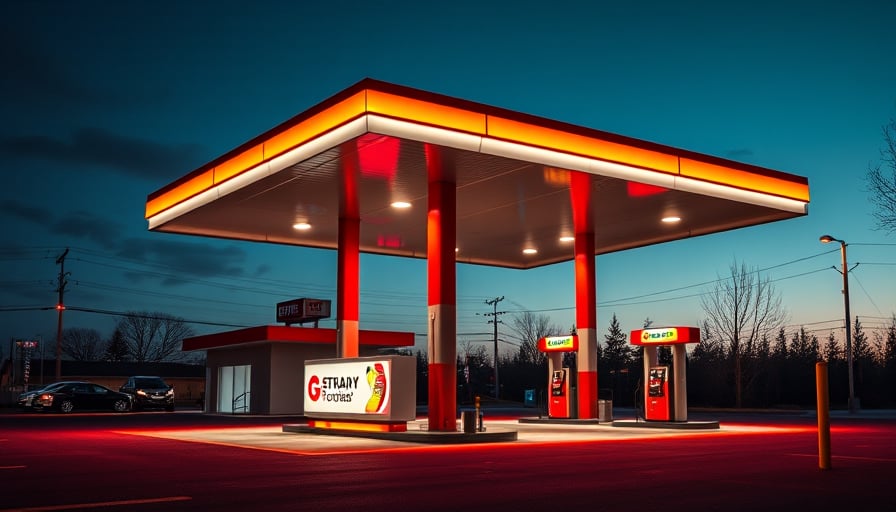
BP PLC Adjusts Forecourt Staff Benefits Amid Rising Wage Standards
BP PLC, the London‑listed multinational energy conglomerate, announced a significant restructuring of employee benefits for approximately 5,400 forecourt staff at its company‑run petrol stations. Effective February, the company will eliminate paid rest breaks and most bank holiday bonuses. The move is intended to offset an imminent increase in the Living Wage Foundation’s minimum fair‑pay standard, thereby preserving the firm’s cost base while maintaining its commitment to fair remuneration.
The benefit realignment represents a broader cost‑management initiative at a time when energy markets are experiencing heightened volatility. Oil and gas prices have fluctuated between $70 and $90 per barrel, influenced by geopolitical tensions in the Middle East, supply constraints in the Gulf of Mexico, and a gradual rebound in demand driven by global economic recovery. BP’s decision reflects the delicate balancing act that energy majors must perform: safeguarding shareholder value without eroding workforce morale in a highly competitive retail environment.
Market Dynamics and Supply‑Demand Fundamentals
Upstream Outlook
BP’s upstream operations remain underpinned by robust exploration activity. A consortium comprising BP, the National Oil Corporation, Eni, and the Libyan Investment Authority is preparing to drill the first deep‑water exploratory well in Libya’s Sirte Basin. The initiative, supported by major international service providers, aligns with BP’s strategy to diversify its asset base amid tightening global oil supply. Preliminary seismic data suggest a high probability of hydrocarbon reserves exceeding 500 million barrels of oil equivalent (BOE), which could enhance BP’s production profile by 2028.
The Sirte Basin project also underscores the importance of geopolitical risk management. Libya’s political landscape, while increasingly stable under international oversight, still presents regulatory uncertainties that could affect production timelines and operating costs. BP’s partnership structure distributes these risks among sovereign and commercial stakeholders, thereby mitigating potential disruptions.
Downstream and Retail Implications
BP’s forecourt network accounts for a significant portion of its retail revenue, generating an estimated €12 billion annually in fuel sales. The benefit changes, while modest in absolute terms, will reduce operating costs by an estimated €30 million over a three‑year horizon. This savings is crucial in an environment where fuel margins have contracted to less than 5 cent per liter due to competitive pricing and increased refinery operating costs. Maintaining profitability at the retail level will depend on optimizing ancillary services—such as convenience stores, car washes, and electric vehicle (EV) charging stations—and leveraging data analytics to enhance customer experience.
Technological Innovations in Production and Storage
BP is actively pursuing low‑carbon technologies to complement its conventional operations. A potential partnership with Exxon on a carbon‑capture project in Indonesia signals the company’s ongoing interest in advanced capture, utilization, and storage (CCUS) solutions. The Indonesian project is envisioned to target a CO₂ capture rate of 500,000 tonnes per year, leveraging membrane separation technology that promises lower energy penalties compared to traditional solvent‑based systems.
Simultaneously, BP is expanding its storage infrastructure to accommodate volatile demand patterns. In the United States, the company is investing in a network of 150 million cubic feet (MCF) of strategic petroleum reserves, strategically positioned near major consumption hubs to buffer supply shocks and support grid stability.
Regulatory Landscape and Renewable Energy Integration
Regulatory developments are shaping the trajectory of energy transition. The European Union’s 2030 Climate Target Plan mandates a 32 % reduction in CO₂ emissions relative to 1990 levels, while the United Kingdom’s net‑zero strategy targets 2050. BP’s compliance roadmap includes a 50 % reduction in its Scope 1 and 2 emissions by 2030, with a shift towards renewable generation and energy storage solutions.
The company’s renewable portfolio includes wind farms in the North Sea and solar projects across the United States, collectively generating 1.5 GW of capacity. BP is also investing in battery storage systems that can deliver up to 200 MW of power, enhancing grid flexibility and facilitating the integration of intermittent renewable sources.
Balancing Short‑Term Trading and Long‑Term Transition
In the short term, BP’s trading desk will likely focus on hedging strategies to mitigate crude oil price swings, employing a mix of forwards, swaps, and options. Long‑term, the firm is positioning itself for a gradual decarbonization pathway that aligns with global energy transition trends. By investing in CCUS, renewable generation, and storage technologies, BP aims to secure a diversified asset base that can adapt to evolving market conditions and regulatory mandates.
The restructuring of employee benefits at BP’s forecourt network, while a cost‑cutting measure, must be weighed against the potential impact on workforce satisfaction and service quality. BP’s broader strategy seeks to balance fiscal prudence with strategic investment in low‑carbon technologies, positioning the company to navigate both immediate market pressures and the long‑term shift towards a more sustainable energy landscape.