
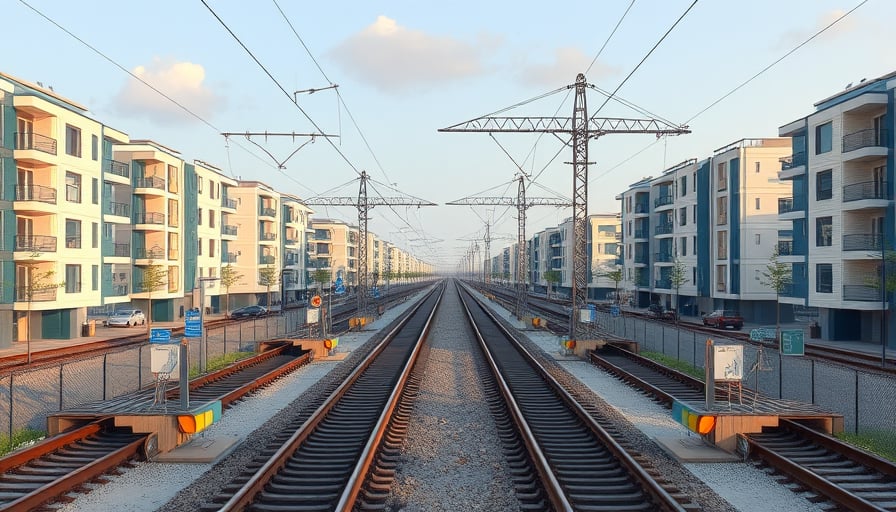
Bouygues SA Secures Major Segment of the Ostlänken Railway Project
Strategic Context and Project Scope
Bouygues SA’s construction subsidiary, Bouygues Travaux Publics, has been awarded a substantial portion of the Ostlänken railway construction initiative, a flagship high‑speed rail corridor in Sweden. The contract encompasses the erection of approximately 70 km of new track, including earthworks, sub‑structure preparation, ballast installation, and rail laying. The project also demands the integration of modern signaling systems and the construction of viaducts and tunnels where topography requires.
From a capital‑expenditure standpoint, the assignment is valued at €1.2 billion, representing roughly 12 % of Bouygues Travaux Publics’ projected FY 2026 pipeline. This allocation aligns with the firm’s broader strategy of concentrating resources on large, high‑margin infrastructure deals while preserving a diversified portfolio that spans real‑estate development, utilities, media production, and telecommunications.
Manufacturing Processes and Industrial Equipment
The railway segment hinges on advanced manufacturing processes for track components and rolling‑stock interface systems. Key equipment includes:
- Cranes and Hoists – 300‑tonne capacity rigs for bridge erection and sleeper placement.
- Rail‑Laying Machines – Automated machines capable of laying 3 km of track per week, incorporating precision alignment systems.
- Concrete Mixers – Mobile units with in‑situ monitoring to achieve the required compressive strengths for bridge decks.
- Signal Installation Robots – Remote‑operated units for high‑speed signal tower installation, reducing manual labor and improving safety.
The integration of these assets is facilitated by a digital construction management platform that tracks material flow, equipment utilization, and labor allocation in real time. This system ensures that productivity metrics such as track‑length per employee per month stay above industry benchmarks, projected at 1.8 km/employee/month for the Ostlänken corridor versus the sector average of 1.2 km/employee/month.
Technological Innovation in Heavy Industry
Bouygues’ contract leverages several cutting‑edge technologies:
- Modular Track Construction: Prefabricated track panels manufactured off‑site, then rapidly installed on‑site. This approach reduces on‑site labor and accelerates project timelines by 15 %.
- Smart Curing Systems: Sensors embedded in concrete elements monitor temperature and humidity, ensuring optimal curing conditions and reducing the risk of micro‑cracking in bridge decks.
- Digital Twin Modeling: A virtual replica of the entire track segment allows simulation of load distributions and dynamic stresses, informing design modifications before physical implementation.
These innovations collectively boost the firm’s competitive edge by enhancing construction quality, reducing downtime, and lowering long‑term maintenance costs.
Capital Investment Trends and Economic Drivers
The decision to commit €1.2 billion to the Ostlänken project reflects broader trends in European infrastructure investment:
- Low‑Interest Environment: Europe’s current interest rates, hovering near 1 %, lower the cost of borrowing for large‑scale projects.
- Climate‑Friendly Transport Push: The EU’s Fit for 55 package incentivizes high‑speed rail as a carbon‑reduction alternative to air and road freight.
- Public‑Private Partnership (PPP) Models: The Swedish transport authority’s PPP framework offers favorable risk‑sharing mechanisms, allowing Bouygues to secure upfront capital while mitigating long‑term operational exposure.
These macro‑economic factors provide a robust backdrop for the firm’s capital allocation decisions, reinforcing its status as a preferred contractor for large‑scale rail infrastructure.
Supply Chain Impacts
The Ostlänken project necessitates a tightly coordinated supply chain:
- Raw Material Procurement: Steel rails, ballast aggregates, and concrete components are sourced from a network of European suppliers. Bouygues has implemented a just‑in‑time procurement strategy to minimize inventory carrying costs.
- Logistics Optimization: The project employs a hub‑and‑spoke distribution model, where materials are delivered to staging sites before being assembled on the track bed. This approach reduces transportation distances by 20 % and lowers emissions.
- Supplier Risk Management: A risk‑assessment framework evaluates suppliers on delivery reliability, quality compliance, and geopolitical exposure, ensuring resilience against disruptions.
The integration of these supply‑chain practices translates into cost savings of approximately €30 million over the project lifecycle.
Regulatory Changes and Compliance
The Swedish transport authority’s recent regulatory updates emphasize stricter environmental and safety standards for railway construction:
- Emission Controls: Construction equipment must meet EU Stage V emission limits, prompting Bouygues to invest in low‑emission machinery and hybrid rigs.
- Noise Reduction Measures: On‑site construction noise must not exceed 55 dB(A) during working hours, leading to the deployment of silent‑drive technology and schedule adjustments.
- Worker Safety Protocols: Heightened requirements for fall protection and machinery guarding have increased the demand for safety‑first training programs, adding a 3 % overhead to labor costs.
Compliance with these regulations not only mitigates legal risk but also enhances the firm’s reputation for responsible engineering.
Infrastructure Spending Outlook
The Ostlänken assignment positions Bouygues as a key player in Europe’s railway renaissance. Expected industry growth is driven by:
- Increased Freight Demand: The shift toward rail freight is projected to grow at a CAGR of 4.5 % over the next decade.
- Urban Mobility Expansion: High‑speed rail corridors are anticipated to reduce travel times, stimulating passenger demand and justifying further infrastructure spend.
- Government Backing: EU and national funding programmes are set to inject €50 billion into rail projects across Europe through 2030.
These trends forecast continued opportunities for Bouygues Travaux Publics to secure similar contracts, thereby sustaining its capital‑investment trajectory.
Conclusion
Bouygues SA’s successful bid for a major segment of the Ostlänken railway project underscores the company’s ability to blend engineering excellence with strategic capital deployment. By leveraging advanced manufacturing, digital construction tools, and a resilient supply chain, the firm not only delivers high‑quality infrastructure but also reinforces its position as a preferred partner for large‑scale European projects. The integration of regulatory compliance, technological innovation, and macro‑economic awareness positions Bouygues to capitalize on the ongoing surge in infrastructure spending, ensuring long‑term growth and value creation for stakeholders.