
Corporate Analysis of BMW’s Recent Strategic and Market Developments
1. Market Performance and Regional Dynamics
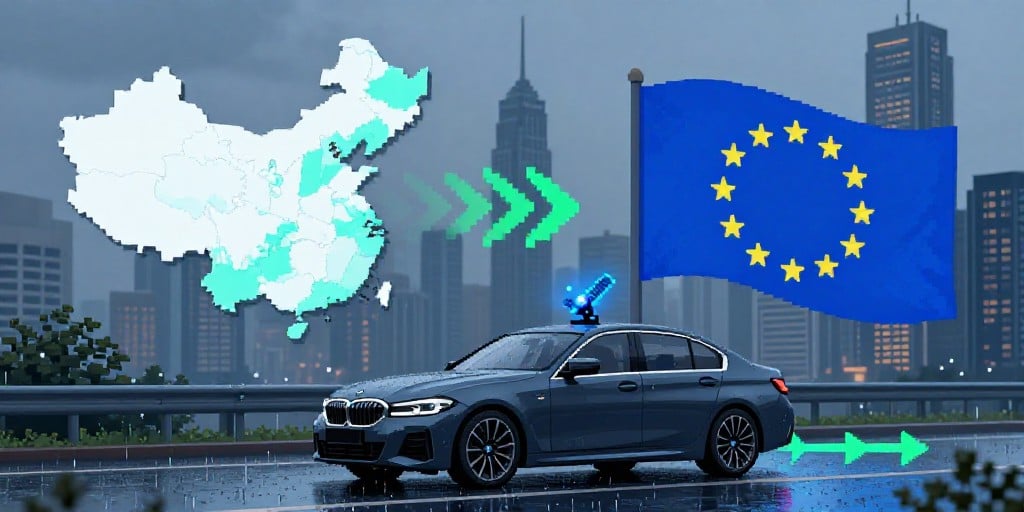
BMW’s sales trajectory in 2026 underscores a pronounced asymmetry across its principal markets. In China, the company’s largest single market, volume fell by roughly 20 % in the first half of the year, with forecasts indicating a further contraction in the second quarter. By contrast, European and U.S. sales displayed modest gains of approximately 5 % and 4 % respectively, reflecting a resilient demand for premium vehicles in mature markets.
The disparity is symptomatic of broader challenges facing the Chinese luxury‑car sector: intensified regulatory scrutiny on foreign brands, a tightening of credit conditions, and the proliferation of domestic competitors that have capitalized on local supply chains. BMW’s current market share decline therefore raises concerns about its long‑term competitiveness unless structural adjustments are implemented.
2. Electrification Momentum
BMW’s electric‑vehicle (EV) portfolio, particularly the iX3, has experienced a notable delivery uptick. In the first half of 2026, the iX3’s share of new‑car registrations in Europe reached a record level, indicating growing acceptance of battery‑powered SUVs in the premium segment. Yet, the company’s overall EV penetration remains below that of key competitors such as Tesla and Volkswagen Group, whose EV shares in Europe surpassed 25 % during the same period.
The iX3’s success points to an opportunity for BMW to leverage its brand equity and engineering prowess in the EV space. However, the firm must confront supply‑chain bottlenecks for batteries, especially in light of geopolitical tensions that have disrupted critical raw‑material flows.
3. Personnel Restructuring and Cost Management
BMW’s appointment of Dorothea von Boxberg, formerly of Brussels Airlines, to the personnel management board signals a strategic pivot towards cost optimisation. Her background in airline revenue management suggests an emphasis on dynamic pricing and workforce efficiency, potentially mitigating the impact of declining volumes in China.
From a financial perspective, cost‑cutting initiatives may alleviate margin compression, yet the company’s net earnings have already fallen by more than 50 % relative to 2022 levels. The sustained downward trend relative to the 50‑day moving average further erodes investor confidence, despite an attractive dividend yield that remains higher than many peers.
4. Connectivity Innovation
BMW’s partnership with Viasat to integrate satellite‑enabled voice‑call capabilities into the iX3 reflects a forward‑looking strategy to enhance in‑vehicle connectivity, particularly for drivers in remote regions lacking cellular coverage. This initiative aligns with the automotive industry’s broader shift toward over‑the‑air updates and expanded infotainment ecosystems.
However, the partnership’s commercial viability hinges on subscriber adoption and the cost of satellite bandwidth. Should the integration fail to deliver a clear value proposition, the investment could erode profit margins without offsetting the high costs of development and licensing.
5. Risk Assessment and Potential Opportunities
Risks
- Regulatory Exposure: China’s evolving automotive regulations, particularly around foreign ownership and data privacy, could further hamper BMW’s sales.
- Supply‑Chain Vulnerabilities: Disruptions to battery cell supply could delay EV roll‑outs.
- Capital Allocation: Ongoing cost cuts may strain R&D budgets, limiting innovation.
Opportunities
- EV Upsell: The record iX3 sales suggest that premium buyers are receptive to electrification; scaling the iX3 lineup could capture additional market share.
- Connectivity Monetization: Satellite connectivity could become a premium service, generating recurring revenue streams.
- Cost Efficiency: Leveraging von Boxberg’s expertise could unlock hidden efficiencies, improving operating margins.
6. Comparative Valuation
Relative to peers such as Daimler AG, Volkswagen AG, and Tesla Inc., BMW’s stock remains roughly a quarter below its year‑end high, reflecting a persistent downward trajectory. While the dividend yield remains attractive, the combination of declining sales in China, reduced profitability, and lower dividends suggests a valuation that may be undervalued relative to the broader premium‑car cohort. Nonetheless, the lack of a recent rebound indicates market scepticism, likely driven by geopolitical tensions, volatile oil prices, and shifting consumer preferences toward low‑carbon mobility.
7. Conclusion
BMW is navigating a complex confluence of challenges—regional sales contraction, cost pressures, and a rapidly evolving connectivity landscape—while simultaneously pursuing electrification and satellite connectivity as growth levers. The company’s strategic moves, particularly personnel restructuring and technology partnerships, could yield competitive advantages if executed effectively. However, investors must remain vigilant regarding regulatory, supply‑chain, and capital‑allocation risks that could undermine the company’s trajectory in the medium term.