
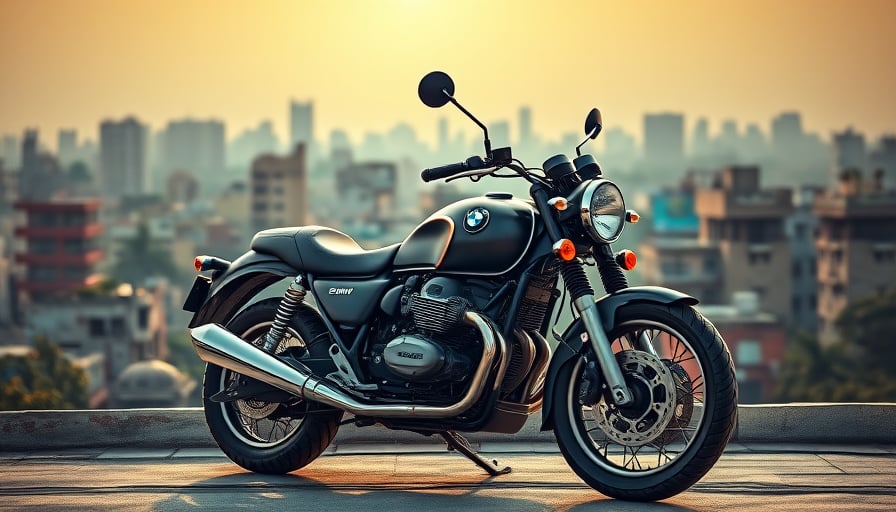
BMW Announces 2026 Price Adjustment for Indian Motorcycle Division
BMW Motorcycles India will increase the retail prices of its entire product lineup by up to six percent, with the change taking effect on 1 January 2026. The decision follows a confluence of macro‑economic pressures that have tightened margins across the global motorcycle market, notably a sustained depreciation of the euro against the Indian rupee and escalating costs for raw materials and logistics.
Drivers of the Price Increase
| Factor | Impact | BMW’s Rationale |
|---|---|---|
| Foreign‑exchange volatility | Loss of purchasing power when converting euro‑denominated costs into rupees | Necessitates higher domestic prices to maintain cost coverage |
| Commodity price escalation | Increased expense for steel, aluminum, and polymer components | Aligns retail prices with input cost reality |
| Logistics and freight | Higher freight rates, especially for long‑haul shipments from Europe | Reduces margin erosion in high‑shipping‑cost environments |
| Dealer network sustainability | Ensuring dealer profitability amid lower volume growth | Supports the long‑term viability of the distribution ecosystem |
The price hike is framed as a measure to preserve profitability and protect the dealer network, which remains a critical channel for aftermarket services and brand loyalty in India. By raising the wholesale price to dealers, BMW aims to offset the reduced revenue per unit while maintaining a competitive edge through its established service and warranty offerings.
Implications for the Indian Motorcycle Market
The Indian two‑wheel market is characterized by intense price sensitivity and a highly fragmented competitive landscape. Key domestic players such as Bajaj Auto, Hero MotoCorp, and TVS Motor Company have maintained aggressive pricing strategies, partly due to a large unbranded and low‑cost segment. BMW’s incremental price increase may slightly erode its market share if consumers shift to lower‑priced alternatives. Conversely, the premium positioning of the brand, combined with its advanced technology and safety features, may cushion the impact for a niche, affluent customer base.
In terms of supply‑chain resilience, BMW’s decision underscores the importance of hedging foreign‑exchange exposure and diversifying sourcing strategies. Companies that can secure local component supplies or establish currency‑hedging mechanisms may face lower cost pressures, thereby sustaining a broader competitive advantage in the region.
Cross‑Sector Reflections
The price adjustment reflects broader trends affecting manufacturing sectors globally:
- Currency risk: Manufacturers with significant imports of raw materials face similar challenges, prompting strategic shifts toward local procurement or currency hedging.
- Commodity price cycles: Industries reliant on metals and polymers—ranging from automotive to consumer electronics—experience analogous cost pressures, affecting product pricing and margins.
- Logistics and transportation: Rising freight costs, driven by fuel price volatility and supply‑chain bottlenecks, have amplified operational costs across sectors that depend on just‑in‑time inventory practices.
Thus, BMW’s strategy aligns with a cross‑industrial move toward greater cost transparency, supply‑chain localization, and risk management.
BMW M2 Coupé Highlights Racing‑Inspired Design
In a recent product spotlight, BMW’s M2 Coupé has been highlighted for its “racing‑inspired” design language. Positioned as the most affordable model within the M‑series lineup, the M2 offers a blend of performance credentials and accessible price points.
Competitive Positioning
- Price‑to‑performance ratio: The M2’s price point sits below the flagship M4 and M3 models, appealing to buyers seeking high performance without the premium price tag.
- Technology differentiation: Features such as active rear‑suspension, M Performance brakes, and advanced infotainment systems give the M2 a competitive edge against rivals like the Audi TT RS and Mercedes‑C63 AMG in the mid‑performance segment.
The focus on racing‑inspired styling—characterized by aggressive aerodynamics, muscular bodywork, and a low, wide stance—reinforces BMW’s brand narrative of “driving pleasure” while also aligning with consumer demand for visually distinctive, high‑performance vehicles.
Minor Traffic Incident: No Operational Impact
A traffic incident involving a BMW vehicle was reported on a German country road. Authorities confirmed that the incident did not result in any broader operational impact for the company. The incident underscores the importance of stringent vehicle safety standards but does not alter BMW’s production or supply‑chain operations.
Regulatory Outlook: European Carbon‑Neutrality Measures
German finance officials have cautioned automotive manufacturers, including BMW, to maintain focus on internal combustion engine (ICE) development amidst proposed European Union (EU) carbon‑neutrality measures. The EU’s target of net‑zero emissions by 2050 is expected to accelerate the transition toward electric propulsion.
Strategic Considerations
| Issue | BMW’s Position | Market Implications |
|---|---|---|
| ICE viability | Continued investment in ICE research to satisfy transitional demand | Sustains market presence in regions with limited EV infrastructure |
| EV transition | Parallel development of electric models (e.g., i4, iX) | Aligns with regulatory mandates and consumer shift to low‑emission vehicles |
| Policy risk | Potential regulatory delays or adjustments in subsidy structures | Necessitates flexible product roadmaps and risk mitigation strategies |
The warning highlights the delicate balance manufacturers must strike between advancing electrification and safeguarding existing ICE‑based revenue streams. Companies that can demonstrate a robust dual‑track strategy—delivering efficient, low‑emission ICE options while scaling electric models—may secure competitive advantage in a rapidly evolving regulatory landscape.
Conclusion
BMW’s forthcoming price increase in India reflects the convergence of macro‑economic pressures that resonate across the manufacturing sector. By addressing cost drivers and preserving dealer viability, the company seeks to maintain profitability while staying true to its premium brand proposition. Meanwhile, the M2 Coupé’s emphasis on racing‑inspired design reinforces BMW’s commitment to performance accessibility, and the regulatory commentary underscores the strategic importance of balancing ICE development with electrification ambitions. These developments collectively illustrate how automotive firms navigate complex economic, competitive, and regulatory dynamics while pursuing sustainable growth.