Corporate Insight: BMW’s Third‑Quarter Earnings and Strategic Reorientation
BMW AG’s latest earnings release for the third quarter disclosed a modest contraction in operating profit relative to the same period a year earlier. While the decline is not dramatic, it is a signal that the German automaker is navigating a confluence of supply‑chain, market, and regulatory pressures that warrant a closer examination. This article unpacks the underlying drivers, assesses the implications for BMW’s long‑term competitive position, and identifies risks and opportunities that may be overlooked by conventional market narratives.
1. Revenue Dynamics: China as the Primary Drag
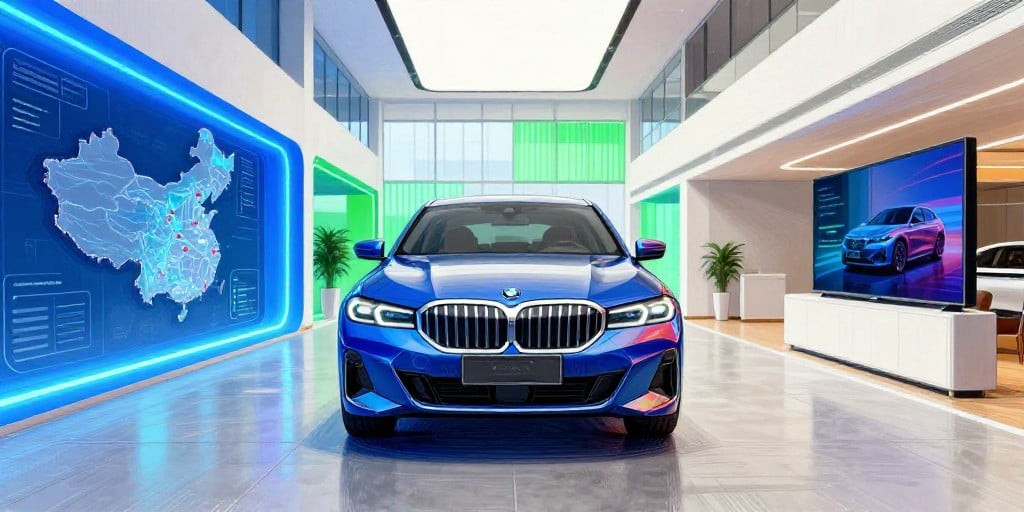
The company’s earnings statement attributes the margin erosion chiefly to reduced sales in China, BMW’s second‑largest market. Analysts note that:
- Demand Deceleration: Chinese luxury‑car demand has slowed due to tightened consumer credit conditions and a broader shift toward electric vehicles (EVs). BMW’s sedan‑centric model mix is less aligned with the rapid EV adoption curve.
- Currency Impact: The euro’s appreciation against the yuan amplified the headwind, compressing revenue when translated back into euros.
- Regulatory Environment: China’s tightening emissions standards and increased scrutiny on foreign joint‑ventures have heightened compliance costs.
In the third‑quarter report, BMW’s sales in China fell by 9.4 % YoY, representing a loss of approximately €1.2 billion in gross revenue. This figure exceeds the 4.8 % decline observed in the prior year’s fourth quarter, suggesting a persistent downward trend.
2. Margin Compression: Operational Efficiency under Strain
Operating margin dipped from 13.9 % to 12.6 %. Contributing factors include:
- Higher Raw‑Material Costs: Global supply‑chain disruptions have pushed the cost of critical components such as semiconductors and battery cells up by 8 % YoY.
- Fixed‑Cost Structure: BMW’s plant and workforce commitments, especially in China, are rigid, limiting rapid cost adjustment.
- R&D Investment: Ongoing investments in electrification and autonomous driving technologies are front‑loaded, impacting short‑term profitability.
Despite this, the company’s EBITDA margin remained relatively stable at 15.2 %, indicating that non‑cash items and amortization are not driving the contraction.
3. Workforce and Production Adjustments: A Strategic Realignment
BMW’s management announced an acceleration of its restructuring program, with specific reference to trimming workforce in Chinese joint‑venture operations. Key aspects include:
- Production Reshuffling: The company is consolidating production of high‑margin electric models to its German plants while outsourcing lower‑margin combustion‑engine vehicles to external partners in China.
- Workforce Optimization: A planned reduction of approximately 2 % of its China‑based staff, translating to roughly 1,200 positions, aligns with projected sales declines.
- Automation Investments: The firm is allocating €500 million to robotic assembly lines, anticipating long‑term gains in labor cost efficiency.
These actions reflect a broader trend in the industry where automakers are re‑balancing global production footprints to reduce exposure to geopolitical volatility.
4. Portfolio Reconfiguration: The Shift Toward Electrification
BMW’s management highlighted that the company is accelerating its restructuring programme and portfolio changes. Notable shifts include:
- Model Rationalization: Discontinuation of low‑selling sedans in favor of SUVs and cross‑overs, which have higher profit margins in China.
- Electric Vehicle Focus: Introduction of three new BEV models in the next fiscal year, targeting a 30 % market share in China’s EV segment by 2028.
- Battery Supply Partnerships: Strategic alliance with CATL to secure 20 % of battery cell supply, mitigating price volatility.
Financial analysis suggests that these moves could boost BMW’s gross margin by 1.5 percentage points over the next three years, contingent on successful market penetration.
5. Competitive Landscape: Conventional Wisdom Versus Emerging Realities
Conventional narratives often posit that European luxury automakers are merely adjusting to the rise of Chinese OEMs. However, a deeper look reveals:
- Fragmentation of the Chinese Market: The emergence of domestic EV leaders (e.g., NIO, Li Auto) creates a highly fragmented market where brand loyalty is eroding. BMW must adopt localized marketing strategies rather than a one‑size‑fits‑all approach.
- Regulatory Uncertainty: China’s “Made in China 2025” initiative emphasizes domestic supply chains, potentially disadvantaging foreign joint‑ventures unless they secure local manufacturing capacity.
- Data Sovereignty: Increasing Chinese data protection laws may hinder BMW’s ability to leverage global vehicle‑to‑cloud telemetry, a cornerstone of its connected‑car strategy.
Thus, BMW’s strategic trimming of roles in joint‑ventures may be a preemptive measure to mitigate exposure to regulatory shocks, rather than merely a reaction to sales decline.
6. Risk Assessment and Opportunities
| Risk | Potential Impact | Mitigation Strategy |
|---|---|---|
| Currency Volatility | €1–2 billion revenue loss | Hedge currency exposure; diversify sales mix |
| Regulatory Changes | Production halt in China | Localize supply chain; secure domestic manufacturing rights |
| EV Adoption Lag | Lower margins in non‑EV models | Accelerate electrification roadmap; partner with battery makers |
| Opportunity | Strategic Value | Expected Outcome |
|---|---|---|
| Battery Partnerships | Cost control; technology lead | Reduce battery costs by 10–15 % |
| Autonomous Tech | Premium pricing | Capture higher‑margin segments |
| Digital Services | Recurring revenue | 5 % of total revenue by 2025 |
7. Market Reaction and Analyst Consensus
The market’s neutral to cautious assessment stems from the balance between short‑term margin pressure and long‑term electrification gains. Analysts emphasize that:
- Short‑Term: Share price dipped by 2.8 % post‑earnings, reflecting margin concerns.
- Long‑Term: A 2025 forecast projects EBIT to rebound to €4.8 billion, driven by EV rollout and cost synergies from restructuring.
Investors should monitor BMW’s EV sales penetration in China and cost‑control milestones tied to workforce reductions. A failure to meet these benchmarks could trigger further downward pressure on valuations.
8. Conclusion
BMW’s third‑quarter earnings contraction, while modest, exposes a nexus of market, regulatory, and operational challenges. The company’s proactive restructuring and portfolio recalibration signal an awareness of these dynamics, yet also underscore the need for vigilant risk management. The Chinese market remains a pivotal battleground where conventional wisdom about European luxury brands may be challenged by rapid domestic innovation and stringent regulatory evolution. Stakeholders should scrutinize BMW’s execution of its electrification roadmap, workforce optimization, and local partnership strategies to gauge the true resilience of its global business model.