Corporate News Analysis: Bayerische Motoren Werke AG Expands Battery Production in Germany
Strategic Context
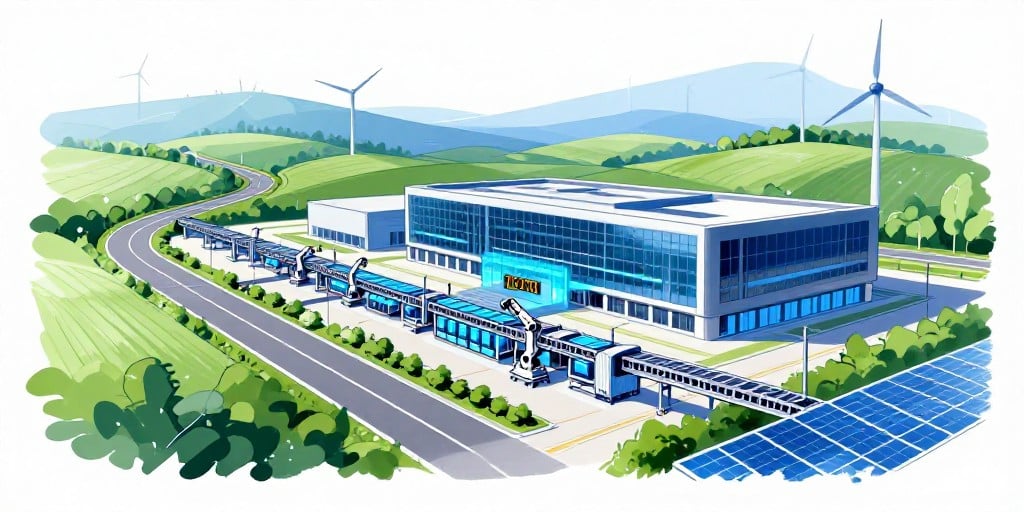
Bayerische Motoren Werke AG (BMW) has announced that its new battery cell plant in Irlbach, Straßkirchen, will commence production in early October. This development is positioned as a cornerstone of the company’s broader strategy to secure a reliable supply chain for its expanding electric‑vehicle (EV) lineup. By focusing on high‑performance lithium‑ion cells designed for upcoming models, BMW aims to enhance its competitive positioning in the rapidly evolving EV market.
Supply‑Chain Implications
The decision to build a domestic battery plant reflects a strategic pivot toward mitigating supply‑chain risks that have plagued the automotive industry. Global events, including semiconductor shortages and geopolitical tensions, have underscored the vulnerabilities of relying on overseas suppliers for critical components. By localizing production, BMW reduces exposure to foreign volatility and aligns with broader industry trends toward regional manufacturing.
Technological Focus
The Irlbach facility will emphasize high‑performance lithium‑ion cells, a technology that has become pivotal for EV range, performance, and cost efficiency. The plant is expected to incorporate advanced recycling processes, enabling the company to recover valuable materials and reduce waste. This commitment to sustainability dovetails with stricter emissions regulations and the growing consumer demand for environmentally responsible products.
Market Dynamics
Automakers worldwide are accelerating battery production to meet tightening emission regulations and growing demand for EVs. BMW’s expansion aligns with this global push for greener mobility. While the company has not disclosed specific financial figures, analysts interpret the expansion as an indicator of a strengthening market position. The additional production capacity is likely to support the company’s projected EV sales growth, especially in Europe where regulatory incentives and consumer adoption are accelerating.
Competitive Positioning
By investing in domestic battery production, BMW strengthens its competitive advantage in several key areas:
| Area | Impact |
|---|---|
| Supply Security | Reduced dependency on foreign suppliers |
| Cost Control | Lower logistics and import costs |
| Speed to Market | Faster integration of new battery technology |
| Sustainability | Enhanced recycling reduces environmental footprint |
These factors collectively bolster BMW’s long‑term competitiveness, allowing the company to respond more agilely to market shifts and regulatory changes.
Broader Economic Trends
The Irlbach plant’s launch signals a broader shift within the automotive sector toward vertical integration and localization. It echoes similar moves by other major manufacturers who are investing in battery production to secure supply chains and meet ambitious electrification targets. Moreover, the emphasis on recycling and sustainability reflects a growing recognition that long‑term profitability in the automotive industry will increasingly hinge on environmental stewardship.
Conclusion
BMW’s new battery cell plant in Irlbach marks a significant step in the company’s strategic pursuit of a robust, secure, and sustainable supply chain for its electric‑vehicle portfolio. By aligning its production capabilities with global regulatory demands, market dynamics, and environmental imperatives, BMW is positioning itself to maintain a competitive edge in the rapidly expanding EV sector.