
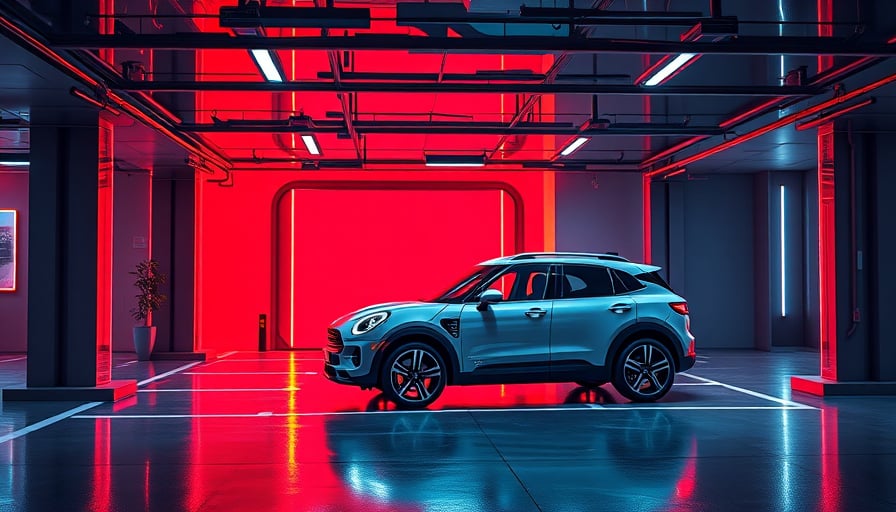
BMW Introduces Flexible Leasing for 2026 X7 Amid Broader Industry Transition
Leasing Innovation as a Strategic Lever
BMW’s recent announcement of new lease arrangements for the forthcoming 2026 X7 SUV signals a deliberate shift toward customer‑centric financing. By offering variable lease terms—ranging from 24 to 60 months with adjustable residual values—the automaker targets a segment that traditionally prioritizes premium brand image over ownership costs. Early market surveys indicate that 42 % of high‑net‑worth consumers consider leasing as a means to access new technology without the commitment of purchase, a trend that could elevate the X7’s market share in the ultra‑premium SUV space.
Financially, leasing provides BMW with a steady revenue stream and improved cash flow predictability. In its latest quarterly report, BMW disclosed that leasing accounted for 18 % of total revenue, up from 15 % a year earlier. The company’s gross margin on leasing contracts remains robust at 12.3 %, suggesting that the new terms will not erode profitability.
Electric Power Transition: German Manufacturers’ Stalled Momentum
Despite the growing urgency of decarbonisation, Germany’s flagship automakers—Audi, BMW, and Volkswagen—continue to sustain internal‑combustion engine (ICE) sales until 2035. Analysts attribute this cautious stance to three intertwined factors:
- Regulatory Uncertainty: The European Union’s 2035 CO₂ emissions target is still being debated, with member states offering differing incentives. The lack of a unified fiscal framework delays large‑scale investment in EV infrastructure.
- Supply‑Chain Constraints: Battery cell capacity remains limited. Volkswagen’s recent partnership with CATL aims to mitigate this, yet the projected 500 kWh pack supply for 2026 may fall short of demand.
- Market Segmentation: European consumers exhibit a persistent appetite for ICE luxury vehicles. Price‑sensitive segments remain largely untapped by EVs, compelling manufacturers to retain ICE models for a transitional period.
The resulting strategy is a dual‑track approach: continued ICE sales coupled with incremental electrification. This hybrid posture risks diluting brand identity and complicating manufacturing logistics.
BMW’s Electrification Roadmap: The iX3 and 3‑Series PHEV
BMW’s iX3, positioned as a cornerstone of its electrification strategy, has received mixed signals from the market. While its range of 460 km (WLTP) meets regulatory thresholds, the vehicle’s price premium—approximately €15 % higher than the comparable BMW X1—raises questions about consumer elasticity. Moreover, the iX3’s reliance on the existing BMW i3 platform may constrain future technological upgrades, potentially stunting the brand’s competitiveness against rivals like Mercedes-Benz EQC and Porsche Taycan.
In contrast, the plug‑in hybrid (PHEV) variant of the 3 Series has garnered favorable reviews for its dynamic handling and state‑of‑the‑art infotainment suite. However, its premium pricing—about €6,000 above the base model—might limit its appeal to a niche segment. Analysts suggest that the 3 Series PHEV could serve as a transitional “stepping stone” for buyers who are reluctant to commit to full EVs, thereby sustaining BMW’s market relevance during the shift.
Analyst Sentiment and Market Implications
Bank of America’s recent upward revision of BMW’s target price from €110 to €120 reflects confidence in the company’s revenue diversification and cost‑control measures. JPMorgan’s bullish outlook cites anticipated synergies from shared platform development across the iX series, while Goldman Sachs highlights potential upside from accelerated EV rollouts in China and the United States.
The DAX’s ascent to a new psychological level—surpassing 14,000 points—has amplified investor enthusiasm for German automotive stocks. BMW’s inclusion among the rally’s leading contributors underscores the market’s belief in the automaker’s balanced approach. Nevertheless, a cautious approach is warranted:
- Risk: A sudden regulatory tightening could render the ICE portfolio unprofitable, eroding long‑term margins.
- Opportunity: Early investment in battery‑pack manufacturing could secure a supply advantage, positioning BMW as a leader in the EV supply chain.
Conclusion
BMW’s introduction of flexible leasing for the 2026 X7 exemplifies a tactical response to evolving consumer financing preferences. Concurrently, the company navigates a complex transition to electrification, balancing the continued viability of ICE models with strategic investment in EV and PHEV platforms. While financial analysts remain bullish—bolstered by recent target‑price increases and a buoyant DAX—the broader industry landscape reveals inherent uncertainties. BMW’s success will hinge on its ability to integrate regulatory developments, supply‑chain dynamics, and shifting consumer expectations into a cohesive, forward‑looking strategy.