
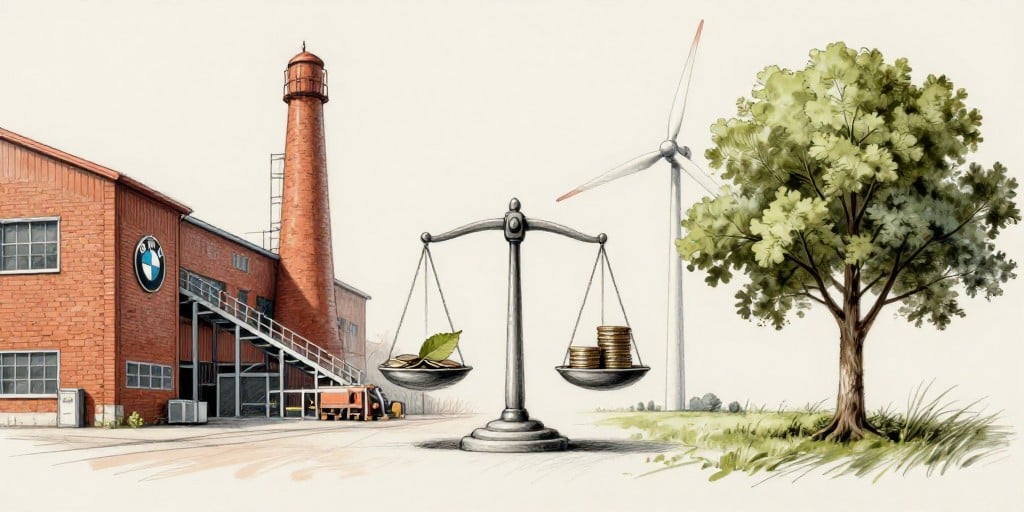
BMW AG Completes Share‑Buyback and Reports Energy‑Efficiency Gains at Debrecen Plant
BMW AG announced that it has finalized a share‑buyback transaction during the week ending 2 August 2026, purchasing more than 380,000 ordinary shares on the German regulated market at Xetra. The weighted‑average purchase price ranged from approximately €57 to €60 per share, reflecting a modest premium over the mid‑price of the trading range for the period. The repurchase is a component of BMW’s 2025‑2027 capital‑return programme, which seeks to return capital to shareholders while preserving sufficient liquidity to support forthcoming investment priorities, including electrification and digitalisation initiatives.
Strategic Rationale Behind the Buyback
The decision to execute a buyback during a period of relatively high market valuation aligns with BMW’s long‑term strategy of balancing shareholder value creation with prudential financial stewardship. By reducing the outstanding share base, the company improves earnings per share and potentially enhances dividend yield, thereby strengthening its appeal to income‑focused investors. Simultaneously, the programme remains structured to maintain ample working‑capital buffers, ensuring that the firm can sustain investment momentum in high‑growth segments such as battery technology and autonomous driving platforms.
From a macro‑economic perspective, the programme is timed against a backdrop of tightening monetary conditions in the Eurozone, which have pressured equity valuations and heightened scrutiny of capital allocation decisions. BMW’s disciplined approach to capital deployment—coupled with a focus on long‑term growth drivers—positions the company favourably relative to peers that have either adopted more aggressive buyback schedules or opted to retain excess cash in anticipation of volatile markets.
Operational Efficiency Gains at the Hungarian Facility
In a separate development, BMW’s Debrecen plant in Hungary has reported a 15 % reduction in energy consumption during the period following the shutdown of the country’s sole nuclear power station. The temporary loss of nuclear capacity—attributable to low water levels—prompted a short‑term optimisation programme that targeted key operational domains: plant machinery utilisation, lighting, climate control, and electric vehicle charging infrastructure.
The Debrecen facility, which assembles the electric SUV iX3, also benefits from an on‑site solar array spanning roughly 50 ha. During periods of high solar irradiance, the plant can draw a significant proportion of its energy requirements from the photovoltaic installation, thereby mitigating reliance on external supply and reducing exposure to volatile energy prices. The 15 % energy‑consumption reduction demonstrates BMW’s agility in adjusting operational practices to external disruptions and underscores the company’s commitment to sustainable manufacturing.
Cross‑Sector Insights and Broader Economic Implications
BMW’s dual focus on capital efficiency and operational sustainability illustrates broader trends that cut across the automotive and manufacturing sectors. First, the use of buybacks to signal confidence in intrinsic business value is a strategy increasingly adopted by capital‑intensive firms seeking to balance investor expectations with investment needs. Second, the proactive management of energy consumption amid supply disruptions reflects a growing emphasis on resilience—an attribute that is gaining importance as global power grids face increasing stress from extreme weather events and shifting policy frameworks.
Moreover, the integration of renewable energy sources—such as the solar panels at the Debrecen plant—provides a case study for how industrial sites can achieve decarbonisation targets without compromising output. This approach aligns with the European Green Deal’s objectives and the automotive industry’s decarbonisation roadmap, which calls for a transition to renewable electricity across the entire value chain.
Conclusion
BMW AG’s recent share‑buyback and the operational efficiency gains at its Debrecen plant together reinforce the company’s strategic narrative of disciplined capital management coupled with sustainable, resilient production practices. By maintaining liquidity for future investment while rewarding shareholders, and by proactively adapting to energy market volatility, BMW is positioning itself to navigate the evolving economic landscape and to sustain its competitive edge in the global automotive market.