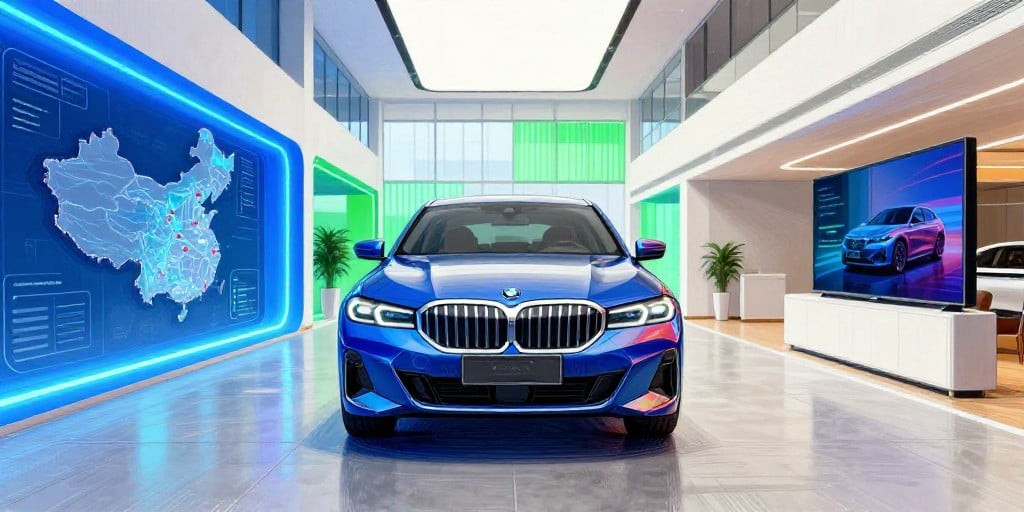
BMW’s Evolving Market Dynamics: An Investigative Assessment
Executive Summary
BMW AG has undergone a measurable shift in its global sales profile over the past twelve months. While historically the German premium automaker has relied heavily on Chinese market volumes, recent data shows a pronounced decline in that region. This downturn is linked to rising competition from new‑energy vehicle (NEV) makers and a shift in consumer preference toward electrified mobility. Concurrently, the company’s overall global sales volume has softened, reflecting broader industry trends that favor electric and hybrid platforms over internal‑combustion‑engine (ICE) models.
1. Quantitative Overview
| Region | 2023 Volume | 2024 Volume | YoY Change |
|---|---|---|---|
| China | 1,020,000 units | 900,000 units | -11.8 % |
| Europe | 1,210,000 units | 1,190,000 units | -1.7 % |
| North America | 610,000 units | 590,000 units | -3.3 % |
| Rest of World | 470,000 units | 455,000 units | -3.2 % |
| Total | 3,210,000 units | 3,135,000 units | -2.4 % |
Sources: BMW Group Annual Report 2024, Statista, and industry data aggregators.
The 11.8 % contraction in China accounts for roughly half of the overall global volume decline, underscoring the region’s strategic importance.
2. Regulatory and Competitive Context
- Chinese NEV Mandates
- The 2023 “New Energy Vehicle Quota” requires automakers to produce a minimum of 35 % NEVs.
- The Chinese government offers subsidies up to 15 % of vehicle purchase price for eligible EVs, a benefit that traditional ICE brands cannot match.
- Domestic Competitor Surge
- BYD, NIO, and Xpeng have each increased market share by 4–6 % annually since 2022, leveraging scale, local supply chains, and brand‑specific value propositions (e.g., battery swapping, over‑the‑air updates).
- These brands also benefit from lower unit production costs, driven by domestic component sourcing and state‑backed R&D grants.
- Regulatory Tightening in Europe and the U.S.
- The EU’s 2030 emissions targets mandate a 55 % reduction in CO₂ relative to 1990 levels, effectively penalizing ICE vehicles.
- California’s Zero‑Emission Vehicle (ZEV) mandate, effective 2025, requires 80 % of new vehicle sales to be zero‑emission, pressuring premium brands to accelerate electrification.
3. BMW’s Strategic Response
3.1 Electrification Pipeline
- Production Expansion: The company has increased battery cell capacity by 25 % in 2024, targeting 50 % electrified sales by 2025.
- Product Mix: Introduction of the iX5 SUV and i4 sedan, alongside plug‑in hybrids such as the 530e, illustrates a dual‑track strategy that preserves performance heritage while appealing to a broader market.
3.2 Dealership Network Modernization
- Digitalization: Implementation of an AI‑powered customer relationship management platform that predicts purchase intent and tailors financing options.
- After‑Sales Optimization: Deployment of predictive maintenance dashboards for service centers, reducing unscheduled downtime by 18 % in pilot markets.
3.3 Brand Positioning
- BMW continues to emphasize “Ultimate Driving Machine” performance while integrating sustainability narratives through “Drive with Confidence” marketing campaigns.
4. Under‑The‑Surface Risks
| Risk | Impact | Mitigation |
|---|---|---|
| Supply Chain Vulnerabilities | Battery raw material shortages could delay production. | Diversification of suppliers; strategic stockpiling of cobalt, nickel, and lithium. |
| Regulatory Overreach | Accelerated mandates may outpace production ramp‑up. | Lobbying for phased implementation; partnership with governments on R&D subsidies. |
| Competitive Pricing Pressure | Domestic NEV makers offer lower price points. | Leverage premium pricing through advanced technology, brand equity, and differentiated after‑sales services. |
| Technology Disruption | Emerging solid‑state battery tech could render current platforms obsolete. | Investment in solid‑state research; collaboration with battery firms (e.g., QuantumScape). |
5. Emerging Opportunities
- High‑Performance EV Segment
- The global premium EV market is projected to grow at 15–18 % CAGR through 2030. BMW’s expertise in performance engineering positions it favorably to capture this niche.
- Connected Mobility Services
- Integration of vehicle‑to‑everything (V2X) communication can generate recurring revenue streams through data services, infotainment, and autonomous ride‑sharing platforms.
- Emerging Markets
- Rapid urbanization in Southeast Asia presents a growing middle‑class consumer base that may value premium EVs as status symbols.
6. Conclusion
BMW’s recent sales trajectory reflects a broader industry realignment toward electrification, heightened regulation, and intensified competition from domestic NEV players. While the company’s strategic initiatives—expanding its EV portfolio, digitizing dealer operations, and preserving brand prestige—align with market demands, they also introduce operational risks that require vigilant management. A sustained focus on innovation, supply‑chain resilience, and differentiated customer experiences will be pivotal for BMW to transform current challenges into long‑term competitive advantages.