
Market Reaction to Bloom Energy Corp. Amid Shifting AI Capital Expenditure Trends
Bloom Energy Corp. (NYSE: BME) has experienced a pronounced decline in its share price following a recent rally. The downturn is attributable to a broader market rotation away from artificial‑intelligence (AI) infrastructure equities and to concerns voiced by one of the company’s principal partners, Oracle Corporation. Oracle’s announcement of a substantial increase in capital expenditures (CapEx) for its AI initiatives, coupled with a negative free‑cash‑flow outlook, has prompted investors to question the pace at which the firm’s investments are translating into revenue. This uncertainty has weighed on Bloom Energy, which supplies fuel‑cell technology that powers data‑center operations critical to AI workloads.
While Bloom Energy’s core business remains focused on delivering low‑emission electricity from natural, biogas, and hydrogen sources, the current sentiment shift has led to a sell‑off in its stock, reflecting investors’ caution amid the sector’s reassessment of AI‑driven demand.
1. CapEx Dynamics in AI‑Driven Data Centers
AI workloads demand high‑density computing, which in turn requires robust, reliable power supplies that are both efficient and compliant with tightening environmental regulations. Companies such as Oracle are escalating CapEx to expand AI data‑center capacity, integrating advanced cooling systems, modular power modules, and high‑efficiency fuel‑cell generators. Oracle’s recent capital‑budget announcement—projected to exceed $10 billion over the next five years—highlights a strategic shift toward electrified and distributed power solutions to mitigate peak demand and reduce carbon footprints.
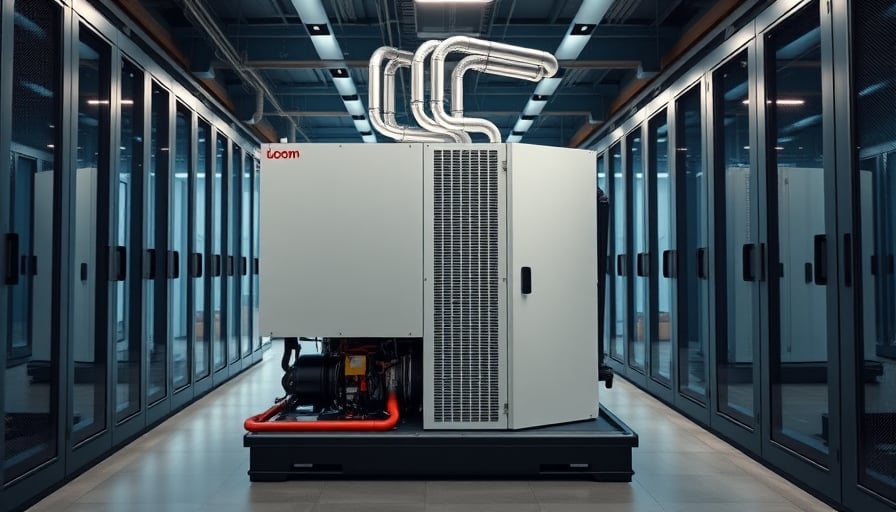
Bloom Energy’s fuel‑cell modules, designed for 24/7 operation with minimal maintenance, are positioned to supply the required clean power. However, the magnitude of Oracle’s CapEx, coupled with Oracle’s negative free‑cash‑flow projection, has raised doubts about the speed and scale of revenue generation for Bloom Energy’s technology partners.
2. Supply Chain Implications for Fuel‑Cell Manufacturing
The production of Bloom Energy’s solid‑oxide fuel‑cell stacks relies on a complex supply chain of high‑purity ceramic materials, advanced electrolytes, and proprietary catalysts. Recent geopolitical tensions and tariff adjustments on critical raw materials (e.g., rare‑earth oxides and platinum‑group metals) have introduced volatility in input costs. In addition, global logistics constraints—stemming from port congestion and container shortages—have delayed the delivery of key components, compressing production timelines.
Bloom Energy’s recent capacity expansion, which includes the construction of a new fabrication plant in Texas, is designed to mitigate these supply‑chain risks by localizing critical material procurement and employing additive manufacturing techniques to reduce material waste. Nonetheless, the projected 12‑month lead time for new stack assembly remains a potential bottleneck in meeting rapid demand spikes from AI data‑center deployments.
3. Technological Innovation in Heavy Industry Power Systems
Bloom Energy’s fuel‑cell technology leverages high‑temperature solid‑oxide membranes to achieve efficiencies exceeding 60 % (electricity generation) and 90 % (combined heat and power). The adoption of micro‑turbine architectures and modular stack design allows for scalable integration into existing data‑center power distribution systems. Recent R&D initiatives focus on:
- Catalyst Durability: Development of cobalt‑free, nickel‑based catalysts to improve longevity and reduce reliance on scarce metals.
- Thermal Management: Implementation of integrated heat exchangers to capture waste heat for district heating or process heat applications.
- Control Systems: Deployment of AI‑driven predictive maintenance algorithms to preempt component degradation and optimize runtime.
These innovations are poised to lower operational expenditures (OPEX) for data‑center operators while maintaining stringent emissions standards, thereby aligning with global decarbonization targets.
4. Capital Expenditure Trends in the Energy‑Tech Sector
Industry data from the International Energy Agency (IEA) indicates that CapEx for clean‑energy infrastructure in high‑tech data centers is projected to rise by 8–12 % annually through 2030. Factors driving this trend include:
- Demand for AI Compute Power: Forecasted growth in AI model training and inference workloads necessitates additional power capacity.
- Regulatory Mandates: Stricter emissions regulations are compelling operators to transition from diesel generators to low‑emission alternatives such as fuel cells.
- Energy Security: Geopolitical uncertainties are motivating diversification of on‑site power generation to mitigate grid reliability risks.
Bloom Energy’s share price movement reflects investor expectations that these broader CapEx trends will translate into robust revenue streams only if the firm can accelerate deployment and reduce cost per kilowatt‑hour.
5. Economic Factors Influencing Investor Sentiment
The recent sell‑off can be contextualized within macroeconomic indicators:
- Interest Rate Environment: Elevated rates increase the discount rate applied to future cash flows, thereby compressing valuation multiples for high‑growth, capital‑intensive firms.
- Inflationary Pressures: Rising input costs erode profit margins unless offset by higher prices or efficiencies.
- Commodity Price Volatility: Fluctuations in natural gas and hydrogen pricing impact the competitive advantage of fuel‑cell solutions versus conventional power sources.
Investors are re‑assessing the risk‑reward profile of Bloom Energy in light of these factors, particularly the uncertainty surrounding the conversion of CapEx into tangible revenue in a highly regulated, rapidly evolving sector.
6. Regulatory Landscape and Infrastructure Spending
The U.S. federal government’s Infrastructure Investment and Jobs Act (IIJA) allocates significant funds toward grid modernization and clean‑energy integration. Provisions under the Act include:
- Tax Credits for Clean Energy: Enhanced investment tax credits (ITC) for fuel‑cell installations in data‑center settings.
- Grid Resilience Grants: Funding for distributed energy resources (DERs) that improve reliability during extreme weather events.
Bloom Energy stands to benefit from these incentives, but the timing of grant disbursement and the complexity of compliance procedures may delay immediate financial gains. Regulatory changes at the state level, such as California’s Zero‑Emission Vehicle (ZEV) mandates, also create downstream opportunities for Bloom Energy’s hydrogen‑based solutions.
7. Conclusion
Bloom Energy Corp. faces a confluence of challenges that are manifesting in a sharp decline in its share price. While its fuel‑cell technology aligns with the growing need for low‑emission power in AI data centers, investor apprehension is driven by Oracle’s large CapEx commitments and negative free‑cash‑flow outlook. Supply‑chain disruptions, rising input costs, and stringent regulatory frameworks further complicate the path to revenue generation.
From an engineering perspective, Bloom Energy’s ongoing R&D and modular production strategies position it to capitalize on the projected rise in clean‑energy infrastructure spending. However, the company’s ability to convert capital investment into market share will hinge on its capacity to streamline supply chains, expedite deployment, and navigate the evolving regulatory environment. Investors will likely continue to monitor the pace at which Bloom Energy’s technology adoption translates into sustained profitability, especially as the broader AI infrastructure sector seeks to balance cost, efficiency, and environmental compliance.