Corporate Insight: BHP Group Limited’s Recent Performance and Governance Dynamics
BHP Group Limited continues to demonstrate resilience within the Australian mining sector, a fact underscored by its modest share‑price gains that mirror the broader market rally of the S&P/ASX 200, which has surpassed the 9,000‑point threshold. The company’s stock movement, closely aligned with peers such as Rio Tinto and Fortescue, signals sustained investor confidence in mining equities, even as the Australian equity market exhibits mixed performance across different sectors.
Market Context and Performance Metrics
- Peer Comparison: BHP’s share price trajectory has largely mirrored that of leading Australian miners, indicating that the firm’s valuation is largely driven by sectoral momentum rather than idiosyncratic events.
- Fundmatic Analysis: Within the Equity Income Fund – Complex ETF (EQIN), BHP stands as the largest holding, with an approximate eight‑percent weight. The fund’s overall outperformance against its benchmark can be partially attributed to BHP’s stability and attractive dividend profile, which help to dampen portfolio volatility while enhancing yield.
- Income and Volatility Contribution: Analysts note that BHP’s dividend yield—currently around 4.5%—provides a buffer against market turbulence, a feature that is especially valuable to income‑focused investors. Its low beta relative to the broader market further supports its role as a stabilizing force within diversified portfolios.
Underlying Business Fundamentals
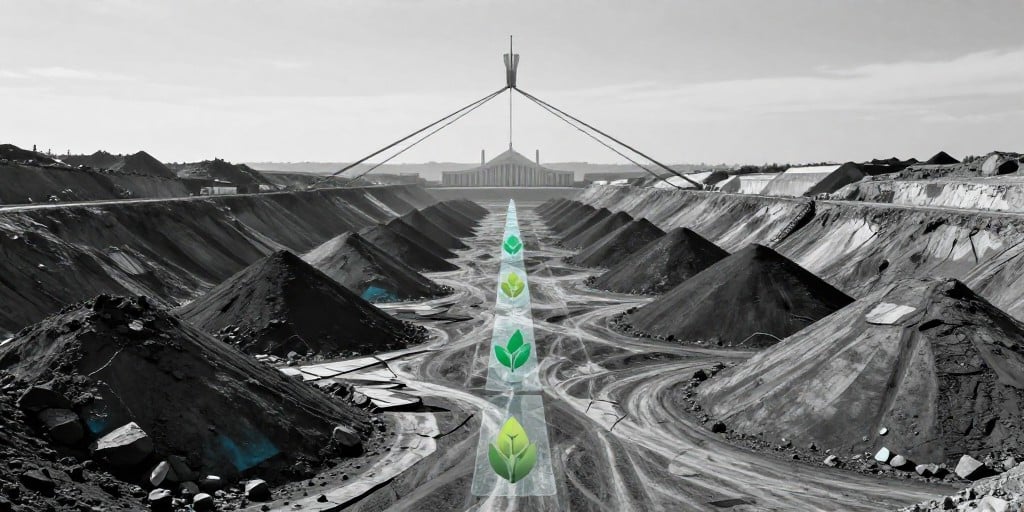
- Commodity Exposure: BHP’s diversified commodity base—including iron ore, copper, nickel, and coal—offers a hedge against single‑commodity volatility. However, the company’s exposure to coal mining remains a regulatory and reputational risk, especially as Australian policy increasingly favors renewable energy.
- Operational Efficiency: Recent capital‑expenditure reductions, coupled with a focus on cost‑control initiatives, have improved BHP’s operating margin to 22%, up from 19% in the prior fiscal year. This trend suggests a managerial emphasis on operational efficiency that may translate into higher free‑cash flow generation.
- Geographic Footprint: The company’s global reach mitigates country‑specific risks, yet its North American and South American operations continue to face regulatory scrutiny related to environmental compliance and community relations.
Regulatory Landscape and Competitive Dynamics
- Australian Mining Regulations: New environmental legislation targeting methane emissions in coal mining could impose additional compliance costs. BHP’s proactive stance on reducing its coal output to 25% of total production by 2030 positions it ahead of competitors that have yet to announce similar targets.
- Industry Consolidation: The Australian mining sector is experiencing a wave of consolidation driven by cost pressures and the pursuit of scale. While BHP maintains a dominant position, its peer, Rio Tinto, is actively exploring acquisitions in the nickel space to diversify its portfolio—an area where BHP is comparatively under‑invested.
- International Trade Dynamics: Tariff adjustments in the United States and China—two of BHP’s largest markets—could alter pricing dynamics for iron ore. The company’s hedging strategy, which currently locks in 60% of its iron ore revenue, mitigates short‑term exposure but leaves room for long‑term profit erosion if global demand wanes.
Governance Transition: A Closer Look
- Executive Departure: The recent resignation of Jessica Farrell, former president of BHP’s North American division and acting president of its South American operations, marks a significant personnel change. The announcement, filed with the Australian market regulator, is part of a broader management transition underway across BHP’s regional units.
- Impact Assessment: Although the company has not disclosed an immediate operational impact, Farrell’s departure could influence strategic priorities in North America and South America. Analysts suggest that continuity of leadership will be crucial to maintaining momentum in these regions, particularly given the complex regulatory environments in Brazil and Mexico.
- Governance Structure: BHP’s board has historically emphasized a decentralized management model, granting substantial autonomy to regional leaders. The loss of a high‑profile executive may prompt a reevaluation of this structure, potentially leading to more centralized oversight or the appointment of a seasoned industry veteran to bridge the transition.
Emerging Opportunities and Risks
| Opportunity | Risk |
|---|---|
| Expansion in Renewable Energy Mining | Regulatory Pressure on Coal |
| Strategic Partnerships in Lithium and Other Battery Materials | Commodity Price Volatility |
| Advanced Automation to Reduce Labor Costs | Geopolitical Instability in Emerging Markets |
| Capital Market Access via Green Bonds | Environmental Litigation |
Conclusion
BHP Group Limited remains a cornerstone of the Australian mining landscape, maintaining a stable share performance that aligns with sectoral trends and delivering robust income to investors. Its strategic position within income‑focused funds like EQIN underscores its role as a low‑volatility anchor in diversified portfolios. Nonetheless, the company faces a confluence of regulatory, competitive, and geopolitical challenges that could reshape its risk profile in the coming years. A vigilant, data‑driven approach to monitoring commodity markets, environmental policy shifts, and leadership continuity will be essential for investors seeking to navigate the complexities of BHP’s evolving business environment.