Corporate Developments and Market Implications
Executive Summary
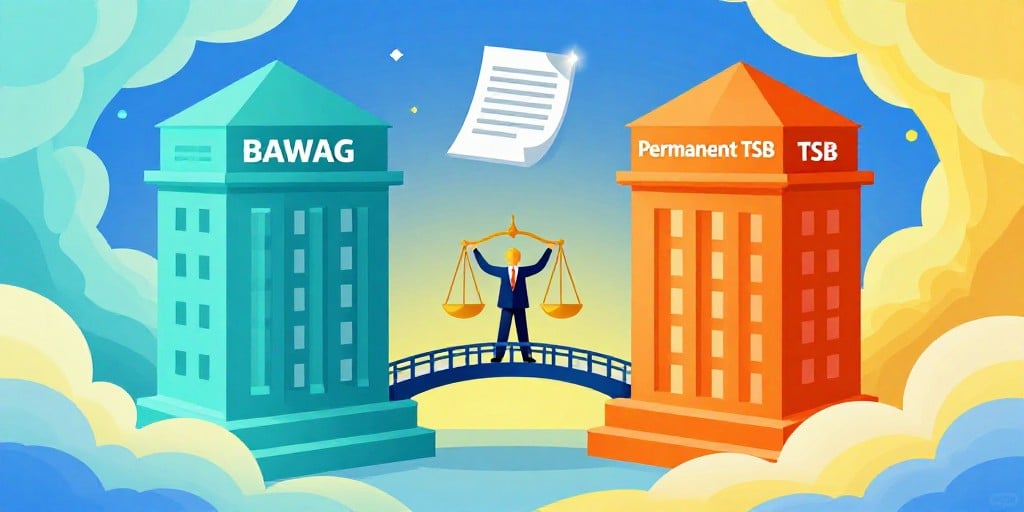
The Austrian financial group BAWAG Group AG encountered a regulatory setback on 26 November when the Irish High Court rejected the scheme of arrangement that would have enabled the bank to acquire all issued shares of Permanent TSB Group Holdings. The decision stemmed from a failure to satisfy the special‑majority requirements, as minority shareholders were not consulted separately. The ruling has immediate financial implications for BAWAG and introduces a new variable into the broader European banking landscape.
Immediate Market Reaction
- Stock Impact: BAWAG’s shares fell more than 6 % upon the announcement, reflecting investor uncertainty about the acquisition’s viability.
- Liquidity Considerations: The decline underscores the sensitivity of cross‑border deal‑making to procedural compliance, potentially affecting liquidity provision for BAWAG’s retail customers in the short term.
Strategic Analysis
| Dimension | Assessment | Long‑Term Implications |
|---|---|---|
| Regulatory Environment | The Irish High Court’s insistence on a separate minority‑shareholder consultation signals tightening enforcement of takeover rules across the EU. | European banking regulators may tighten guidelines on cross‑border mergers, requiring more robust shareholder‑engagement mechanisms. |
| Competitive Dynamics | The delay opens the door for rival bidders to strengthen their positions. The court’s decision highlights a procedural gap that competitors could exploit. | BAWAG’s delay may reduce its competitive edge, especially if alternative bidders secure preferential terms. |
| Market Context | The EU banking sector is navigating post‑pandemic consolidation trends while grappling with tighter prudential standards. | Any postponement in BAWAG’s acquisition may shift capital allocation patterns, influencing M&A activity among mid‑cap European banks. |
| Investor Perspective | Investors must now reassess the valuation of BAWAG relative to its acquisition prospects. The uncertainty could depress the share price further if the outcome is perceived as a prolonged risk. | Long‑term equity performance will hinge on BAWAG’s ability to either resolve the legal hurdle or pivot to an alternative strategy without eroding shareholder value. |
| Emerging Opportunities | BAWAG’s digital‑first strategy remains a growth lever, especially if the acquisition is delayed. The bank could accelerate its own digital expansion to offset the impact of the stalled deal. | A focus on digital platforms may position BAWAG favorably against competitors who lag in tech adoption, potentially improving margins and market share. |
Potential Scenarios
- Resolution of the Current Plan
- Action: BAWAG revises the scheme to include separate minority‑shareholder consultation.
- Outcome: Faster reinstatement of the acquisition timeline, preserving the projected March 2027 closure.
- Investment Note: Market may react positively if the revision is clear and demonstrates compliance, mitigating downside risk.
- Alternative Bidder Engagement
- Action: BAWAG accepts a counter‑bid from a competitor or restructures its offer to include additional incentives.
- Outcome: Possible acquisition delay or cancellation; BAWAG could lose out on the strategic benefits of Permanent TSB’s retail footprint.
- Investment Note: Shareholders might view this as a negative event, leading to a prolonged share price decline.
- Strategic Pivot
- Action: BAWAG abandons the Permanent TSB deal and focuses on internal growth, especially digital channels and cross‑border retail expansion.
- Outcome: Shift from an M&A‑driven strategy to organic growth; potential for higher long‑term profitability.
- Investment Note: While riskier in the short term, a disciplined pivot could enhance long‑term resilience.
Recommendations for Institutional Investors
- Monitor Regulatory Updates: Keep abreast of EU banking regulatory changes that may affect cross‑border acquisition frameworks.
- Assess BAWAG’s Capital Position: Evaluate whether the bank can absorb potential delays without compromising its capital adequacy, especially given its pan‑European and U.S. presence.
- Diversify Exposure: Consider reallocating a portion of the portfolio to banks with a more established track record in cross‑border M&A to mitigate transaction risk.
- Engage in Dialogue: Utilize proxy voting or shareholder engagement mechanisms to advocate for procedural transparency and shareholder rights.
Conclusion
The Irish High Court’s decision serves as a cautionary tale for cross‑border banking acquisitions in the EU, emphasizing the critical importance of procedural diligence and minority shareholder rights. While BAWAG’s digital strategy and retail footprint remain robust, the delay in acquiring Permanent TSB introduces significant uncertainty into its growth trajectory. Institutional investors should closely monitor BAWAG’s next communication and the broader regulatory context to adjust their exposure and strategic expectations accordingly.