Government‑Led Price Ceiling and Its Implications for Austria’s Energy Landscape
The Austrian government’s recent proposal to introduce a nationwide fuel‑price ceiling, effective from 1 January, represents a significant policy shift in the country’s energy market. The draft, slated for cabinet approval on Wednesday, would replace the current retail discount scheme with a daily‑calculated maximum price for gasoline E5, E10 and diesel at petrol stations. The calculation employs wholesale prices from the most expensive of eleven regional wholesaler areas, and imposes penalties of up to €100 000 for individual stations and €500 000 for companies that set prices above the cap. Motorway service stations remain exempt, and individual states may set lower limits if they deem it necessary. The ministry stresses that the measure is not a subsidy; instead, it seeks to preserve supply security and prevent import and delivery costs from becoming uncompetitive.
Market Response and Corporate Outlook
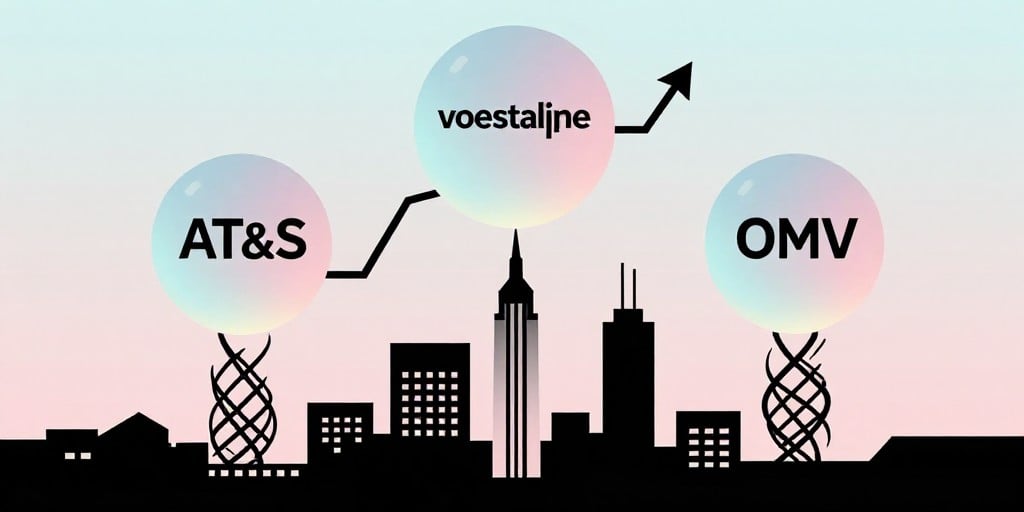
During the trading session, the ATX and ATX Prime indices registered modest gains, reflecting a broader sense of optimism across the Austrian equity market. Among the listed companies, OMV continued to be a prominent component of the index. FactSet’s 2026 projections suggest that OMV will enjoy the lowest price‑earnings ratio among ATX constituents, coupled with the highest dividend yield in the index. OMV’s performance has remained relatively stable, with only minor day‑to‑day fluctuations in its share price. The prevailing market environment is supportive, and analysts expect the new fuel‑price policy to influence retail fuel prices in the near term.
Analysis of Energy Markets
Supply‑Demand Fundamentals
Austrian fuel prices are tightly linked to global crude oil benchmarks, refined product inventories, and transportation costs. With the introduction of a price ceiling that bases retail maximums on the highest regional wholesale price, the policy is expected to dampen volatility in retail fuel costs. This, in turn, may moderate demand elasticity for gasoline and diesel, particularly among price‑sensitive consumers and commercial fleets. However, the exemption for motorway service stations means that high‑traffic corridors may still experience price differentials, potentially creating a mild arbitrage incentive between urban and rural stations.
Technological Innovations
Advancements in liquefied natural gas (LNG) supply chains, hydrogen fuel cells, and battery‑electric storage are reshaping the Austrian energy portfolio. While the fuel‑price ceiling directly affects liquid fuels, the broader corporate sector—exemplified by OMV—must balance investment in conventional refining with diversification into renewable energy sources. OMV’s strategic initiatives in green hydrogen and biofuel production are expected to align with the European Green Deal, offering a hedge against potential future regulatory tightening on fossil fuels.
Geopolitical Awareness
European energy security remains a pressing concern, especially in the context of supply disruptions stemming from geopolitical tensions in the Caspian region and the Middle East. Austria’s policy to cap retail fuel prices may be viewed as a precautionary measure to mitigate the impact of such disruptions on domestic consumers. Simultaneously, the country must navigate the evolving regulatory landscape within the European Union, where directives on carbon pricing and renewable energy targets increasingly influence national energy strategies.
Commodity Price Analysis
Crude oil benchmarks, such as the Brent and WTI indices, continue to exhibit modest upward pressure due to supply constraints in the Gulf region and OPEC+ production policies. In contrast, refined product prices in Austria have remained comparatively stable, partly due to the government’s cap. This divergence highlights the role of local policy interventions in decoupling domestic fuel prices from global commodity volatility.
Production Data and Infrastructure Developments
Austrian refineries have maintained a steady output profile, with a slight uptick in light‑fraction production to accommodate the rising demand for gasoline. Concurrently, the national pipeline network has seen incremental upgrades, improving the resilience of fuel transport to and from border regions. Infrastructure projects aimed at expanding LNG import terminals and electrification of rail lines also underscore Austria’s commitment to a diversified energy mix.
Short‑Term Trading Versus Long‑Term Transition
From a trading perspective, the introduction of a fuel‑price ceiling introduces a new constraint on price formation, which may reduce short‑term volatility. Traders may adjust hedging strategies accordingly, placing greater emphasis on futures contracts tied to wholesale benchmarks rather than retail indices. In the long term, the Austrian policy aligns with the broader energy transition narrative. By ensuring price stability for conventional fuels, the government can provide a predictable environment for investment in renewable projects, while also maintaining consumer affordability during the transitional phase.
Conclusion
The Austrian government’s draft fuel‑price ceiling represents a targeted regulatory approach to preserve supply security and shield consumers from volatile market swings. Its impact on the domestic equity market, particularly on firms such as OMV, underscores the interconnectedness of policy, corporate strategy, and broader energy market dynamics. As the country navigates supply‑demand fundamentals, technological innovations, and geopolitical challenges, the balance between short‑term market stability and long‑term energy transition objectives will remain a focal point for investors, policymakers, and industry stakeholders alike.