
Cisco Systems Unveils Australia’s First Secure AI Factory
Overview
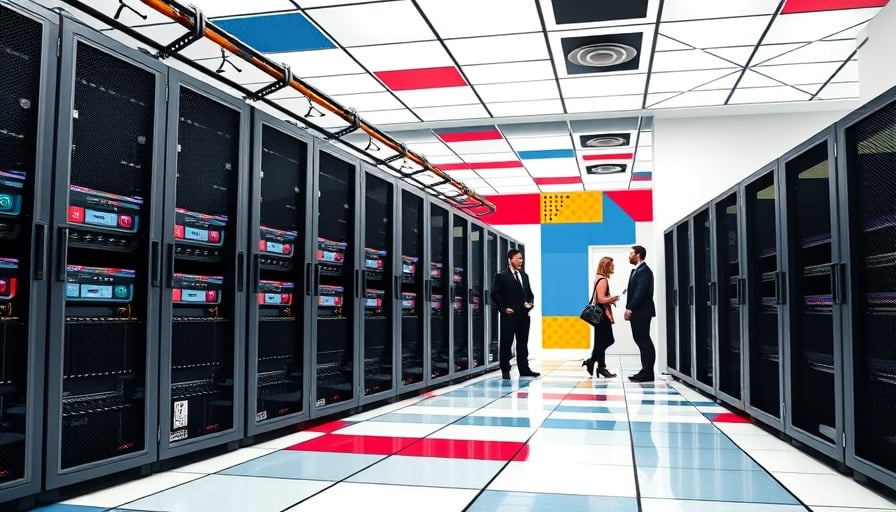
Cisco Systems Inc. has announced the establishment of Australia’s inaugural Cisco Secure AI Factory in collaboration with SharonAI Holdings and NVIDIA. The new facility will integrate NVIDIA’s cutting‑edge GPU technology with Cisco’s UCS servers and Nexus HyperFabric architecture to deliver secure, high‑performance artificial intelligence (AI) workloads tailored for enterprise and government workloads.
Technical Architecture
| Component | Role | Key Features |
|---|---|---|
| NVIDIA GPUs | Compute engine | Tensor Core‑accelerated deep learning, multi‑instance GPU (MIG) support for workload isolation |
| Cisco UCS Servers | Physical host | Unified Compute System (UCS) enables consolidated management, high‑density blade compute, low‑latency interconnects |
| Nexus HyperFabric | Fabric backbone | 32‑bit addressing, up to 10 Tbps aggregate bandwidth, software‑defined fabric for dynamic routing |
| Secure AI Framework | Security overlay | Zero‑trust segmentation, data‑at‑rest encryption, integrated compliance monitoring via Cisco SecureX |
The combination of these components enables elastic scaling of GPU resources while maintaining a zero‑trust security posture. The factory architecture allows multiple AI workloads—such as natural language processing, computer vision, and predictive analytics—to run concurrently on isolated GPU slices, minimizing performance contention.
Market Context
- Global Secure AI Spending: According to IDC, secure AI infrastructure investment is projected to grow at a CAGR of 18% through 2027, reaching $17 billion worldwide.
- Australian Digital Strategy: The Australian Government’s Digital Transformation Strategy 2025 emphasizes secure cloud and AI capabilities for critical infrastructure sectors, creating a receptive market for high‑performance AI solutions.
- Competitive Landscape: Amazon Web Services, Microsoft Azure, and Google Cloud currently dominate the AI infrastructure market in Australia, but Cisco’s focus on physical security and fabric‑based networking differentiates it from purely cloud‑centric competitors.
Strategic Implications
Strengthened Market Position Cisco’s entry into Australia’s secure AI space positions it as a key vendor for government and regulated industries—healthcare, finance, and utilities—where data sovereignty and compliance are paramount.
Ecosystem Collaboration Partnering with SharonAI Holdings, a local AI research firm, enhances Cisco’s ability to deliver region‑specific AI models and services, while NVIDIA’s GPU expertise ensures computational edge.
Vertical Integration Advantage By combining end‑to‑end infrastructure (compute, network, security) under one roof, Cisco can offer simplified procurement and operational models for organizations looking to adopt AI without extensive in‑house expertise.
Expert Perspectives
Dr. Maya Patel, AI Infrastructure Analyst at Gartner “Cisco’s Secure AI Factory is an important development because it tackles two pain points simultaneously: performance scalability and regulatory compliance. The integration of Nexus HyperFabric provides the bandwidth needed for large‑scale transformer models, while UCS’s unified management lowers the operational cost.”
John Reynolds, CIO of Australian Energy Grid Operator “In our sector, data residency and real‑time analytics are non‑negotiable. Cisco’s on‑premise approach gives us the flexibility to keep sensitive data within Australia’s borders while still harnessing world‑class GPU capabilities.”
Actionable Insights for IT Decision‑Makers
| Decision Area | Recommendation | Rationale |
|---|---|---|
| Vendor Selection | Evaluate Cisco’s Secure AI Factory against cloud‑only alternatives when compliance mandates local processing. | Local data residency reduces export control risk. |
| Cost Modeling | Conduct a total‑cost‑of‑ownership (TCO) analysis that includes power, cooling, and staff training for UCS and HyperFabric. | Physical infrastructure requires upfront CAPEX but can lower OPEX over 5–7 years. |
| Security Posture | Integrate Cisco SecureX with existing SIEM/NGFW solutions to maintain a unified threat view. | SecureX provides continuous monitoring of AI workload behavior. |
| Scalability Planning | Leverage MIG on NVIDIA GPUs to run multiple AI models simultaneously, optimizing resource use. | MIG enables workload isolation without dedicating entire GPUs. |
Conclusion
Cisco’s launch of Australia’s first Secure AI Factory marks a strategic advance in secure, high‑performance AI infrastructure. By marrying NVIDIA GPU technology with Cisco’s UCS and Nexus HyperFabric, the facility offers enterprises a compelling blend of performance, security, and compliance. IT leaders evaluating AI deployment options should weigh the factory’s local, on‑premise strengths against the flexibility of cloud offerings, especially in sectors where data sovereignty and regulatory compliance are critical.