Corporate News: Atmos Energy Corporation Secures Up to $1.5 B in Equity Capital for Grid Modernization
Atmos Energy Corporation (NYSE: AMO) announced on 17 November 2026 that it has entered into a comprehensive equity distribution agreement with a consortium of securities firms. The arrangement authorises the company to issue and sell up to $1.5 billion in common‑stock shares through the appointed managers and through a forward‑sale framework with selected purchasers. This new mechanism replaces a prior program that constrained the amount of equity available for issuance, thereby granting Atmos Energy a flexible vehicle for raising capital to fund critical investments in its power‑generation, transmission, and distribution infrastructure.
Key Provisions of the Agreement
| Element | Description |
|---|---|
| Issuance Volume | Up to $1.5 billion in aggregate offering price. |
| Sale Agents | Exclusive sales agents (managers) with commercially reasonable efforts to solicit purchasers. |
| Forward‑Sale Framework | Allows forward purchasers to borrow shares from third parties and sell them through the managers, creating a hedge that can reduce dilution risk for Atmos Energy. |
| Retention of Direct Sale Rights | Atmos Energy retains the right to sell shares outside the agreement on terms it deems appropriate. |
| Non‑Obligation & Suspension Rights | The company may suspend offers and sales at any time and is not obligated to make any specific sale. |
| Use of Proceeds | Primarily to enhance the safety and reliability of Atmos Energy’s system and for general corporate purposes. |
Strategic Rationale: Supporting Grid Modernization
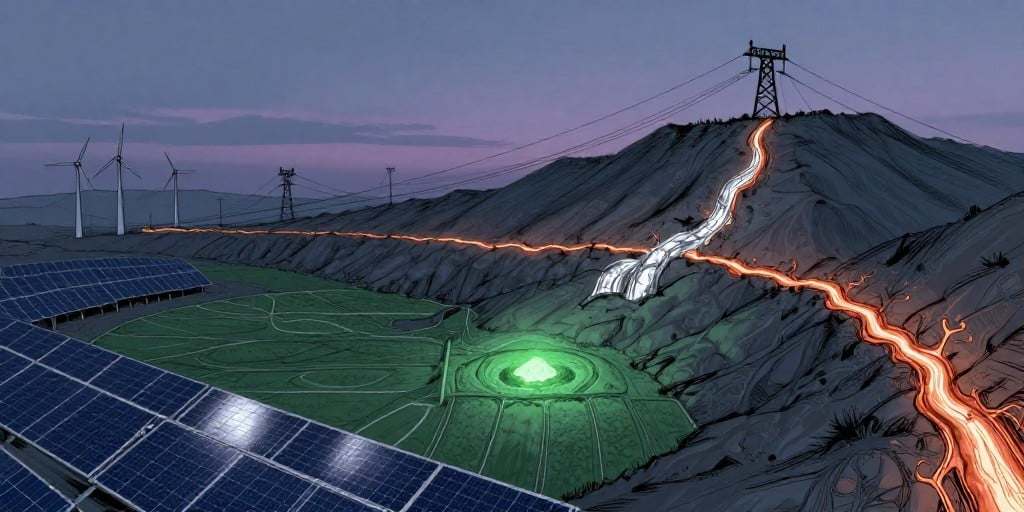
The capital raised is earmarked for investments that directly address the twin imperatives of grid stability and renewable energy integration. Atmos Energy operates a 400 MW electric generation fleet, a 5,000 km transmission network, and a 35,000 km distribution system that serves a diverse load base across the Midwest. With the rapid proliferation of distributed photovoltaic (PV) arrays and battery storage, the utility faces increasingly complex power‑system dynamics, including:
- Voltage Regulation Challenges – High PV penetration can cause voltage rise on distribution feeders, necessitating advanced voltage‑control equipment such as static VAR compensators (SVCs) and voltage‑regulated transformers.
- Frequency Stability Risks – The intermittent nature of solar generation can exacerbate frequency deviations, requiring real‑time control of flexible load and storage resources to maintain the ±0.02 Hz tolerance mandated by the North American Electric Reliability Corporation (NERC).
- Load‑flow Congestion – As renewable resources migrate from bulk‑mover locations to distribution‑level sites, transmission corridors may experience new congestion patterns, calling for investment in line‑reinforcement projects and dynamic line‑rating systems.
To meet these challenges, Atmos Energy plans to deploy:
- Smart Inverters with advanced functionalities (e.g., Volt‑Var and Frequency‑Droop) to provide grid support without curtailing solar output.
- Phasor Measurement Units (PMUs) for enhanced situational awareness and rapid fault detection across the transmission network.
- Battery Energy Storage Systems (BESS) to offer frequency‑control, black‑start, and peak‑shaving services, thereby improving system inertia and reducing the need for costly fossil‑fuel peaking plants.
Regulatory and Rate‑Structure Implications
Under the Public Utility Regulatory Policies Act (PURPA) and the Federal Energy Regulatory Commission (FERC) mandates for grid reliability, utilities like Atmos Energy must demonstrate that new investments are cost‑effective and beneficial to consumers. The capital infusion will enable the company to:
- Reduce Transmission Losses – By upgrading high‑voltage corridors, Atmos Energy can cut losses from the current 3.2 % to below 2.8 %, translating into measurable savings for ratepayers.
- Accelerate Renewable Portfolio Standard (RPS) Compliance – Enhanced interconnection capacity allows the utility to accept more renewable generation, helping to meet the 25 % RPS target by 2035 without the need for additional fossil‑fuel capacity.
- Leverage Time‑of‑Use (TOU) Pricing – Advanced distribution automation will support more granular TOU tariffs, encouraging load shifting and reducing peak demand, ultimately lowering energy costs for commercial and industrial customers.
The rate‑structure impact is projected to be neutral in the short term, with a modest increase in the capacity charge offset by reductions in the energy charge due to improved system efficiency. FERC’s recent guidance on “smart grid” investments supports such cost‑recovery mechanisms, providing a favorable regulatory environment for Atmos Energy’s modernization initiatives.
Economic Impact and Investor Outlook
By investing in grid reliability and renewable integration, Atmos Energy positions itself to:
- Mitigate Outage Costs – Improved reliability reduces the frequency and duration of outages, lowering the indirect costs borne by consumers and businesses.
- Attract Renewable Credits – Enhanced interconnection capabilities allow the utility to capture renewable energy credits (RECs), improving its financial performance in the evolving market.
- Enhance Shareholder Value – The flexibility of the equity distribution agreement provides a reliable capital‑raising tool, reducing future debt reliance and improving the company’s balance sheet.
Analysts forecast that the combined effect of these investments will yield a 2–3 % increase in long‑term revenue growth for Atmos Energy, while maintaining a stable rate‑payer impact. The equity distribution agreement’s structure—particularly the forward‑sale mechanism—reduces the dilution risk associated with large share issuances, thereby preserving existing shareholders’ value.
Conclusion
Atmos Energy’s new equity distribution agreement represents a pivotal step in its strategic pursuit of a more resilient, renewable‑friendly grid. By leveraging the $1.5 billion capital raise, the company will address critical technical challenges—voltage regulation, frequency stability, and transmission congestion—while navigating complex regulatory frameworks and protecting consumer costs. This move underscores the broader industry trend of utility modernization, where engineering solutions and financial innovation converge to support the national transition to a cleaner, more reliable energy future.