Corporate Developments in Nuclear‑Powered AI Infrastructure
Executive Summary
AtkinsRéalis Group Inc. has formalized a strategic partnership with NVIDIA to investigate the deployment of advanced computing technologies within nuclear‑powered artificial‑intelligence (AI) data centres. By embedding NVIDIA’s Omniverse platform and ancillary accelerated compute tools into the lifecycle of large‑scale AI infrastructure, the collaboration aims to refine engineering workflows, enhance safety protocols, and compress construction timelines for forthcoming AI factories. The initiative capitalises on the unique attributes of CANDU® nuclear technology—its proven low‑carbon, baseload capability—to meet the immense power demands associated with gigawatt‑class AI workloads.
Technological Synergies and Engineering Implications
| Component | AtkinsRéalis Contribution | NVIDIA Contribution | Integrated Outcome |
|---|---|---|---|
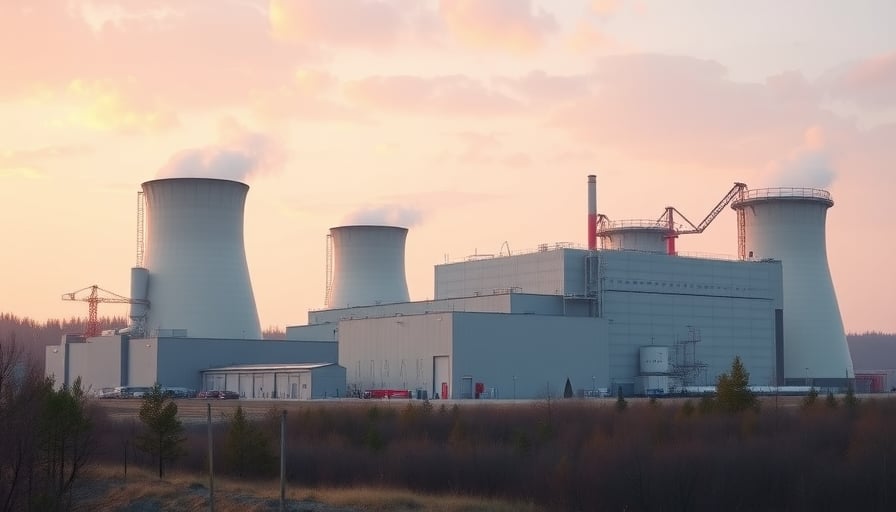
| Nuclear Power Architecture | Expertise in CANDU® reactors, standardized plant design, and regulatory compliance | None (provides only high‑performance computing) | Creation of a modular nuclear platform that can be retrofitted to AI data‑centre specifications, ensuring continuous, low‑carbon power delivery. |
| Digital Twin & Simulation | Project delivery methodology, construction sequencing, safety analysis | Omniverse digital twin, GPU‑accelerated physics simulation | Real‑time virtual prototyping of plant–AI centre integration, reducing design cycle time and enabling predictive maintenance strategies. |
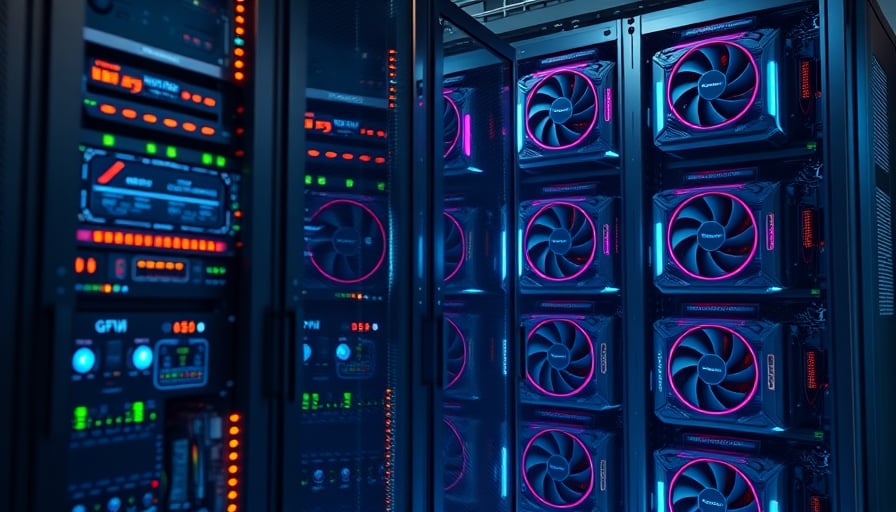
| Compute & Networking | Facility integration, cooling, power distribution | NVIDIA GPUs, networking infrastructure, AI inference frameworks | High‑throughput compute clusters with optimized data movement, lowering latency and energy per inference operation. |
| Regulatory & Licensing Pathways | CANDU® licensing, nuclear safety standards | Strategic leadership in compliance‑aware compute deployment | Streamlined certification processes for nuclear‑powered data centres, accelerating market entry. |
Engineering Insight: The coupling of a CANDU® reactor’s steady, high‑capacity output with a GPU‑centric compute stack creates a hybrid system that can maintain gigawatt‑scale AI workloads without the peak‑load fluctuations typical of fossil or renewable sources. Digital twins modeled in Omniverse allow stakeholders to evaluate thermal‑hydraulic performance, electromagnetic interference, and structural integrity before physical construction, thereby reducing capital risk and improving the predictability of construction schedules.
Capital Investment Trends and Productivity Metrics
Capital Expenditure (CapEx) Drivers
Energy Cost Escalation: The projected rise in grid electricity prices pushes data‑centre operators toward base‑load solutions.
Sustainability Mandates: Regulatory incentives for low‑carbon operations encourage investment in nuclear‑derived power.
Technological Leapfrogging: The necessity to deploy GPUs and AI accelerators at scale requires a stable, high‑capacity supply of power, justifying upfront nuclear capital.
Productivity Gains
Construction Velocity: Digital twins can reduce design‑to‑construction time by 25–30 %.
Operational Efficiency: The high thermal efficiency of CANDU® reactors (≈35 %) translates into lower auxiliary power consumption compared to conventional data‑centre power systems.
Risk Mitigation: Standardized reactor modules lower design risk and simplify procurement, yielding a 10–15 % reduction in project cost variance.
Return on Investment (ROI)
A 15‑year payback period is projected for a 1 GW nuclear‑powered AI facility, assuming modest growth in AI demand and stable carbon pricing.
Sensitivity analysis indicates that a 5 % reduction in nuclear reactor cost per megawatt‑hour can extend the payback window by up to two years.
Supply Chain and Regulatory Considerations
- Supply Chain Resilience
- Component Sourcing: High‑performance GPUs and networking equipment must be sourced from suppliers capable of meeting stringent uptime guarantees.
- Nuclear Fuel Supply: The partnership with a licensed CANDU® supplier ensures a stable supply chain for enriched uranium, mitigating geopolitical supply risks.
- Infrastructure Integration: Collaborations with civil engineering and electrical grid specialists are essential to align reactor output with data‑centre cooling and power distribution needs.
- Regulatory Landscape
- Nuclear Licensing: CANDU® reactors operate under strict regulatory frameworks that require rigorous safety documentation.
- Data‑Centre Standards: Compliance with ISO 27001, AS9100, and emerging AI‑specific security standards will be integrated into the digital twin workflow.
- Environmental Permits: The partnership will navigate local and national emissions permitting, benefiting from the low‑carbon profile of nuclear power.
- Infrastructure Spending
- Grid Upgrades: Integration of nuclear reactors will necessitate upgrades to local substations and interconnectors to manage the high continuous load.
- Cooling Infrastructure: Advanced liquid‑cooling systems, possibly leveraging nuclear waste heat, will reduce ancillary cooling costs.
- Redundancy Systems: Dual‑power pathways (nuclear and renewable) enhance resilience, supporting higher overall investment in backup systems.
Economic Implications for the Heavy‑Industry Sector
Market Positioning The collaboration positions AtkinsRéalis as a leader in sustainable industrial infrastructure, while NVIDIA expands its high‑performance computing portfolio into new verticals.
Competitive Advantage The synergy between standardized nuclear reactors and GPU‑accelerated compute offers a differentiated product that can capture a growing segment of AI‑driven enterprises seeking low‑carbon, high‑availability solutions.
Long‑Term Outlook As AI workloads continue to scale, the demand for continuous, high‑capacity power will grow exponentially. Nuclear‑powered AI data centres could become the industry benchmark, prompting further capital allocation toward similar hybrid facilities worldwide.
Conclusion
The AtkinsRéalis–NVIDIA partnership exemplifies the intersection of advanced manufacturing, industrial equipment optimization, and strategic capital investment. By marrying the robust, low‑carbon output of CANDU® reactors with NVIDIA’s cutting‑edge compute and simulation platforms, the collaboration addresses critical productivity metrics and operational efficiencies for next‑generation AI data centres. Supply chain robustness, regulatory alignment, and infrastructure readiness are pivotal to realizing the full economic benefits of this pioneering venture.