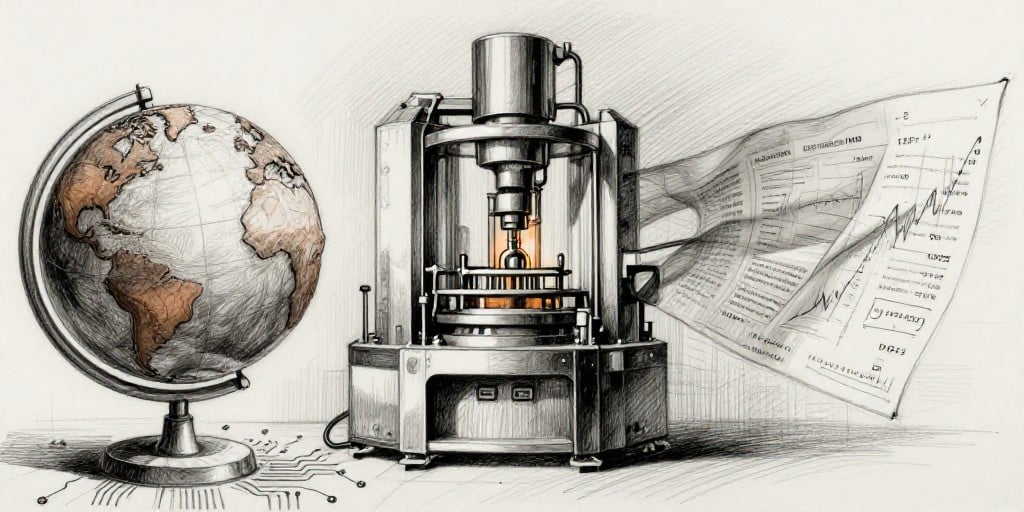
ASML Holding NV’s Robust Q3 Performance and Its Implications for the Semiconductor Ecosystem
ASML Holding NV, the preeminent Dutch supplier of lithography systems, posted third‑quarter results that exceeded market expectations and reinforced its 2026 outlook. With revenue of €11.7 billion and a net profit of €5.0 billion, the company now projects full‑year revenue to fall in the mid‑forties of euros—a range that underscores the continued demand for extreme ultraviolet (EUV) lithography despite macro‑economic headwinds.
1. Technical Depth: Why EUV Remains Irreplaceable
EUV machines are the linchpin of modern chip manufacturing, enabling the fabrication of nodes below 7 nm. The 2024 EUV tool, the TWIN 3‑stage system, boasts an 84‑cm beam aperture and a laser‑driven light source that generates 13.5 nm photons. This technology is not merely incremental; it fundamentally changes the physics of lithography, allowing for higher resolution and lower defect rates.
- Yield Implications: In a recent case study from TSMC’s 3nm line, the adoption of EUV reduced critical dimension variation by 15 %, translating into a 3 % yield improvement that offsets the capital intensity of the tool.
- Cost Trajectory: ASML’s own data indicates that the cost of a single EUV machine is approximately €200 million, with an expected depreciation period of 5 years. The company’s Q3 earnings suggest a 10 % increase in tool sales year‑on‑year, reflecting sustained demand from major fab operators.
2. Human‑Centered Story: The Workforce Behind the Machines
While the capital expenditure is staggering, the human capital required to develop and service EUV tools is equally critical. ASML’s workforce of ~14,000 engineers, many of whom hold advanced degrees in optical physics and materials science, represents a significant portion of the global talent pool in semiconductor equipment manufacturing. The company’s investment in in‑house training programs and partnerships with European universities aims to mitigate the risk of talent shortages, a concern echoed in industry analyses of the impending “chip workforce crunch.”
3. Market Context: A Week of Mixed Signals
The week surrounding ASML’s earnings release was marked by volatility on the U.S. technology front and relative calm in European indices. Key drivers included:
- Inflation Data: U.S. consumer price indices rose 0.5 % month‑on‑month, prompting traders to anticipate further tightening by the Federal Reserve. The Nasdaq Composite fell 2.3 %, reflecting concerns about higher borrowing costs for capital‑intensive projects such as chip fabs.
- Oil Prices and Bond Yields: Lower crude prices and easing yield curves supported the DAX, which remained flat, illustrating how macro‑economic levers can differentially affect regions.
- AI‑Related Investment Pressure: Tech giants increased capital allocations to AI hardware, intensifying demand for high‑performance processors and, by extension, lithography systems.
4. Competitor Landscape: TSMC’s Complementary Momentum
Taiwan Semiconductor Manufacturing Company (TSMC) reported Q3 revenue of US$1.49 billion, mirroring a similar profit trajectory. TSMC’s earnings reinforce the notion that the semiconductor supply chain is resilient, yet the company’s strategic shift toward 7 nm and below nodes signals a continued need for advanced lithography. Both ASML and TSMC’s performance suggest that investors are cautiously optimistic about the sector’s ability to weather rate hikes while sustaining growth.
5. Macro‑Economic Risks and Opportunities
Persistent inflationary pressures, volatile energy prices, and geopolitical tensions (particularly in the Middle East and Eastern Europe) introduce uncertainty that could impact the cost of capital for technology and AI projects. Central bank signals—especially those from the Federal Reserve—indicate a willingness to further tighten policy. This environment poses the following risks:
- Capital Expenditure Crunch: Higher borrowing costs may delay or reduce investments in new fabs, potentially constraining demand for ASML’s lithography tools.
- Supply Chain Disruptions: Geopolitical instability could affect the availability of critical raw materials (e.g., specialty gases for EUV sources).
- Regulatory Scrutiny: Increased focus on supply chain security could lead to stricter export controls, affecting ASML’s ability to sell to certain markets.
Conversely, opportunities arise from the acceleration of AI workloads and edge computing, which demand higher transistor densities. The continued push toward 12.5 nm and 7 nm nodes for AI accelerators creates a sustained market for EUV tools.
6. Conclusion: A Balanced Outlook
ASML’s strong third‑quarter results and upbeat 2026 guidance paint a picture of resilience in the face of macro‑economic uncertainty. The company’s technological leadership in EUV lithography positions it well to capitalize on the ongoing semiconductor upgrade cycle, especially as AI and 5G applications drive demand for smaller, more power‑efficient chips. However, investors must remain vigilant regarding the interplay between interest rate policy, supply‑chain dynamics, and geopolitical risks—factors that can quickly shift the balance between growth and caution in the technology sector.
By maintaining a rigorous focus on both the engineering breakthroughs that underpin ASML’s product line and the human capital that sustains its innovation pipeline, stakeholders can better assess the company’s trajectory and the broader implications for the global semiconductor ecosystem.