
ASML Holding NV Faces Geopolitical Headwinds While Reinforcing Shareholder Returns
Market Performance Amid Export‑Restriction Concerns
ASML Holding NV, the Dutch semiconductor equipment manufacturer, opened the week on a downturn, falling more than six percent as investors digested fresh reports that the United States could impose stricter export controls on the company’s advanced lithography systems. The potential restrictions would curtail ASML’s sales to China, a critical market for high‑end chip manufacturing equipment. The announcement triggered a sharp pullback in the share price, reflecting a broader uncertainty among market participants about the scale and timing of forthcoming trade controls.
In the face of this turbulence, institutional investors have become more cautious, re‑evaluating the risk profile of ASML’s portfolio exposure to geopolitical events. The decline has been largely temporary, with the stock recovering toward the middle of the week after the company clarified its current licensing arrangements and reiterated its commitment to compliance with U.S. export regulations.
Continued Share‑Buyback Program Signals Confidence
Despite the headwinds, ASML maintained momentum in its share‑buyback program, purchasing shares at a rate that underscores confidence in the firm’s balance sheet strength. The buyback, which has been underway for several quarters, aims to support the stock price and signal shareholder value creation. Analysts note that the buyback, combined with a robust cash generation profile, positions ASML well to navigate potential disruptions in the supply chain.
Reinforcement of Global Supply Chain Role
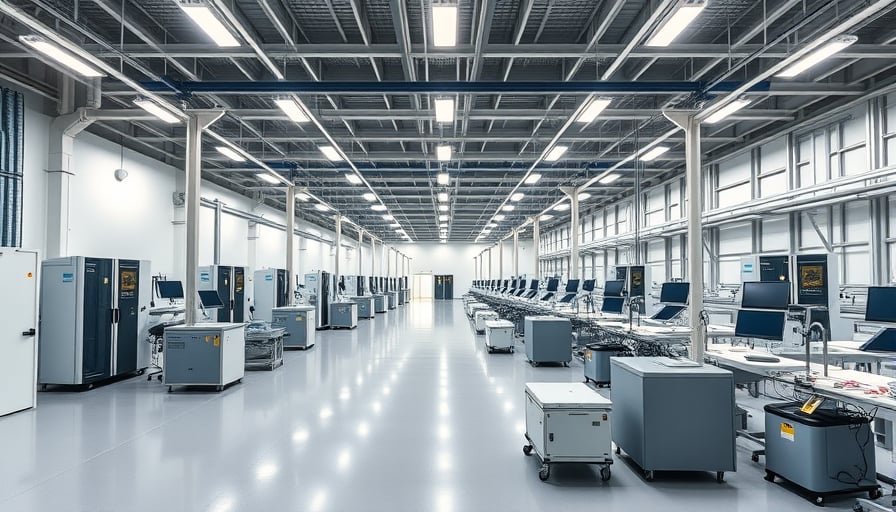
Industry coverage also highlighted a recent visit to Intel’s Arizona foundry, where ASML’s extreme ultraviolet (EUV) lithography systems are installed. The visit reinforced the company’s role as a critical enabler for advanced chip production across the United States. According to Intel, the collaboration focuses on scaling EUV throughput and improving yield on 7 nm and 5 nm process nodes, which are central to the company’s 2025 roadmap.
This partnership illustrates ASML’s ongoing strategy to diversify its customer base across the global supply chain, reducing concentration risk in any single market. It also signals to investors that the company remains a cornerstone in the semiconductor ecosystem, even amid geopolitical uncertainties.
Industry Trends and Outlook
Export‑Control Landscape: The U.S. Department of Commerce’s recent tightening of semiconductor technology export rules has increased volatility for companies that export high‑performance equipment to China. Firms that can demonstrate robust compliance frameworks and diversified customer footprints tend to weather these pressures better.
Demand for EUV Systems: Global demand for EUV lithography equipment is projected to grow at a compound annual growth rate of 15% through 2027, driven by the need for smaller process nodes and increased transistor density. ASML currently holds a 99% market share in EUV production, which positions it favorably in this high‑barrier market.
Supply Chain Resilience: The semiconductor industry is prioritizing resilience, with firms investing in dual‑source suppliers and advanced process technology. ASML’s continued presence in both U.S. and Chinese foundries supports this trend, giving it a broader geographic risk profile.
Actionable Takeaways for IT Decision‑Makers and Software Professionals
Assess Vendor Exposure: Organizations relying on semiconductor hardware should evaluate their exposure to ASML‑dependent supply chains and consider contingency plans for potential export‑restriction scenarios.
Monitor Regulatory Updates: Stay informed on U.S. export‑control policy changes, especially those related to advanced lithography, as they can affect the availability and cost of high‑performance chip manufacturing equipment.
Leverage Buyback Signals: Companies that maintain disciplined share‑repurchase programs often indicate strong cash flow and confidence in long‑term prospects. This can be an indicator when considering equity investments or partnership opportunities.
Prioritize Supply Chain Diversification: Engage with multiple vendors and geographic regions to mitigate the risk of localized trade restrictions or geopolitical disruptions.
Track Technological Advancements: Follow progress in EUV lithography and next‑generation process nodes, as they directly impact the performance and efficiency of software that depends on high‑density silicon chips.
In summary, ASML’s share price reaction to potential U.S. export restrictions underscores the heightened sensitivity of the semiconductor equipment sector to geopolitical developments. Yet, the company’s steadfast share‑buyback initiative and continued engagement with leading foundries such as Intel’s Arizona plant illustrate a resilient strategy that balances shareholder value creation with a diversified, global supply‑chain presence. For IT leaders and software professionals, understanding these dynamics is essential for navigating the evolving landscape of semiconductor technology and its implications for business operations.