ASML Holding NV: Navigating Demand Dynamics Amidst Physical Constraints in AI‑Driven Semiconductor Production
ASML Holding NV, the preeminent supplier of lithography systems for advanced semiconductor fabrication, remains a focal point for market participants as the company adapts to the evolving demands of the artificial‑intelligence (AI) sector. Recent industry commentary has underscored that the firm’s flagship extreme ultraviolet (EUV) machines—critical for enabling the manufacture of the smallest logic nodes—continue to enjoy robust demand. Simultaneously, analysts have highlighted a persistent physical limitation in the current generation of equipment that could influence chip‑maker profitability and necessitate workarounds.
Sector‑Specific Dynamics and Market Drivers
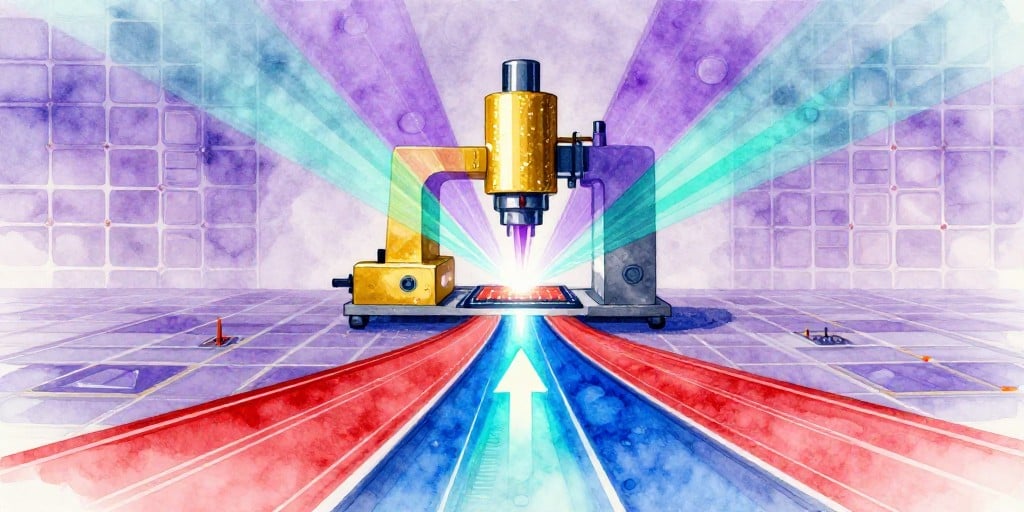
EUV lithography represents the pinnacle of photolithographic technology, allowing semiconductor manufacturers to pattern circuits with sub‑10‑nanometer precision. ASML’s EUV systems are indispensable for producing next‑generation chips that power AI workloads, data centers, and high‑performance computing. Consequently, demand for EUV is closely tied to the pace of AI adoption across multiple verticals, from cloud service providers to automotive electronics.
Despite strong demand, the physical constraints of the current EUV generation—primarily related to source power, wafer throughput, and optics quality—have become a focal point for analysts. These limitations can constrain yield and throughput, thereby elevating production costs for fab operators. In response, some chip makers are exploring hybrid strategies, such as combining EUV with advanced immersion lithography or employing step‑and‑repeat techniques to mitigate throughput bottlenecks. Such workarounds, while technically viable, introduce additional complexity and capital expenditure, potentially compressing margins for semiconductor manufacturers.
Financial and Market Context
European equity markets have exhibited a modest rebound from recent sell‑off pressures, with bond yields easing slightly and oil prices stabilizing. Within this broader backdrop, technology names—including ASML—have shown resilience against market volatility. The company’s shares have registered modest gains in the broader technology and AI‑related sectors, reflecting investor confidence in the underlying demand drivers.
Over the past month, ASML’s share price has experienced a moderate decline, a trend that some investors interpret as a buying opportunity rather than an indication of fundamental weakness. This perception is rooted in the company’s sustained demand from semiconductor manufacturers and its strategic position within the supply chain for next‑generation chips. Analysts emphasize that while short‑term price swings are expected in a market characterized by high valuation sensitivity, the long‑term trajectory remains anchored by the critical role of EUV technology in enabling AI and other high‑performance computing workloads.
Competitive Positioning and Broader Economic Implications
ASML’s competitive positioning is reinforced by its technological lead in EUV lithography, a field with high entry barriers and significant capital intensity. The company’s partnership with major semiconductor manufacturers—such as TSMC, Samsung, and Intel—ensures a pipeline of orders that sustains revenue growth. Moreover, ASML’s continuous investment in research and development positions it favorably to address the physical limitations identified by industry observers, potentially unlocking higher throughput and lower unit costs in future generations.
From an economic standpoint, the sustained demand for EUV underscores the broader shift toward data‑intensive applications and AI adoption. As global digitalization accelerates, the semiconductor supply chain will continue to be a pivotal component of economic growth. ASML’s role in this chain thus carries implications that transcend the semiconductor industry, impacting technology infrastructure, cloud service provision, and high‑performance computing across sectors.
Outlook
While the physical constraints of current‑generation EUV machines present short‑term challenges for chip manufacturers, they also catalyze innovation in manufacturing strategies and drive further investment in next‑generation lithography technologies. ASML’s ability to navigate these dynamics—maintaining strong customer relationships, advancing its technology roadmap, and managing capital expenditures—will be critical in sustaining its valuation and supporting shareholder returns.
Investors and market participants should continue monitoring the interplay between EUV technological evolution, chip‑maker throughput strategies, and macroeconomic factors such as interest rates and commodity prices. In doing so, they can assess ASML’s position within the broader context of technological advancement and economic growth, ensuring a well‑rounded perspective on the company’s future prospects.