
ASML Holding NV Drives Semiconductor Momentum Through AI‑Driven Demand and Strategic Expansion
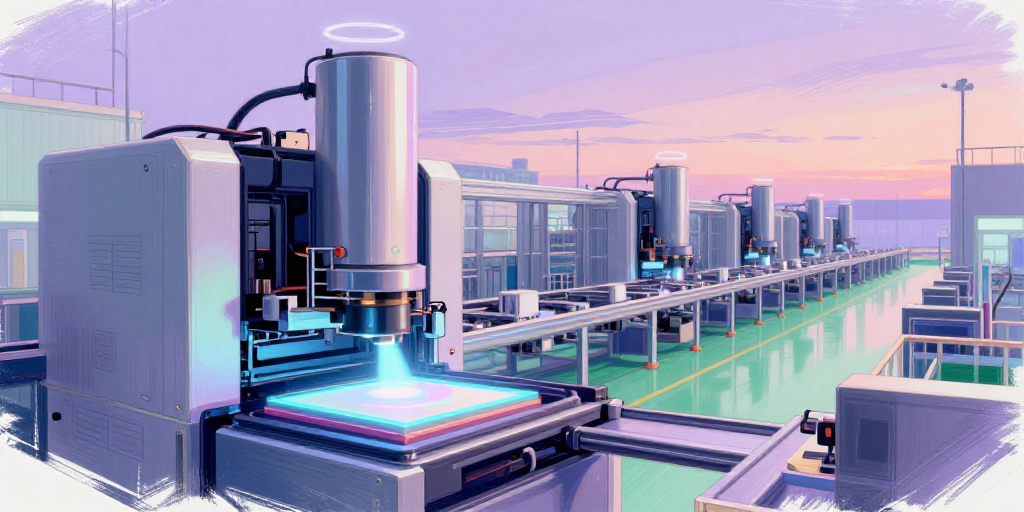
ASML Holding NV, the preeminent supplier of extreme ultraviolet (EUV) lithography systems, has reinforced its pivotal role in the AI‑chip supply chain. In its latest quarterly report, the Dutch company disclosed a pronounced surge in orders for its next‑generation EUV machines, slated for delivery within the current fiscal year. This uptick underscores the escalating demand for cutting‑edge lithography equipment, a direct response to the relentless push toward smaller process nodes and higher‑performance artificial intelligence (AI) accelerators.
Node Progression and Yield Optimization
The semiconductor industry’s transition from 7 nm to 5 nm, and now toward 3 nm and 2 nm nodes, hinges on lithography precision. EUV technology, operating at a 13.5 nm wavelength, offers the requisite resolution to pattern the dense transistors characteristic of these nodes. ASML’s latest machines incorporate advanced phase‑shift masks and sophisticated defect‑management systems, which collectively improve lithographic fidelity and reduce defect densities. Consequently, yield rates—critical for cost competitiveness—have improved. Recent data suggest that yield gains of 1–2 % at the 5 nm node can translate to 10–15 % cost savings, a margin that becomes increasingly valuable as feature sizes shrink.
Manufacturing Process Challenges
Manufacturing at 3 nm and below introduces several technical hurdles:
- Doping Uniformity – Maintaining consistent impurity profiles across wafer surfaces is difficult due to the high aspect ratios of nanostructures. ASML’s EUV tools incorporate real‑time metrology to monitor and adjust exposure dosage, mitigating non‑uniformities.
- Source Power Management – EUV sources generate photons at low efficiency; thus, maximizing photon output while minimizing power consumption is essential. Recent breakthroughs in high‑average‑power xenon flash lamps have improved source lifetimes, reducing downtime for foundries.
- Patterning of Multi‑Patterned Layers – Techniques such as double or multiple patterning remain necessary for certain interconnect layers. ASML’s 193 nm immersion lithography, combined with EUV, enables hybrid patterning workflows that balance throughput and resolution.
Yield optimization across these challenges is facilitated by ASML’s metrology suite, which delivers sub‑nanometer accuracy in line‑edge roughness and overlay error metrics. Foundries report that early adoption of these systems leads to faster mask‑to‑wafer convergence, shortening product development cycles.
Capital Equipment Cycles and Foundry Capacity Utilization
ASML operates on a long capital‑equipment cycle. The development, testing, and commercialization of a new EUV line can span 5–7 years, during which the company must secure substantial investment. Despite this, ASML’s capital expenditures remain tightly controlled, allowing the company to maintain a strong cash position—as evidenced by its recent dividend hike.
Foundry capacity utilization has become a key indicator of market health. In 2024, major players such as TSMC and Samsung reported utilization rates above 90 % for 5 nm fabs, signaling near‑capacity constraints. This situation creates a backlog for new EUV orders, a trend that ASML capitalizes on by expanding its production throughput through modular upgrades and phased commissioning strategies. By deploying smaller, high‑yield EUV lines as interim solutions, ASML helps foundries bridge the capacity gap while full‑scale 3 nm fabs come online.
Interplay Between Chip Design Complexity and Manufacturing Capabilities
Modern AI accelerators, such as large‑scale transformer models, demand not only high transistor counts but also specialized memory hierarchies and interconnect architectures. Chip designers rely on advanced process nodes to pack more logic per square millimeter and to integrate high‑bandwidth memory (HBM) stacks. This symbiotic relationship places pressure on lithography systems to deliver both high resolution and high throughput.
ASML’s innovations—particularly its EUV phase‑shift mask technology and real‑time defect‑correction algorithms—enable designers to push the envelope of transistor scaling without compromising reliability. Furthermore, the company’s collaboration with Singtel and Mistral AI exemplifies a broader strategy: aligning lithographic capabilities with AI cloud infrastructure, thereby ensuring that the full ecosystem—from design tools to manufacturing execution—remains coherent.
Enabling Broader Technological Advances
The ripple effect of ASML’s advancements extends beyond AI chips. High‑resolution lithography accelerates progress in automotive electronics, 5G/6G baseband processors, and quantum computing hardware. Each of these domains requires dense, energy‑efficient designs that can only be realized on the smallest nodes. By providing the lithographic backbone, ASML indirectly fuels innovations across the technology spectrum.
Outlook
ASML’s strategic focus on EUV expansion, coupled with its robust dividend policy and leadership refresh, positions it to maintain market dominance amid tightening supply chains. As the semiconductor industry continues to pivot toward AI and edge computing, the demand for advanced lithography will remain inelastic. Foundries with high‑node capacities will secure long‑term contracts, while smaller fabs will leverage ASML’s modular solutions to remain competitive.
In sum, ASML’s recent developments reflect sustained growth momentum driven by AI chip manufacturing needs, rigorous capital deployment plans, and strategic alliances that reinforce its role as the linchpin of the global semiconductor supply chain.