United States Army Enhances Counter‑Drone Capabilities on the Southern Border
The Army’s recent month‑long counter‑drone exercise along the southern border has underscored the growing threat posed by commercial unmanned aerial systems (UAS) and the need for a diversified defensive architecture. The exercise incorporated radar, electronic jamming, kinetic interceptors, and directed‑energy laser systems, demonstrating the Army’s preference for a layered approach rather than reliance on a single technology.
Technical Evaluation of Interceptor Platforms
Multiple low‑cost interceptor prototypes were field‑tested. One prototype was highlighted for its projected deployment cost of less than $10,000 per unit—a threshold that balances affordability with operational capability. The prototypes were assessed on several key parameters:
| Parameter | Evaluation | Implications |
|---|---|---|
| Launch Mechanism | Rail‑based vs. motorized launcher | Rail systems offer higher velocity but require heavier launch platforms; motorized launchers provide mobility but lower muzzle velocity. |
| Guidance System | Electro‑optic homing with adaptive Kalman filtering | Enables real‑time trajectory prediction; trade‑off between sensor weight and processing latency. |
| Warhead Design | Contact detonation vs. shaped‑charge fragmentation | Contact detonation maximizes kinetic impact on small drones; fragmentation improves neutralization radius but increases debris risk. |
| Power Source | Lithium‑ion battery vs. small fuel cell | Lithium‑ion offers high energy density for short missions; fuel cells provide extended endurance but add mass. |
| Operational Envelope | 500–2,000 m engagement range | Sufficient for perimeter defense but limited against high‑altitude drones. |
The Army’s assessment prioritized systems that could maintain performance in extreme temperatures, high‑salinity environments, and dusty conditions typical of the border region. Weight constraints for rapid deployment from convoys and the ability to integrate with existing command and control (C2) networks were also critical factors.
Teledyne Technologies Inc. – P‑1 Autonomous Interceptor
Teledyne Technologies’ subsidiary, ZenaTech, announced the P‑1 single‑use autonomous interceptor. The P‑1 is designed to operate at a projected cost of $6,000–$8,000 per unit, positioning it below the threshold of the Army’s low‑cost prototypes. Key technical attributes include:
- Autonomous Target Tracking – The P‑1 employs a stereo‑vision sensor suite coupled with onboard neural‑network inference (using a TensorRT‑optimized model) to classify and track multiple drones concurrently.
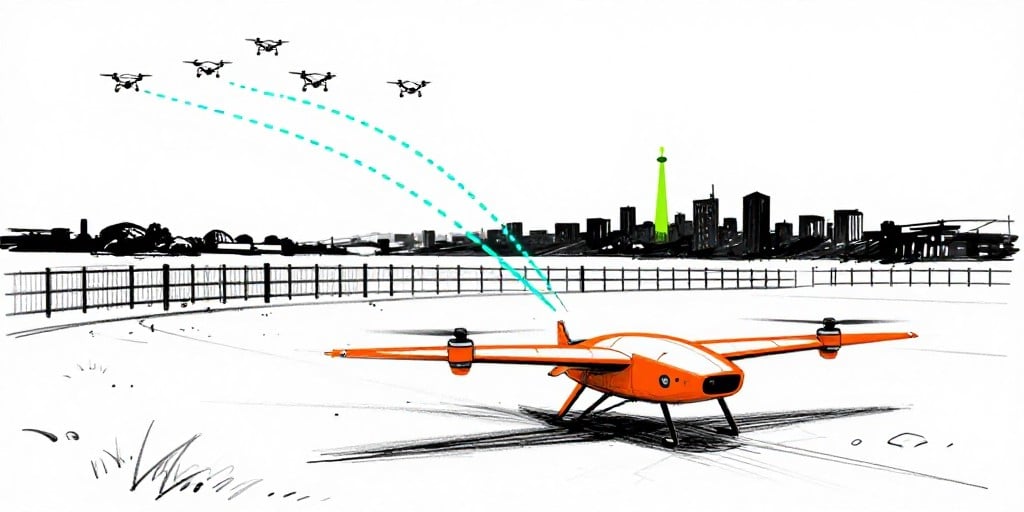
- Multi‑Drone‑Shot Capability – Integrated with a rapid‑fire rail launcher, the P‑1 can engage up to four targets within 10 seconds, a significant improvement over single‑shot kinetic interceptors.
- Software Integration – The interceptor is compatible with a cloud‑based command‑and‑control platform that aggregates radar, electro‑optical, and signal‑intelligence feeds, enabling coordinated engagements across a theater.
Although still in the experimental phase and lacking any procurement contracts, the P‑1 aligns with the Army’s focus on scalability, affordability, and interoperability. The use of a single‑use architecture simplifies logistics, reduces maintenance cycles, and mitigates risk of component failure during deployment.
Supply‑Chain and Manufacturing Considerations
The rapid deployment of counter‑drone systems hinges on the availability of high‑volume, precision‑manufactured components. Several trends influence the supply chain:
- Semiconductor Shortage Mitigation – Interceptors rely heavily on high‑speed FPGAs and MEMS gyros. Diversification of chip suppliers and the adoption of silicon‑photonic interconnects are being explored to reduce bottlenecks.
- Additive Manufacturing of Warheads – 3D‑printed composite warheads reduce lead time and allow for rapid iteration of warhead geometries, improving effectiveness against varied drone designs.
- Logistics Footprint Reduction – Modular launcher platforms that can be pre‑assembled and shipped as a single unit shorten deployment time, critical for border operations where rapid response is required.
Manufacturing processes are shifting toward lean production with real‑time quality monitoring using machine‑vision systems. The use of continuous manufacturing lines for interceptor casings and launcher components enhances throughput and reduces defect rates, meeting the Army’s demand for large‑scale deployment.
Market Positioning and Competitive Landscape
Pentagon funding for counter‑drone initiatives has surged, with recent allocations exceeding $5 billion for small UAS defense solutions. This influx of capital is driving a competitive environment where firms must differentiate on cost, performance, and integration capability.
- Teledyne Technologies leverages its established detection and interceptor portfolio, positioning the P‑1 as a cost‑effective, autonomous solution.
- Emerging Startups focus on directed‑energy weapons, offering high‑speed engagement but facing higher developmental risk and regulatory hurdles.
- Established Defense Contractors are optimizing existing kinetic systems for rapid production, emphasizing proven reliability over innovative features.
The Army’s preference for layered defense—combining radar, jamming, kinetic, and laser systems—means that vendors must offer interoperable solutions that can be seamlessly integrated into a unified C2 architecture. The P‑1’s compatibility with Teledyne’s existing software platform could provide a strategic advantage in securing future contracts.
Conclusion
The Army’s counter‑drone exercise demonstrates a clear trajectory toward affordable, scalable, and technologically sophisticated defensive capabilities. Teledyne Technologies’ development of the P‑1 interceptor aligns with the Army’s emerging requirements for autonomous, multi‑target engagement at a low cost. As the defense market evolves, companies that can navigate supply‑chain constraints, deliver rapid manufacturability, and integrate seamlessly into multi‑layered defense architectures will likely secure the substantial contracts that accompany the Pentagon’s expanded counter‑drone budget.