
Corporate Overview
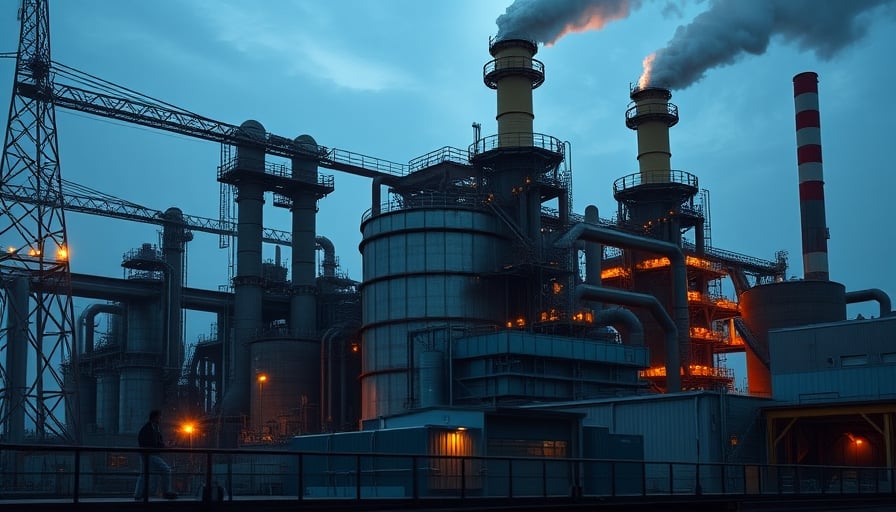
ArcelorMittal SA, the world’s largest steel producer, announced that its Kryvyi Rih steel plant in Ukraine will suspend one of its production lines during the second quarter of 2024. The announcement comes amid mounting regulatory and operational pressures that are reshaping the company’s regional footprint. While the plant remains a significant contributor to the group’s output, the decision signals a strategic recalibration driven by external constraints and cost‑structure challenges.
Regulatory Headwinds
EU Carbon Border Adjustment Mechanism (CBAM)
The European Union’s recently implemented Carbon Border Adjustment Mechanism (CBAM) imposes a carbon pricing fee on imports of high‑emission goods, including steel. Ukrainian products, which largely fall under the “high‑emission” category, face a tariff of up to €35 per tonne. For ArcelorMittal’s Kryvyi Rih unit, this translates into an estimated €40‑€60 million loss of competitive advantage in the EU market. The CBAM’s effect is twofold:
- Market Access Reduction – Export volumes to EU member states have already declined by 12 % year‑on‑year, with projections suggesting further contraction if the tariff remains unchanged.
- Margin Compression – The additional cost erodes gross margins, which historically hovered around 13 % for the Kryvyi Rih plant.
Implications for Corporate Strategy
ArcelorMittal’s exposure to the EU market is substantial; the Kryvyi Rih plant accounts for roughly 8 % of the group’s total European sales. The CBAM’s long‑term viability raises questions about the sustainability of continued investment in Ukrainian production assets. The company may need to re‑evaluate its regional portfolio, potentially diverting capital to lower‑emission facilities or pursuing technology upgrades to qualify for CBAM rebates.
Energy Cost Shock
Impact of Energy Infrastructure Attacks
The Kryvyi Rih plant relies on a dedicated power substation that has been targeted in a series of recent cyber‑physical attacks. These incidents have led to:
- Increased Backup Generators Use – Fuel costs for diesel generators have surged by 18 % since the first attack in Q1 2024.
- Unreliable Grid Supply – Average outage duration has doubled, forcing production curtailments and reducing throughput by 7 % compared to 2023 levels.
- Regulatory Scrutiny – The Ukrainian Ministry of Energy has imposed stricter compliance requirements, adding an estimated €5 million in compliance costs per annum.
Economic Viability
Electricity prices in Ukraine are already among the highest in the region, with average industrial rates exceeding €0.10 per kWh. The combination of higher input costs and intermittent supply has inflated operating expenses by approximately 12 %. For a unit that operates at marginal capacity, even a modest cost increase can render it economically unviable.
Competitive Dynamics
Industry Position
ArcelorMittal’s Kryvyi Rih plant has historically leveraged its proximity to raw material sources and relatively low labor costs. However, the following trends are reshaping its competitive landscape:
- Shift Toward Low‑Carbon Steel – European buyers are increasingly favoring low‑carbon or recycled steel. The plant’s current processes lack the carbon‑reduction capabilities to meet this demand.
- Regional Consolidation – Competitors such as POSCO and Nippon Steel are investing in advanced direct‑reduction technologies, offering lower‑emission products that command premium prices.
- Supply Chain Fragmentation – Disruptions in global logistics have prompted customers to diversify suppliers, reducing concentration risk for ArcelorMittal but also diluting its market share.
Risk Assessment
- Regulatory Risk: Failure to adapt to CBAM requirements could trigger a permanent loss of EU market access.
- Operational Risk: Continued attacks on energy infrastructure may increase downtime and maintenance costs.
- Market Risk: The shift toward low‑carbon steel could erode demand for Kryvyi Rih’s products if the company cannot pivot quickly.
Financial Implications
A preliminary analysis suggests that suspending the production line will incur a short‑term cost reduction of approximately €12 million, largely due to lower electricity bills and decreased labor usage. However, the company anticipates a long‑term revenue decline of €18 million annually, reflecting lost market share and higher operating costs. Net present value (NPV) calculations, assuming a 10 % discount rate and a 5‑year horizon, indicate a negative NPV of €42 million, underscoring the necessity for strategic realignment.
Opportunities and Strategic Options
- Technology Upgrades – Investing in carbon‑capture or hydrogen‑based reduction could qualify the unit for CBAM rebates, restoring export viability.
- Diversification – Repurposing the plant for alternative metallurgical processes, such as steel recycling or specialty alloys, could tap new customer segments.
- Strategic Partnerships – Collaborating with European firms on joint ventures may facilitate access to low‑carbon markets and shared risk.
Conclusion
ArcelorMittal’s decision to halt a production line at its Kryvyi Rih plant is symptomatic of a broader set of challenges facing the steel industry in an era of stringent environmental regulation and geopolitical volatility. While the move mitigates immediate operational risks, it also highlights systemic vulnerabilities that could threaten long‑term competitiveness. Stakeholders must closely monitor regulatory developments, energy security, and technological innovation to navigate this complex landscape successfully.