
ArcelorMittal: Expanding Capacity and Strengthening Financial Position in the First Quarter of 2026
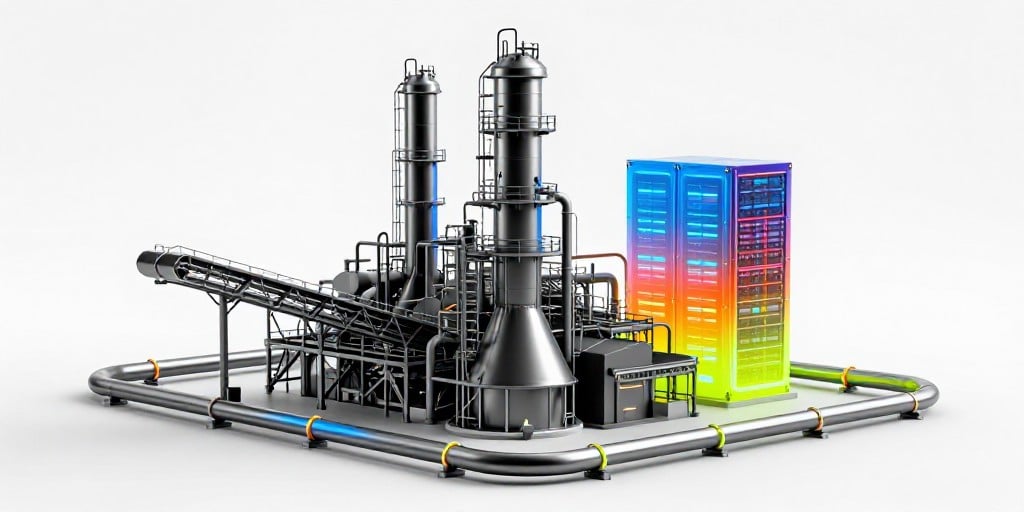
ArcelorMittal, the world’s largest steel producer, reported a series of developments across its operations and financial performance during the period ending March 2026. The company’s quarterly earnings call highlighted a continuation of its capacity‑expansion strategy, with new seamless and welded plant additions scheduled to increase overall output. Management emphasized that the expansion of welded capacity is expected to open opportunities in data‑centre, water‑treatment, construction and HVAC markets, while seamless production remains a core focus.
Capacity Expansion Strategy
The company’s ongoing expansion plan is anchored in the deployment of both seamless and welded production lines. New seamless units continue to underpin ArcelorMittal’s core high‑quality steel offerings, while welded lines are being added to meet growing demand in several emerging application sectors. In particular, welded steel products are projected to drive growth in data‑centre infrastructure, water‑treatment facilities, construction projects and HVAC systems. This diversification aligns with broader trends toward resilient infrastructure and digital transformation, positioning the firm to capture value across multiple high‑growth sectors.
Key highlights:
- New seamless capacity remains a core focus, reinforcing the company’s leadership in high‑strength, high‑quality steel.
- Welded capacity additions will unlock opportunities in data‑centre, water‑treatment, construction and HVAC markets.
- The expansion is scheduled to increase overall output, supporting both domestic and international market demand.
Financial Performance
Financially, ArcelorMittal recorded modest revenue growth for the year, driven in part by a stable domestic market and a solid export mix. Management noted that the company’s gross margins had improved, a trend that is expected to support further scaling of the new capacity.
Revenue and Margin Dynamics
- Revenue growth was modest but steady, supported by a resilient domestic steel market and diversified export portfolio.
- Gross margins improved, reflecting efficiencies in production and a favourable shift in the product mix toward higher‑margin items.
- EBITDA and profit before tax rose, with margin expansion attributed to operational efficiencies and a shift in the product mix towards higher‑margin items.
These financial metrics suggest that the company’s strategic focus on high‑margin products and operational efficiencies is translating into tangible profitability improvements.
Capital Structure and Funding
ArcelorMittal also addressed its capital structure, confirming that proceeds from a recent initial public offering have been used primarily for capacity build‑outs, working‑capital support and general corporate purposes. The company indicated that debt levels are expected to rise in the short term due to the new projects but will be managed through disciplined utilisation of cash flows.
Key points:
- Proceeds from IPO are allocated to capacity expansion, working capital, and corporate purposes.
- Short‑term debt increase is anticipated as a consequence of the new projects.
- Cash‑flow discipline is expected to manage debt levels and support sustainable growth.
Outlook for the Next Financial Year
ArcelorMittal reiterated its outlook for the following financial year, projecting continued revenue growth and margin improvement, while maintaining a focus on cost control and supply‑chain resilience amid geopolitical and commodity‑price volatility. The management’s commentary suggested a cautious but optimistic view of future performance, underscoring the company’s commitment to sustaining profitability through strategic investment and operational discipline.
- Revenue growth is expected to continue, supported by the new capacity and diversified product mix.
- Margin improvement is projected, driven by operational efficiencies and a higher‑margin product focus.
- Cost control remains a priority, particularly in the face of geopolitical uncertainties and volatile commodity prices.
- Supply‑chain resilience is being strengthened to mitigate risks associated with global disruptions.
Implications for the Steel Sector
ArcelorMittal’s continued investment in both seamless and welded capacities reflects a broader industry shift toward flexibility and responsiveness to evolving market demands. The company’s focus on high‑margin products and operational efficiency provides a blueprint for peers seeking to navigate the challenging macroeconomic environment. By aligning its capacity expansion with emerging high‑growth sectors such as data‑centre infrastructure and water‑treatment, ArcelorMittal is positioning itself to capture value that transcends traditional steel applications.