Corporate News: ArcelorMittal’s Strategic Stand‑off in Ukraine
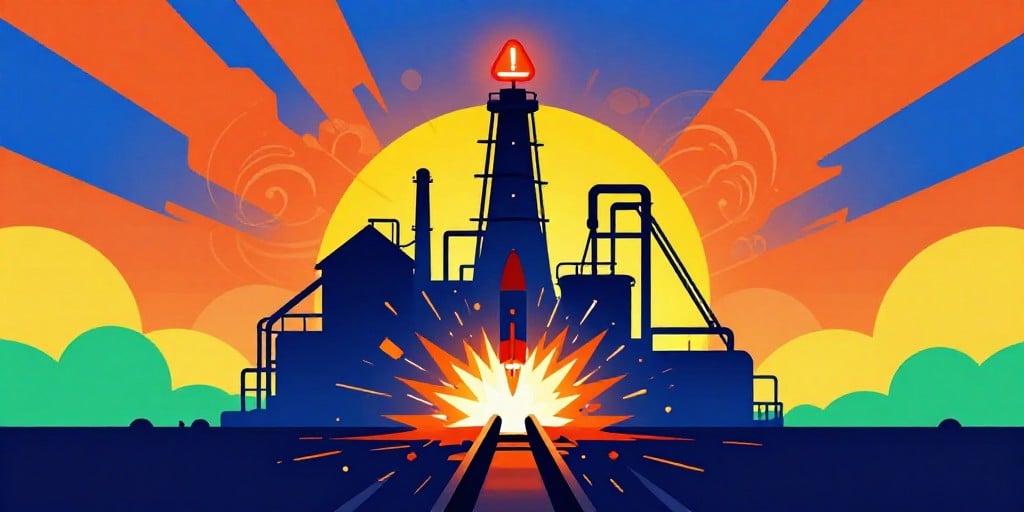
ArcelorMittal announced on 25 September that it cannot resume operations at its Ukrainian subsidiary, ArcelorMittal Kryvyi Rih, after a series of missile strikes that have inflicted extensive physical damage, caused fatalities and injuries, and disrupted production. The company confirmed that four strikes in the preceding five weeks resulted in five deaths and 17 injured employees, one of whom remains in critical condition. In response, ArcelorMittal has communicated with the Ukrainian government that the plant cannot be restarted safely or sustainably. Instead, the firm will focus on preserving existing infrastructure with the aim of reassessing production when peace is restored.
Immediate Operational Impact
- Production Halt: All steel manufacturing activities at Kryvyi Rih are suspended, eliminating an estimated 15–20 % of ArcelorMittal’s total output capacity.
- Asset Degradation: Structural assessments indicate severe compromise of rolling mills, blast furnaces, and ancillary support systems.
- Human Capital: Loss of workforce and potential long‑term attrition threaten skill retention and future operational readiness.
Financial Consequences
ArcelorMittal has disclosed a non‑cash impairment charge of roughly $1 billion, primarily reflecting the loss in value of property, plant, and equipment (PP&E) at Kryvyi Rih. This charge is expected to reduce earnings before interest, taxes, depreciation, and amortization (EBITDA) by an additional 6–8 % for the fiscal year 2026. The company has already committed $700 million in financial support to sustain Ukrainian operations during the conflict, a figure that underscores the scale of its contingency planning.
| Item | Impact |
|---|---|
| PP&E impairment | $1 billion |
| Cash support | $700 million |
| Revenue loss (2026 estimate) | 15–20 % of Ukrainian contribution |
Regulatory and Legal Context
- International Sanctions: Ukraine’s defense industry is subject to a complex web of sanctions. ArcelorMittal’s decision to suspend operations aligns with the need to avoid inadvertent violations while ensuring compliance with EU and US export controls.
- Repatriation of Equipment: The company must navigate legal frameworks governing the transfer or repatriation of damaged machinery, potentially incurring additional costs.
- Insurance Coverage: Pending claims on industrial property insurance may be complicated by the “war risk” clause, often excluded in standard policies.
Competitive Dynamics
ArcelorMittal faces a dual threat from regional competitors and global steel producers:
- Regional Players: Ukrainian steelmaker Kharkiv Steel has pivoted to low‑carbon steel, positioning itself as a niche supplier for defense and infrastructure projects.
- Global Rivals: Companies such as POSCO and JFE Holdings are expanding their Eurasian footprint, leveraging lower labor costs and advanced technology to capture market share left by disrupted operations.
The loss of Kryvyi Rih’s capacity provides competitors an opening to capture market segments that were previously under ArcelorMittal’s purview, especially in high‑strength alloy production.
Uncovered Trends and Potential Opportunities
| Trend | Insight |
|---|---|
| Shift to Digital Asset Management | The destruction of physical assets has accelerated investment in digital twins, enabling remote monitoring and predictive maintenance, potentially reducing future operational costs. |
| Decarbonization Drive | The halt presents an opportunity to retrofit Kryvyi Rih with green technologies (e.g., hydrogen-based direct reduction), aligning with EU’s steel decarbonization roadmap. |
| Supply Chain Resilience | ArcelorMittal can diversify its raw material sourcing from alternative regions, mitigating future geopolitical risk. |
| Talent Migration | The exodus of skilled workers may be offset by the company’s investment in training programs, creating a long‑term competitive advantage in workforce development. |
Risks that May Be Overlooked
- Prolonged Conflict: An extended war could erode the value of remaining infrastructure to a level where reconstruction is economically unviable.
- Reputational Damage: Perceived reluctance to resume operations may trigger stakeholder backlash, especially among investors prioritizing ESG metrics.
- Currency Volatility: The hryvnia’s depreciation could inflate repatriation costs and impact the company’s financial reporting.
Potential Pathways Forward
- Partial Re‑activation: Restarting critical subsections (e.g., scrap recycling) to maintain cash flow while full-scale production remains suspended.
- Strategic Partnerships: Forming joint ventures with local firms to share the burden of reconstruction and navigate regulatory hurdles.
- Capital Allocation: Redirecting capital towards high‑yield, low‑risk assets in other regions to offset the loss in EBITDA.
Market Reaction
Following the announcement, ArcelorMittal’s share price experienced a modest decline of 1.8 % within the first trading session, reflecting investor anxiety regarding the valuation hit and operational uncertainty. Analysts suggest that long‑term market participants will scrutinize the company’s ability to manage geopolitical risk and maintain its position as a global steel leader.
The situation underscores the intricate interplay between geopolitical events, regulatory frameworks, and corporate strategy. As ArcelorMittal navigates these turbulent waters, its decisions will not only shape its own future but also signal broader trends in how multinational steel producers confront and adapt to conflict‑affected operational landscapes.