ArcelorMittal’s Low‑Carbon Initiative: Cost Pass‑Through Uncertainties Amid Sector‑Wide Rally
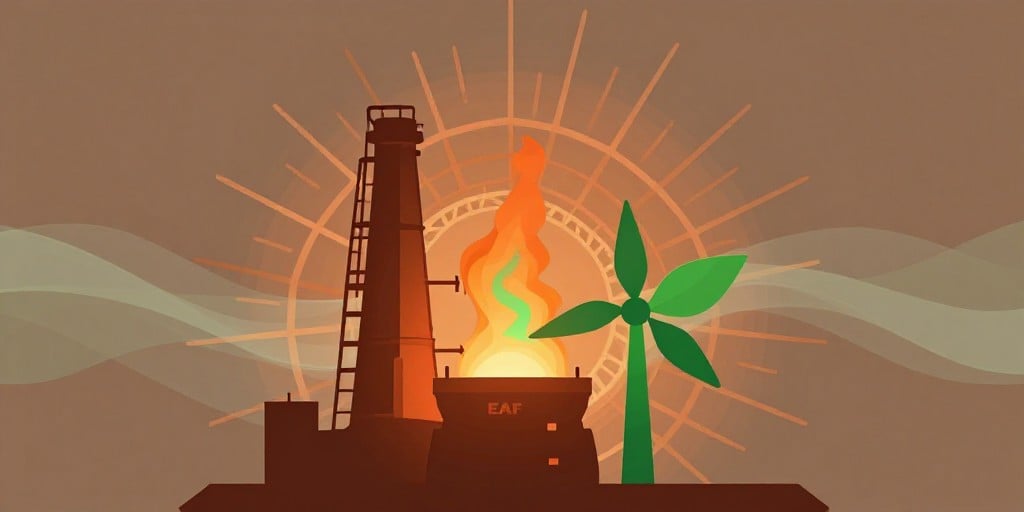
ArcelorMittal’s recently announced flagship low‑carbon plant, slated to employ an electric‑arc furnace (EAF), has entered the market amid a wave of optimism surrounding the steel sector’s rebound. Yet, the company has admitted that it has no clear visibility on whether the additional capital and operating outlays associated with the EAF can be effectively transferred to end users. This ambiguity poses a risk to the pricing and profitability of the company’s green steel offerings, even as broader market conditions appear favorable.
The Underlying Cost Structure of the EAF
Electric‑arc furnaces rely on substantial electrical inputs, typically sourced from renewable or low‑carbon grids, to melt scrap steel and produce a reduced‑carbon product. While the initial capital expenditure for an EAF can be lower than that for a traditional blast‑furnace route, the ongoing operational cost hinges on electricity prices, scrap availability, and auxiliary consumables such as inert gases. ArcelorMittal’s transparency about the “uncertain ability to pass on additional costs” signals that the company anticipates price elasticity in its customer base, especially within the automotive and construction sectors that are increasingly scrutinizing material footprints.
From a financial standpoint, the incremental cost of the EAF is reflected in the company’s operating margin forecasts. If the firm cannot charge a premium for the low‑carbon product, it risks eroding the margin uplift that green steel is expected to deliver. This scenario could compress the company’s EBITDA contribution margin, particularly in a market that is still grappling with fluctuating raw‑material prices.
Regulatory and Market Dynamics
Regulatory frameworks across the European Union are tightening emissions limits for the steel industry, with the European Green Deal and the Carbon Border Adjustment Mechanism (CBAM) poised to impose additional compliance costs. A low‑carbon product that meets the CBAM thresholds may command a pricing advantage. However, the uncertainty highlighted by ArcelorMittal suggests that the market may not be ready to absorb the extra cost of such compliance, especially if competitors adopt alternative low‑carbon technologies that offer a more favorable cost‑benefit profile.
In the automotive sector, demand has been on an upward trajectory thanks to electrification mandates and a surge in vehicle production. Construction demand, too, has shown resilience, buoyed by infrastructure renewal programmes. These sectoral recoveries contribute to a positive supply‑demand balance for steel, thereby supporting a general price lift across the industry. Nevertheless, the extent to which ArcelorMittal’s low‑carbon product can benefit from this uplift depends on its pricing strategy, which, as noted, is currently opaque.
Competitive Landscape
ArcelorMittal is not alone in pursuing low‑carbon steel. Competitors such as POSCO, Nucor, and Thyssenkrupp are investing heavily in EAF technology and hydrogen‑based direct‑reduction routes. These rivals may have more established customer agreements that incorporate premium pricing clauses for green products. If ArcelorMittal cannot secure similar contractual terms, it could lose market share to firms better positioned to monetize the environmental premium.
Additionally, the capital intensity of EAF projects has attracted investment from financial institutions that are increasingly wary of high environmental, social, and governance (ESG) risk profiles. This could affect the cost of capital for ArcelorMittal’s green steel initiatives, further complicating the pass‑through of costs.
Investor Sentiment and Risk Assessment
Despite the sector’s recent gains, ArcelorMittal’s shares moved only modestly in line with broader positive sentiment. Analysts interpret this subdued reaction as an acknowledgment of the underlying pricing uncertainty. Investors are thus monitoring the company’s cost‑management strategy closely, specifically:
- Capital Allocation – How the firm prioritizes EAF deployment relative to conventional blast‑furnace operations.
- Pricing Agreements – Whether the company has secured long‑term contracts that allow a green‑steel premium.
- Operational Efficiency – The projected energy‑to‑steel ratio for the new furnace and its impact on overall unit costs.
Financial analysts suggest that a scenario where the EAF’s added cost is fully absorbed by customers could yield a 1–2% uplift in operating margin. Conversely, a scenario where the firm bears the cost would compress margins by a similar margin, potentially eroding the competitive advantage that green steel is supposed to confer.
Conclusion
ArcelorMittal’s venture into electric‑arc furnace technology represents a critical step toward decarbonizing the steel sector. Yet, the company’s candid admission of uncertainty regarding cost pass‑through highlights a significant risk that may dampen the projected profitability of its green steel products. The broader market’s favorable trajectory—driven by automotive and construction demand—offers a cushion, but it also raises the stakes for firms that fail to secure a clear pricing strategy. Investors, regulators, and industry participants will watch closely to see whether ArcelorMittal can navigate the regulatory, operational, and competitive hurdles to capitalize on the low‑carbon steel opportunity.