Corporate Update: Advancement in Carbon Capture at ArcelorMittal’s Ghent Plant
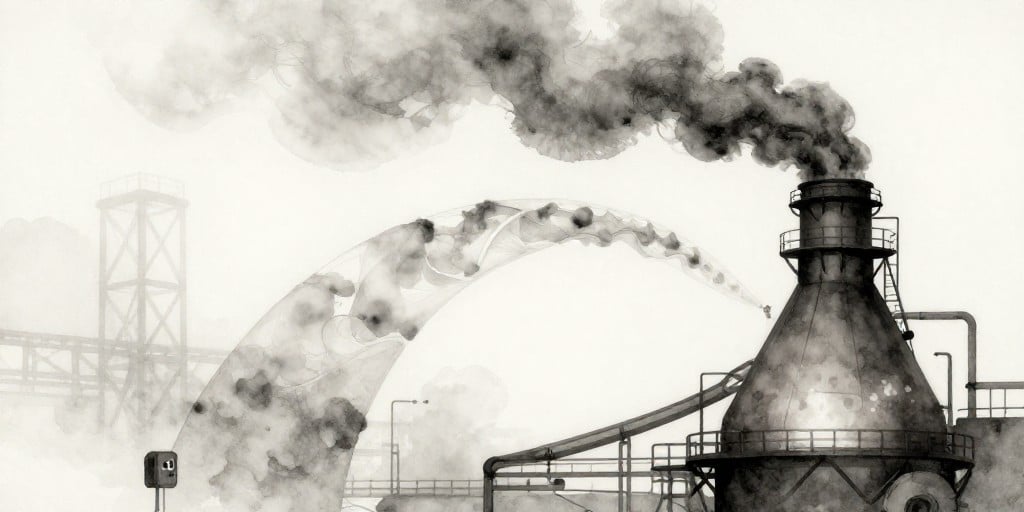
ArcelorMittal has announced a significant milestone in its ongoing effort to reduce carbon emissions from steelmaking. In a collaborative initiative involving Mitsubishi Heavy Industries, BHP, and Mitsubishi Development Pty Ltd, the company successfully captured more than 90 % of carbon dioxide (CO₂) from blast‑furnace gas at its integrated steel plant in Ghent, Belgium. The trial, which spanned over 4,500 operational hours, demonstrated the viability of the Advanced KM Carbon Dioxide Removal (CDR) process under the challenging conditions typical of a commercial steelworks, where off‑gas contains dust, sulphur, and other contaminants.
Technical Validation and Economic Implications
The data obtained during the trial provide a robust evidence base for assessing the scalability of the Advanced KM CDR technology to full commercial application. If deployed across multiple points in the steelmaking process, the technology has the potential to lower CO₂ intensity by up to 25 % relative to current levels. Such a reduction would markedly advance the plant toward near‑zero emissions intensity, aligning with global decarbonisation targets and reinforcing ArcelorMittal’s commitment to environmental stewardship without compromising competitiveness.
Progression to Phase Two: Hot‑Strip‑Mill Reheating Furnace
Following the successful first phase, ArcelorMittal is progressing to a second stage that will apply the same capture technology to gases emanating from the hot‑strip‑mill reheating furnace. This environment presents a more dynamic flue‑gas profile, including rapid shifts in temperature and composition. The results from this subsequent test will be critical in determining how well the technology integrates across the wider plant and whether it can maintain high capture efficiency in varying operational conditions.
Strategic Context and Industry Significance
The positive outcome of the trial has bolstered confidence among partners that carbon capture can be applied to the most demanding steelmaking route—blast‑furnace technology—which remains the dominant method worldwide for producing crude steel. By validating the technology in a real‑world, high‑contamination setting, the collaboration demonstrates that decarbonisation is not merely a theoretical possibility but an achievable engineering solution.
ArcelorMittal’s continued investment in research and collaboration with leading technology providers underscores its strategic priority to reduce the environmental footprint of its operations. This approach is consistent with broader industry trends, where integrated solutions that combine advanced capture technologies with process optimization are increasingly viewed as essential to achieving net‑zero objectives.
Competitive Positioning and Market Drivers
From a competitive standpoint, the successful deployment of the Advanced KM CDR process positions ArcelorMittal favorably in markets where regulatory pressure and consumer expectations increasingly favor low‑carbon products. The ability to demonstrate tangible reductions in CO₂ intensity may provide a differentiator in bidding for high‑value contracts, particularly in sectors such as automotive, construction, and infrastructure, which are progressively mandating lower lifecycle emissions from their suppliers.
Moreover, the partnership model exemplifies a growing industry trend toward collaborative innovation, where OEMs, material suppliers, and technology firms co‑develop solutions that address systemic challenges. Such alliances not only spread risk but also accelerate technology maturation, creating economies of scale that can lower unit costs and enhance deployment speed.
Broader Economic Trends and Policy Alignment
The trial aligns with macro‑economic trends that emphasize the decarbonisation of heavy industry as a key component of climate policy. Governments across the European Union and beyond are implementing carbon pricing mechanisms, emissions reduction mandates, and incentives for low‑carbon technologies. By proactively developing and validating a high‑efficiency CO₂ capture solution, ArcelorMittal positions itself to meet future regulatory requirements and to take advantage of potential financial incentives, such as grants, tax credits, and carbon offset markets.
Conclusion
ArcelorMittal’s recent achievement in capturing 90 % of CO₂ from blast‑furnace gas represents a critical step toward the broader decarbonisation of steel production. The ongoing second‑phase trial on hot‑strip‑mill reheating gases will further validate the technology’s adaptability and scalability. Through strategic partnerships, rigorous research, and a focus on fundamental business principles—efficiency, competitiveness, and compliance—ArcelorMittal is reinforcing its leadership position in the steel industry while contributing to the transition toward a low‑carbon economy.