
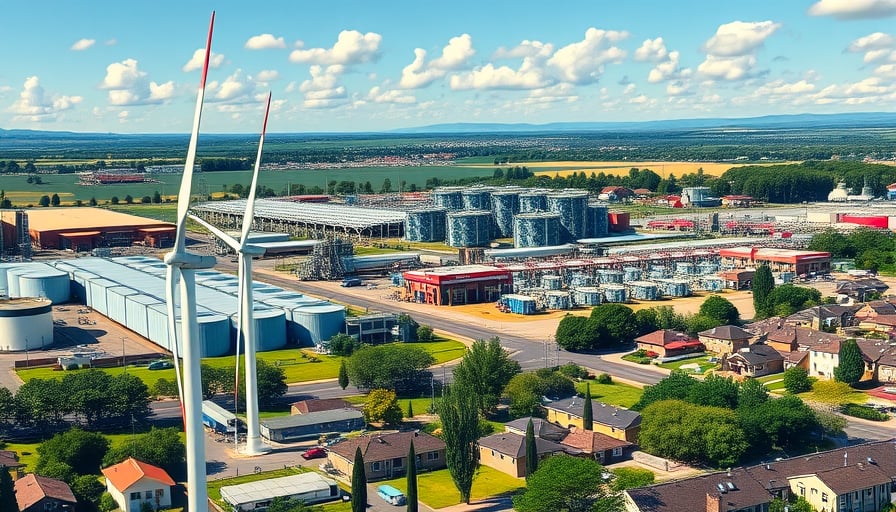
ArcelorMittal Expands Renewable Energy Footprint in India
ArcelorMittal SA announced on 22 December 2025 that it will add three new solar and wind installations in India, with a combined nominal capacity of 1 GW. This expansion will increase the company’s renewable output in the country to roughly 2 GW and raise its global renewable portfolio to about 3.3 GW.
The development aligns with ArcelorMittal’s strategy to diversify its energy mix and advance its sustainability objectives. By incorporating additional renewable sources, the steel producer aims to reduce its carbon intensity, meet evolving regulatory requirements, and support the transition toward a low‑carbon economy.
Context within the Steel and Energy Sectors
ArcelorMittal’s move reflects a broader trend among industrial firms seeking to decarbonise their operations. The steel industry, traditionally associated with high greenhouse‑gas emissions, is increasingly turning to renewable power to offset the energy intensity of blast‑furnace and electric arc processes. The addition of wind and solar capacity in India—where the government has set ambitious renewable targets—positions the company favorably to tap incentives, secure power purchase agreements, and leverage India’s rapidly growing renewable market.
Competitive Positioning
ArcelorMittal is not alone in this pursuit. Competitors such as Nippon Steel and POSCO are investing in on‑site renewable generation to secure supply and mitigate fuel price volatility. By expanding its renewable base to 2 GW in India, ArcelorMittal strengthens its competitive advantage in markets where energy costs and environmental compliance are increasingly influential in procurement decisions.
Economic Drivers and Policy Environment
India’s renewable energy policy framework, characterized by feed‑in tariffs, tax incentives, and a national target of 450 GW of renewable capacity by 2030, provides a conducive environment for such investments. The company’s projects are likely to benefit from these incentives, enhancing project economics and supporting long‑term cost stability. Furthermore, the global push for decarbonisation and the growing demand for steel in emerging markets amplify the economic rationale for energy diversification.
Conclusion
ArcelorMittal’s expansion of renewable capacity in India underscores the intersection of industrial decarbonisation and strategic energy diversification. By adding 1 GW of wind and solar generation, the company not only advances its sustainability agenda but also fortifies its competitive position in an industry under increasing regulatory scrutiny and market pressure for cleaner operations. The initiative exemplifies how traditional manufacturing firms can adapt to evolving economic and environmental imperatives through targeted investments in renewable energy.