Apple’s Fold‑Screen Foray: A Modest Upswing Amid a Volatile Tech Landscape
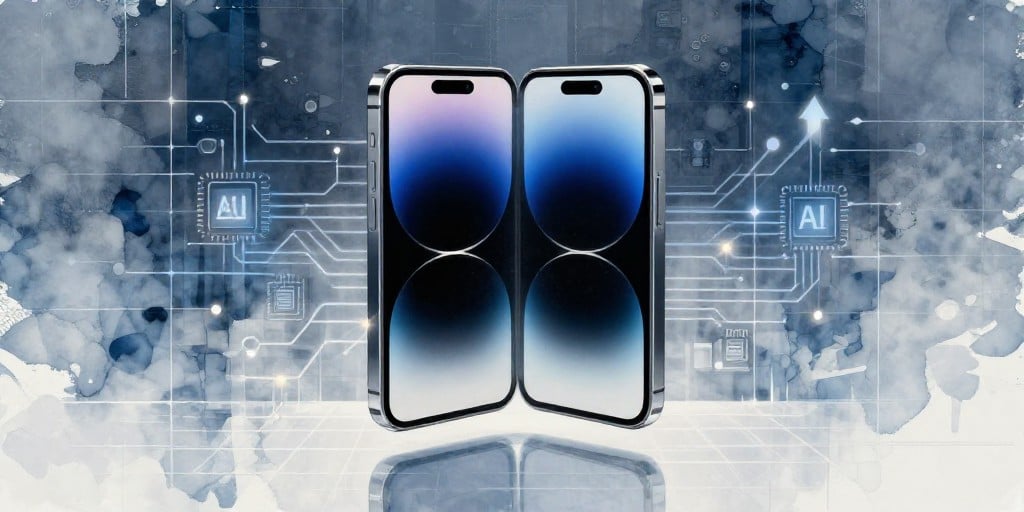
Apple Inc. experienced a brief uptick in share price following the October 16 launch of the iPhone Duo, its inaugural fold‑screen smartphone. The device, positioned at the premium end of the market, attracted an immediate surge of pre‑orders that temporarily overloaded Apple’s e‑commerce platform. While the short‑term reaction was largely positive, analysts caution that the product is tailored for a niche, high‑margin segment rather than for mass adoption.
1. Product‑Launch Dynamics and Investor Sentiment
| Metric | Detail | Interpretation |
|---|---|---|
| Launch Date | 16 Oct | Coincided with a period of heightened media focus on fold‑screen technology |
| Price Point | Premium tier | Targets affluent consumers and early‑adopter technophiles |
| Pre‑order Volume | Significant spike | Indicates strong brand pull but may plateau quickly |
| Website Traffic | Brief surge | Reflects high demand but also operational strain |
Apple’s decision to price the iPhone Duo at the high end reflects its ongoing strategy to differentiate through premium design and exclusive features. By contrast, competitors such as Samsung and Xiaomi have opted for a broader price spectrum in their fold‑screen lineup, thereby capturing a wider consumer base. Consequently, Apple’s incremental revenue from this new line is expected to be modest relative to its overall sales mix.
2. Market Performance in Context
During the same period, Apple’s broader performance contrasted sharply with the broader market. Apple was the only U.S. company with a market capitalisation exceeding one trillion dollars to record a weekly gain, while the Philadelphia Semiconductor Index fell more than 11 percent—its steepest decline since April 2025. This divergence underscores the following points:
- AI‑Related Sell‑Off: The semiconductor index’s collapse reflects a pronounced sell‑off in AI‑hardware stocks, driven by tightening capital availability and volatility in the AI chip sector.
- Apple’s Resilience: Apple’s relative stability suggests that its high‑margin product strategy can weather sector‑specific downturns.
3. Strategic Focus on Artificial Intelligence
Apple’s leadership continues to emphasise the long‑term value of artificial intelligence. CEO Tim Cook expressed confidence that investor apprehensions surrounding AI will diminish over time. This optimism is anchored in several strategic pillars:
| Pillar | Rationale | Impact |
|---|---|---|
| High‑End Product Differentiation | Maintains brand prestige and price elasticity | Sustains margins even in a volatile market |
| Incremental Revenue Growth | Focus on recurring services and accessories | Mitigates risk of single‑product fluctuations |
| Capital Allocation Discipline | Prioritises R&D over speculative ventures | Reduces exposure to AI‑hardware volatility |
Cook’s remarks align with a broader industry shift that recognises AI as a long‑term growth engine rather than a short‑term revenue driver. Apple’s approach—integrating AI into its ecosystem incrementally while preserving its premium positioning—offers a counter‑example to the speculative fervour that has characterised the AI hardware sector.
4. Patterns Across the Technology Landscape
The events surrounding Apple’s iPhone Duo launch highlight several overarching patterns:
- Premiumisation vs. Mass Adoption: Companies are increasingly segmenting the market, offering high‑end devices for niche consumers while leaving mass adoption to lower‑priced competitors.
- Sector‑Specific Volatility: AI‑related stocks are more susceptible to rapid capital re‑allocation, whereas established hardware players with diversified revenue streams show resilience.
- Strategic Differentiation: Brands that can couple cutting‑edge technology (fold‑screen, AI) with a strong premium ecosystem tend to weather market swings better.
5. Forward‑Looking Analysis
- Product Lifecycle: The iPhone Duo is likely to serve as a flagship model, with incremental updates and accessories designed to keep the ecosystem vibrant.
- AI Integration: Apple’s cautious stance on AI hardware suggests a focus on software‑driven AI services (Siri, on‑device processing) rather than direct competition in chip manufacturing.
- Capital Markets: Investors should monitor Apple’s cash flow from services and recurring revenue streams, which can buffer against downturns in hardware sales.
In conclusion, Apple’s modest share price rise following its fold‑screen launch illustrates a broader strategic narrative: leveraging premium product differentiation while maintaining disciplined capital allocation, even amid a sector experiencing heightened volatility. This balanced approach positions Apple to navigate the evolving technology landscape, sustaining long‑term growth without compromising its brand ethos.