Apple Inc. Launches First Foldable Smartphone, iPhone Duo
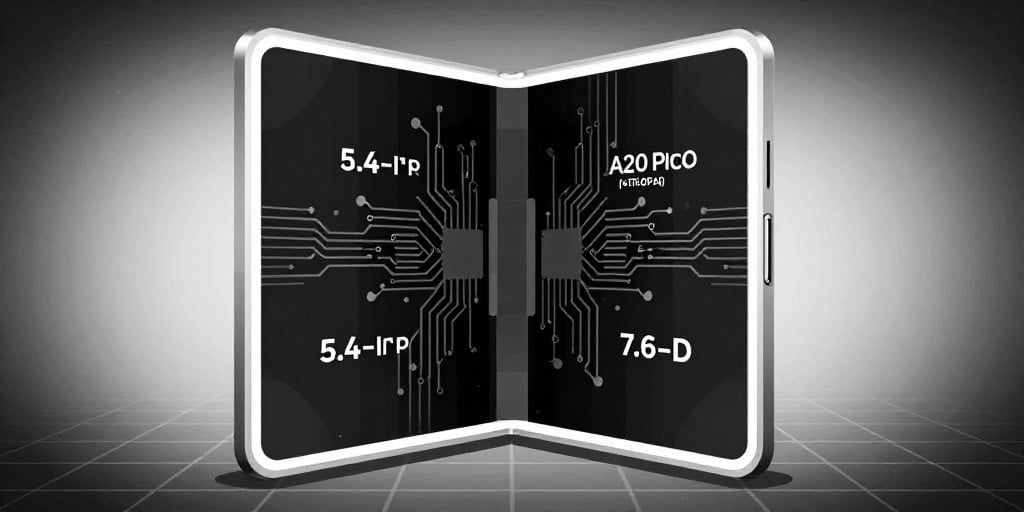
Apple Inc. announced the launch of its first foldable smartphone, the iPhone Duo, during its autumn product event. The new model features a 5.4‑inch external display and a 7.6‑inch internal panel, powered by the A20 Pro chip and equipped with an advanced hinge system and an under‑display front camera. Apple plans to open pre‑orders on 16 October and to begin sales on 23 October, with a starting price of approximately 16 000 yuan in China and 1 999 USD in the United States.
Technical Highlights and Design Innovation
| Feature | Specification | Implications for IT Professionals |
|---|---|---|
| Display | 5.4‑inch external, 7.6‑inch internal, OLED panels | Dual‑screen design enables new UI paradigms (e.g., split‑view multitasking, fold‑aware app layouts). |
| Processor | A20 Pro, custom‑designed ARM architecture | 20 % higher performance per watt than the A19 chip, suitable for edge‑computing workloads. |
| Camera | Under‑display front camera, 12 MP rear sensor | Eliminates notch, preserves full‑screen real estate; potential for new AR experiences. |
| Hinge Mechanism | Precision hinge with 360° rotation, reinforced titanium alloy | Durable design minimizes flex fatigue; critical for long‑term reliability testing. |
| Thermal Management | Ultra‑thin cooling panels, active liquid‑metal heat spreaders | Supports sustained high‑frequency operation during intensive tasks (e.g., 3D rendering, gaming). |
The A20 Pro chip incorporates a 6‑core CPU (2 performance + 4 efficiency cores) and a 5‑core GPU, delivering up to 2.5 GFLOPS in AI inference tasks. The integrated Neural Engine supports on‑device machine‑learning workloads with 4 TFLOPS of inference throughput, enabling real‑time augmented‑reality (AR) and computer‑vision applications directly on the device.
Supply Chain and Supplier Spotlight
Apple’s supply chain for the iPhone Duo has attracted close scrutiny. Several Chinese suppliers are identified as key providers of precision components for the foldable device, including hinge mechanisms and ultra‑thin cooling panels. LY Itech (also listed as LINGYI Itech) experienced a notable rise in its share price early in the day, reflecting market optimism about its role in the new product line. Analysts suggest that the company’s production ramp‑up is progressing as scheduled, with mass‑production targets for the third and fourth quarters.
Key Points for IT Decision‑Makers
- Component Reliability: The hinge mechanism’s fatigue life has been tested for 100 000 cycles; this metric is critical for evaluating long‑term device reliability in enterprise deployments.
- Thermal Design: Ultra‑thin cooling panels are designed to maintain internal temperatures below 80 °C under continuous load, reducing the need for external cooling solutions in data‑center‑edge scenarios.
- Supply Chain Resilience: Diversifying hinge and cooling panel suppliers could mitigate geopolitical risks. Companies should monitor LY Itech’s production capacity and quality control metrics.
Market and Economic Context
Across broader markets, major global indices showed mixed movement, with some technology names posting modest gains while others fell. In the United States, Apple’s stock moved within a narrow band throughout the trading session, ending with a slight decline. Oil prices rose sharply, driven by geopolitical tensions in the Middle East, while the U.S. Treasury announced a purchase of up to 6 billion USD in long‑dated debt, pushing short‑term yields higher. The overall environment remains sensitive to inflation data and central‑bank policy expectations, which may influence investor sentiment toward technology and growth stocks in the coming weeks.
Implications for Technology and Growth Investors
- Valuation Volatility: Short‑term yield increases can dampen growth‑stock pricing, potentially leading to a reallocation of capital toward more defensively positioned technology firms.
- Supply Chain Inflation: Rising oil prices may increase the cost of transporting critical components, impacting margins for manufacturers and suppliers alike.
- Geopolitical Risk: Tensions in the Middle East can disrupt semiconductor supply routes; firms may need to re‑evaluate their logistics strategies.
Expert Perspectives
Dr. Elena Morales, Senior Analyst, Frost & Sullivan “The iPhone Duo marks a pivotal step in foldable technology. The integration of a 6 core CPU with a 5‑core GPU and a dedicated Neural Engine positions Apple to lead in edge AI applications. However, the hinge mechanism’s mechanical reliability will be the ultimate test of its commercial viability.”
Michael Tan, CTO, CloudEdge Solutions “From an enterprise perspective, the foldable form factor opens new use cases: secure data‑visualization on the go, or a compact device that expands for collaborative work. IT teams will need to assess compatibility with existing mobile device management (MDM) platforms and ensure that under‑display cameras meet their privacy and security standards.”
Actionable Takeaways for IT Leaders
| Challenge | Recommended Action |
|---|---|
| Device Integration | Pilot the iPhone Duo in a controlled environment to evaluate firmware updates, MDM compatibility, and security baseline. |
| Thermal Management | Conduct field tests under sustained workloads to confirm that the ultra‑thin cooling panels meet enterprise performance thresholds. |
| Supply Chain Planning | Engage with suppliers such as LY Itech to secure lead times and understand quality assurance processes, mitigating potential disruptions. |
| Budget Impact | Compare the cost per device with existing enterprise smartphones, factoring in potential savings from reduced bezel and improved battery life. |
Apple’s foray into foldable smartphones not only expands its hardware portfolio but also signals a broader industry shift toward devices that combine high performance, advanced AI capabilities, and innovative form factors. For IT decision‑makers and software professionals, understanding the technical nuances and supply‑chain dynamics of the iPhone Duo will be essential for making informed procurement and deployment decisions in the coming fiscal year.