
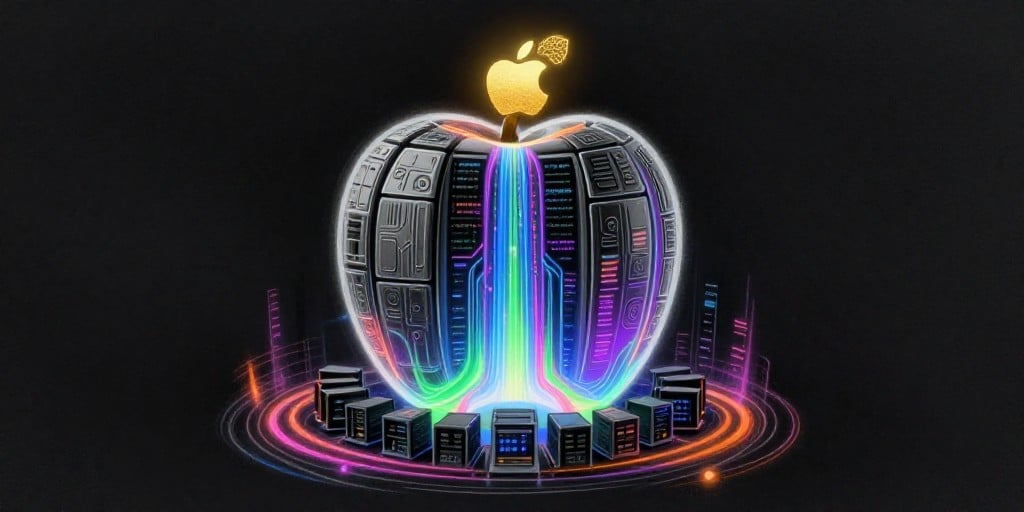
Apple Reclaims the Crown as the World’s Most Valuable Company
Apple Inc. has regained the distinction of being the most valuable company in the world after a decline in Nvidia’s shares, reflecting a market shift from high‑cost artificial‑intelligence (AI) infrastructure toward consumer‑centric growth. The technology giant’s share price rose modestly during Monday’s trading, pushing its market value to nearly five trillion dollars and surpassing Nvidia for the first time since early 2025.
A Strategic Shift Toward Leased AI Capacity
Analysts attribute Apple’s renewed valuation to its strategy of leasing AI compute resources rather than building expansive in‑house data‑center facilities. This approach has appealed to investors who are increasingly wary of the escalating costs associated with AI chip production and the capital‑intensive nature of constructing proprietary GPU farms. By leveraging external cloud providers for AI workloads, Apple can scale its machine‑learning capabilities while maintaining tighter control over capital expenditure and operating expenses.
Mixed Performance Across the Tech Sector
The broader technology sector exhibited a patchwork of outcomes. Major names such as Microsoft, Google and Meta posted gains, reinforcing their dominance in enterprise cloud services, search advertising and social media. In contrast, Nvidia experienced a notable decline, driven by concerns over its aggressive financing commitments for AI‑related projects and the high cost of expanding its GPU supply chain. This divergence has spotlighted memory‑chip makers and other data‑center infrastructure firms as the market reevaluates the balance between GPU demand and the rising cost of supporting hardware.
| Company | % Change (Mon) | Market Cap (Trillions) | Key Driver |
|---|---|---|---|
| Apple | +0.5 % | $4.95 | Lease‑based AI strategy |
| Nvidia | -2.8 % | $1.22 | Financing burden, supply constraints |
| Microsoft | +1.1 % | $2.55 | Cloud & AI services growth |
| Google (Alphabet) | +0.9 % | $1.73 | Advertising & AI integration |
| Meta | +0.7 % | $0.77 | Virtual‑reality & ad revenue |
Implications for Memory and Supply‑Chain Dynamics
Apple’s forthcoming earnings report, slated for Thursday, will shed light on the company’s exposure to global memory shortages that have led to pricing adjustments for its Mac and iPad lines. The company’s ability to navigate semiconductor supply constraints—particularly DRAM and NAND flash—will be a key metric for investors. Moreover, Apple’s capital‑allocation strategy, especially any moves toward shareholder returns such as share buybacks or dividends, will be scrutinized as part of the broader trend toward sustainable, consumer‑driven business models.
Market Pivot: From High‑Growth AI to Sustainable Consumer Models
The market’s attention appears to be pivoting from the high‑growth, high‑expense AI sector toward more sustainable, consumer‑driven business models. Apple, with its robust ecosystem, premium hardware strategy, and disciplined capital management, is positioned at the center of this transition. For IT decision‑makers and software professionals, the shift underscores the importance of evaluating the total cost of ownership for AI workloads, balancing on‑premise and cloud‑based solutions, and aligning supply‑chain resilience with product roadmap timelines.
In summary, Apple’s resurgence as the world’s most valuable company signals a broader realignment of investor sentiment. The narrative now favors companies that can marry cutting‑edge technology with efficient operational execution, thereby delivering consistent value to consumers and shareholders alike.