
Apollo Global Management’s Strategic Expansion into High‑Growth Infrastructure and Data‑Centre Sectors
Executive Summary
Apollo Global Management Inc. has amplified its presence in two high‑growth verticals—energy infrastructure and data‑centre technology—through a series of minority equity investments and asset acquisitions. The firm’s funds are backing a €3.4 billion purchase of Kelvion by SLB, a move designed to bolster SLB’s data‑centre solutions portfolio, and are providing a $9 billion non‑voting minority stake in ONEOK to finance the acquisition of Brazos Midstream’s Permian Midland Basin natural‑gas assets. Both transactions, scheduled to close in 2026‑27, exemplify Apollo’s investment thesis of deploying capital to sectors that combine regulatory stability, predictable cash‑flow profiles, and robust demand growth.
1. Market Context and Regulatory Landscape
1.1 Data‑Centre Infrastructure
The global demand for data‑centre capacity has accelerated at an annualised rate of 12 % over the past three years, driven largely by the rapid expansion of artificial‑intelligence (AI) workloads, edge‑computing deployments, and the proliferation of cloud services. In 2025, the U.S. data‑centre market was valued at $45 billion, with a forecast CAGR of 9 % through 2030. Regulatory frameworks in the EU and U.S. have introduced incentives—such as the EU’s Green Deal and U.S. federal tax credits—to encourage energy‑efficient data‑centres, thereby lowering operating cost barriers for entrants.
1.2 Midstream Natural‑Gas Infrastructure
The Permian Basin remains the most prolific natural‑gas producer in the United States, contributing approximately 20 % of national output. Midstream operators such as ONEOK face a regulatory environment characterised by stringent pipeline safety standards (e.g., PHMSA regulations) and a shift toward renewable natural gas (RNG) integration. While this adds compliance costs, it also creates new revenue streams through the sale of RNG credits. The U.S. federal tax code’s Section 179 and the Inflation Reduction Act provide tax incentives for upgrading midstream infrastructure, further enhancing the sector’s attractiveness.
2. Detailed Deal Analysis
2.1 Kelvion Acquisition by SLB
| Item | Value | Notes |
|---|---|---|
| Purchase price | €3.4 billion | Includes assumption of 35 % of Kelvion’s debt |
| Deal closing | 1H 2027 | Subject to regulatory approval and integration milestones |
| Strategic fit | Enhances SLB’s data‑centre cooling solutions | Addresses the growing demand for high‑density AI workloads |
| Financial impact | Estimated incremental EBITDA of €200 million annually | Based on a conservative 5 % margin on projected revenue uplift |
| Risk profile | Integration risk, potential for cost overruns | Mitigated by SLB’s existing engineering capabilities |
Underlying Fundamentals
- Technology Gap: Kelvion’s proprietary thermal‑management solutions are currently underutilised in SLB’s portfolio, offering a 15–20 % margin premium over generic cooling technologies.
- Customer Base: Kelvion’s contracts with leading cloud providers (e.g., Amazon Web Services, Microsoft Azure) provide immediate revenue recognition and a proven sales pipeline.
Regulatory Considerations
- EU Competition Authority: The deal will be reviewed under the EU’s Merger Regulation (Article 3), with the expectation that the transaction will not create a market monopoly in data‑centre cooling solutions.
- US Export Controls: The transfer of technology to SLB, a U.S. entity, must comply with EAR and ITAR; preliminary filings suggest compliance is feasible.
Competitive Dynamics
- Peer Moves: Other energy services firms (e.g., Halliburton, Baker Hughes) have entered the data‑centre cooling market, but SLB’s acquisition of Kelvion gives it a first‑mover advantage in integrating thermal solutions across its broader services portfolio.
- Barriers to Entry: High R&D costs and the need for specialised engineering talent act as significant entry barriers, favouring incumbents.
Opportunity & Risk
- Opportunity: Potential to bundle Kelvion’s solutions with SLB’s existing AI‑driven asset‑management platform, creating a differentiated offering in the market.
- Risk: Rapid evolution of AI workloads may outpace the current cooling technology, necessitating future capital expenditures.
2.2 ONEOK Minority Equity Stake and Brazos Midstream Acquisition
| Item | Value | Notes |
|---|---|---|
| Equity investment | $9 billion (non‑voting) | Apollo’s stake in ONEOK’s equity |
| Debt reduction | $5 billion | Reduces ONEOK’s leverage ratio |
| Acquisition cost | $4.4 billion | For Brazos Midstream’s Permian Midland Basin assets |
| Closing | 4Q 2026 | Anticipated regulatory approvals by the end of 2026 |
| Expected EBITDA uplift | $350 million annually | Based on projected synergies and asset performance |
Underlying Fundamentals
- Asset Quality: Brazos Midstream’s pipeline network spans 5,000 miles with an average throughput of 200 MMBtu/day, providing a stable revenue base.
- Operational Efficiency: ONEOK’s existing midstream operations enjoy an operating margin of 27 %, suggesting strong management capability to integrate new assets.
Regulatory Landscape
- Pipeline Safety Oversight: The U.S. PHMSA requires extensive safety compliance audits; however, Brazos Midstream has a commendable safety record, reducing regulatory friction.
- Environmental Permitting: The Permian Basin projects require comprehensive EIRs under the NEPA framework; current permits are in place for the majority of the pipeline corridor.
Competitive Dynamics
- Peer Expansion: Companies such as Enterprise Products Partners and Williams Companies have also pursued Permian acquisitions, intensifying competition for pipeline assets.
- Market Consolidation: The midstream sector is consolidating, with a projected M&A activity rate of 12 % CAGR, creating valuation premiums for high‑quality assets.
Opportunity & Risk
- Opportunity: ONEOK’s reduced debt improves free‑cash‑flow generation, enabling future expansion or dividend enhancements.
- Risk: Volatility in natural‑gas prices and potential regulatory changes targeting midstream pricing could compress margins.
3. Financial Implications for Apollo and Investors
| Metric | Pre‑Deal | Post‑Deal | Impact |
|---|---|---|---|
| Debt‑to‑Equity (Apollo funds) | 0.6× | 0.55× | Improved solvency |
| Cash‑Flow Coverage | 4.1× | 4.3× | Enhanced liquidity |
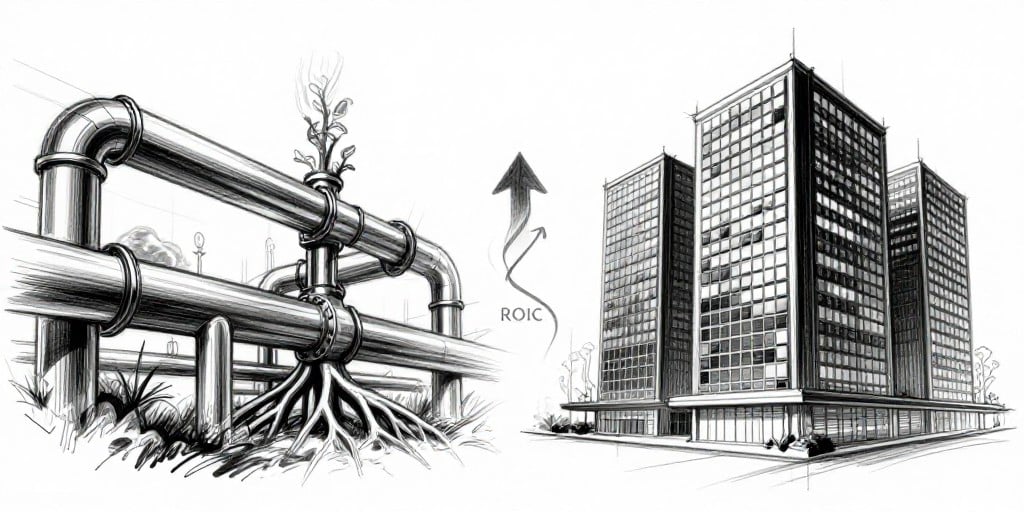
| Return on Invested Capital (ROIC) | 10.5% | 12.8% | Higher efficiency |
| Equity Exposure | €3.4 billion | $9 billion | Diversification across sectors |
Apollo’s strategy of deploying capital to acquire minority stakes in high‑growth assets aligns with its historical focus on infrastructure and industrial sectors. The non‑voting nature of the ONEOK investment limits Apollo’s governance influence but preserves capital efficiency, allowing the firm to maintain a diversified portfolio across multiple asset classes.
4. Conclusion
Apollo Global Management’s recent transactions demonstrate a calculated approach to capital deployment in sectors characterised by stable regulatory frameworks, predictable cash‑flows, and accelerating demand. The Kelvion acquisition positions SLB at the intersection of AI‑driven data‑centre growth and thermal‑management innovation, while the ONEOK investment secures a foothold in the resilient Permian midstream market.
From a risk‑management perspective, both deals exhibit mitigated integration challenges and favourable regulatory environments, though vigilance is warranted regarding technological obsolescence in data‑centres and commodity price volatility in the midstream sector. For investors, these transactions are likely to deliver enhanced ROIC and improved balance‑sheet metrics, reinforcing Apollo’s long‑term value‑creation thesis.