
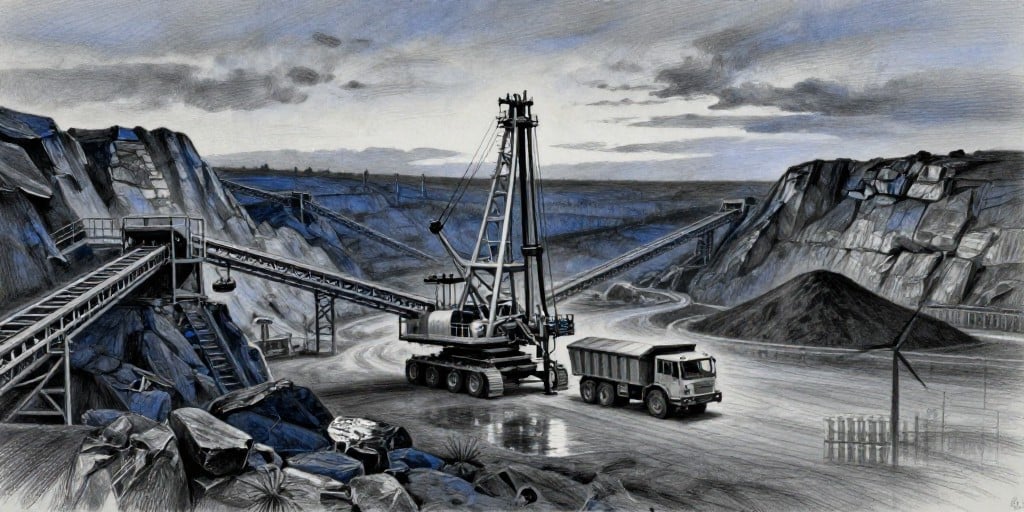
Anglo American Plc and Codelco Forge a 21‑Year Joint Mine Plan
Anglo American Plc today confirmed that it has completed a joint mine plan with Chilean copper producer Codelco, after receiving the requisite regulatory approvals and satisfying all prerequisite conditions. The agreement extends a prior arrangement signed in September 2025 and is designed to unlock additional copper output over a 21‑year horizon. Both companies will share the benefits of the plan while preserving the flexibility to pursue independent projects throughout its duration.
Investigative Lens: Strategic Rationale and Business Fundamentals
From a strategic standpoint, the joint plan appears to be driven by a combination of cost‑control imperatives and market‑expansion objectives. Anglo American, which has historically sought to improve its cost base in copper and other commodities, is positioned to leverage Codelco’s existing infrastructure and Chilean regulatory familiarity. In contrast, Codelco benefits from the capital efficiency and technological expertise of Anglo American, potentially accelerating its goal of increasing national copper output.
Financially, the plan is expected to produce a “steady stream of low‑cost copper.” However, the precise cost‑benefit profile remains opaque. Analysts have highlighted the need for a detailed breakdown of joint operating costs, capital expenditures, and revenue-sharing mechanisms. Without such data, investors cannot fully assess whether the partnership will materially improve Anglo American’s operating margins or merely redistribute existing costs.
Regulatory Environment and Sustainability Commitments
Both parties underscored the importance of securing environmental permits before full implementation, with an anticipated timeline of 2030. This raises questions about the regulatory trajectory in Chile, which has seen increasing scrutiny of mining projects in the past decade. The potential for delays—whether from local community opposition, stricter environmental regulations, or geopolitical shifts—could erode the projected cost‑benefit balance.
Sustainability commitments are also central to the narrative. Anglo American has historically faced criticism for its environmental record, and Codelco has been under pressure from Chilean authorities to meet global sustainability standards. The partnership’s success will hinge on its ability to align with these standards without compromising production efficiency, a delicate balance that warrants close monitoring.
Competitive Dynamics and Market Positioning
The copper market is characterized by a handful of large, vertically integrated players, yet it remains vulnerable to commodity price swings. Anglo American’s move to secure a long‑term low‑cost supply could confer a competitive advantage against rivals such as Rio Tinto, BHP, and Southern Copper. However, this advantage may be offset by the fact that the partnership is still subject to a range of external risks: geopolitical tensions in South America, fluctuations in U.S. monetary policy, and the evolving global transition to renewable energy.
The partnership also creates a strategic foothold for Anglo American in a region where competition for copper supply is intensifying. If the joint plan is successful, Anglo American could position itself as a key supplier to the global battery industry—a sector experiencing rapid growth but also significant price volatility.
Market Reception and Macro‑Economic Context
European equity markets on the day of the announcement were modestly down, with technology valuations and potential interest‑rate hikes by the Federal Reserve and other central banks driving broad sell‑offs. Mining stocks, including Anglo American, were among the weakest performers, reflecting heightened sensitivity to commodity price fluctuations and macro‑economic data. This market backdrop suggests that, despite the long‑term nature of the joint plan, short‑term investor sentiment remains tethered to broader economic indicators rather than sector‑specific fundamentals.
Risks and Opportunities
Risks
- Regulatory Delays: The plan’s execution hinges on environmental permits that may not be secured until 2030.
- Commodity Price Volatility: Fluctuations in copper prices could erode projected margins.
- Geopolitical Tensions: Changes in Chilean policy or U.S. relations with South America could impact operations.
- Operational Integration: Merging two distinct corporate cultures and operating models may encounter unforeseen inefficiencies.
Opportunities
- Cost Reduction: Leveraging shared infrastructure could lower operating costs for both firms.
- Supply Chain Control: Long‑term access to low‑cost copper positions both companies favorably amid global electrification trends.
- Market Expansion: Strengthened foothold in Chile may open avenues for further investment in Latin America.
- Sustainability Leadership: Successful compliance with environmental standards could enhance brand equity and attract ESG‑focused investors.
Conclusion
While the Anglo American–Codelco joint mine plan presents an intriguing proposition—offering a potential long‑term low‑cost copper supply and a strategic expansion into Chile—it is not without significant caveats. Investors and analysts will need to scrutinize the partnership’s financial architecture, regulatory trajectory, and operational integration plans. Only through a rigorous, skeptical approach that interrogates each of these dimensions can the true value and risk profile of this venture be understood.