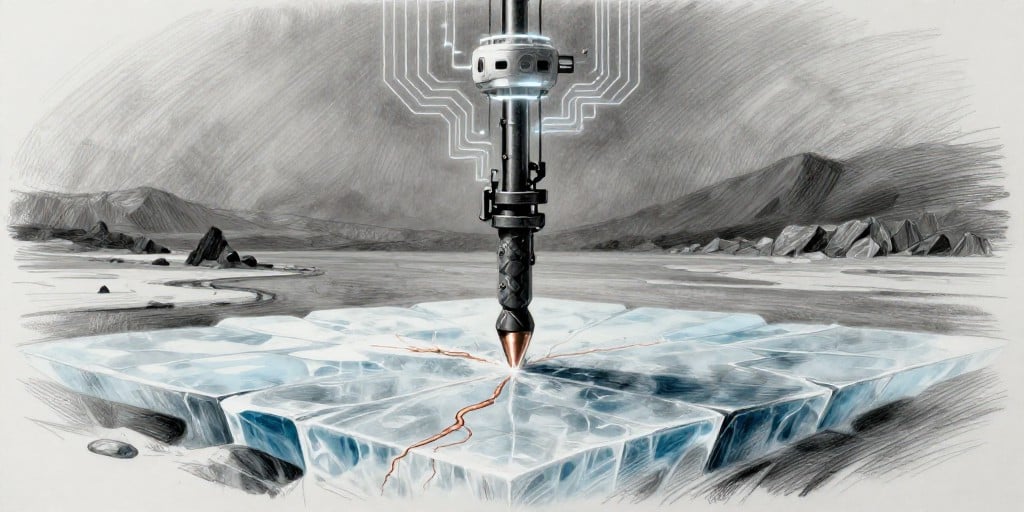
American West Metals Ltd. Announces New Exploration Targets for Storm Copper Project
American West Metals Ltd. (AWM) has unveiled a comprehensive set of exploration targets for its Storm Copper Project situated on Somerset Island, Nunavut. The targets, delineated under the JORC Code, encompass seven high‑priority zones: Resource Extension, Deeps Zone, Central Graben, South‑East Stratabound, South‑East Structural, Tornado, and Chevron. This strategic expansion aims to identify additional mineralised material beyond the current indicated and inferred resource estimates.
Technical Basis and Methodology
The exploration program, slated to commence in 2027, will integrate deep‑hole drilling with surface geophysical surveys to validate the conceptual targets. The delineation of the zones was achieved through a synthesis of:
- Existing drill core data
- Geophysical anomaly mapping
- Surface geochemistry
- Advanced geological modelling
This multidisciplinary approach capitalises on the strong structural controls already identified at Storm, notably the Central and Tornado grabens, which have historically hosted several high‑grade copper deposits. By leveraging structural geology insights, the company anticipates a higher probability of intercepting economically viable ore bodies.
Capital Expenditure Implications
AWM’s emphasis on a low‑impact, high‑grade base‑metal strategy aligns with broader industry trends towards capital efficiency and productivity optimisation. The forthcoming drilling initiative is expected to refine the project’s economic model and mine design, thereby informing capital allocation decisions. Key considerations include:
- Equipment procurement: High‑precision drilling rigs and portable geophysical instrumentation will be required, necessitating capital outlays in the range of USD 5–8 million for the 2027 phase.
- Infrastructure development: Access roads, power generation (likely renewable-dominated), and water supply systems will be scaled to accommodate drilling and future mine operations.
- Regulatory compliance: Environmental impact assessments and Nunavut‑specific permitting processes will impose additional upfront costs but also open avenues for governmental incentives aimed at sustainable resource development.
The integration of modular drilling units and real‑time data analytics platforms is projected to reduce operational downtime and accelerate decision‑making cycles, thereby improving the project’s net present value (NPV) and internal rate of return (IRR).
Productivity Metrics and Technological Innovation
AWM’s focus on high‑grade copper directly influences productivity metrics such as tonne‑per‑day (TPD) throughput and ore dilution rates. By targeting zones with robust structural controls, the company can optimise ore body delineation, resulting in:
- Reduced ore dilution: Enhanced pre‑mining resource modelling leads to more accurate cut‑off grades and mine planning.
- Higher ore recovery: Modern flotation circuits and heap‑leaching technologies can extract greater recoveries from complex sulphide matrices.
- Lower energy consumption: Incorporation of renewable energy sources and electrified haulage can decrease the project’s carbon footprint and operating costs.
The anticipated deployment of AI‑driven geophysical interpretation tools will further refine target prioritisation, allowing for rapid adjustment of drilling plans in response to in‑situ data.
Supply Chain and Market Implications
The successful expansion of the Storm copper resource will have ripple effects across the supply chain:
- Raw material demand: Increased copper grades bolster demand for specialised processing chemicals and precision equipment.
- Component manufacturers: Suppliers of drilling rigs, geophysical sensors, and mineral processing equipment stand to benefit from heightened procurement.
- Infrastructure contractors: The development of remote mining infrastructure will stimulate demand for logistics, construction, and maintenance services.
Furthermore, the Canadian government’s recent emphasis on critical mineral independence and infrastructure spending may translate into favourable policy environments, including tax incentives and streamlined permitting, thereby mitigating some capital risk.
Regulatory and Economic Drivers
The Arctic context introduces unique regulatory considerations, notably:
- Indigenous land‑use agreements: Compliance with Nunavut’s Inuit Impact and Benefit Agreements (IIBAs) is essential to secure community support and minimize social risk.
- Environmental stewardship: Stringent emissions and waste‑management regulations require investment in monitoring systems and tailings management solutions.
- Export controls: Copper produced for global markets must navigate U.S. and European trade regulations, affecting downstream logistics planning.
Economic drivers such as global copper price volatility, inflationary pressures on commodity inputs, and currency fluctuations will shape the timing and scale of capital expenditures. AWM’s strategy to use the 2027 drilling results to refine economics and mine design reflects a prudent approach to hedging against these uncertainties.
Conclusion
American West Metals Ltd.’s announcement of new exploration targets for the Storm Copper Project underscores a methodical, technology‑driven approach to resource expansion. By coupling robust geological science with cutting‑edge drilling and geophysical techniques, AWM positions itself to enhance productivity, optimise capital spend, and navigate the evolving regulatory and market landscape of Arctic copper mining.