Corporate News Analysis: American Water Works Company’s 2026 Annual Meeting and Strategic Outlook
American Water Works Company, Inc. (NYSE: AW) announced that its 2026 Annual Meeting of Shareholders will be conducted virtually on Wednesday, May 13, 2026. The company is leveraging digital platforms to broaden access for shareholders and employees, while ensuring that all voting will occur through its designated virtual system. Record‑holder shareholders as of March 17, 2026 will receive the meeting notice and voting materials, and the company is encouraging electronic delivery of proxy documents to reduce paper usage.
Meeting Agenda and Corporate Governance
During the meeting, the Board of Directors will:
- Elect ten new directors to represent the company’s expanding portfolio of regulated utilities.
- Approve executive officer compensation on an advisory basis, reflecting industry‑benchmark alignment.
- Appoint an independent auditor to oversee financial reporting and regulatory compliance.
- Approve several amendments to long‑term compensation plans, aimed at aligning executive incentives with shareholder value.
The proxy statement emphasizes that the company’s 2026 strategy is centered on substantial investment in its regulated utilities, strategic acquisitions, and operational efficiencies to sustain service reliability and affordability for its customers.
Strategic Merger with Essential Utilities, Inc.
American Water is also progressing a planned merger with Essential Utilities, Inc. (NYSE: EUI). If consummated, the combined entity would become a larger regulated water and wastewater utility, benefiting from:
- Enhanced financial stability through diversified revenue streams.
- Improved service capacity via synergies in asset management and customer service operations.
2025 Operating Highlights
The 2025 operating results demonstrate continued growth in revenue and service volumes, attributable to:
- Infrastructure upgrades across the company’s utility network.
- New acquisitions that expand geographic reach and service capabilities.
Sustainability Narrative
American Water’s sustainability narrative underscores its commitment to:
- Environmental leadership through water conservation, wastewater treatment, and greenhouse gas reduction initiatives.
- Regulatory compliance in all operating jurisdictions.
- Long‑term value creation for shareholders and the communities served.
All proxy materials and related documents are available electronically on the company’s website and through the transfer agent, Equiniti Trust Company.
Technical Context: Infrastructure Investment, Grid Stability, and Renewable Energy Integration
While American Water’s core operations revolve around water and wastewater utilities, the company’s strategic focus on infrastructure investment, operational efficiencies, and mergers parallels broader trends in utility modernization—particularly those affecting the electric power sector. Below is a technical analysis of how these elements intersect with power generation, transmission, and distribution (GTD) considerations.
1. Grid Stability and Asset Modernization
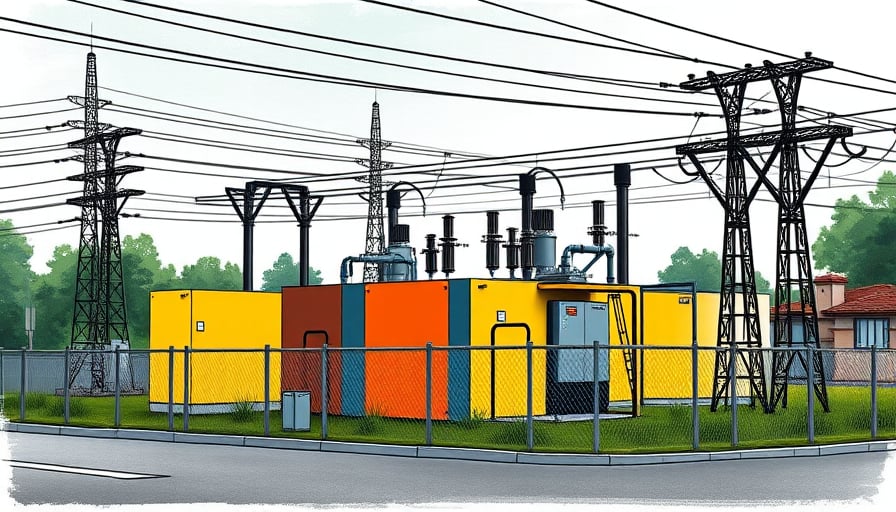
In electric utilities, grid stability hinges on the ability of the transmission and distribution (T&D) network to balance supply and demand in real time. Analogous to water utilities that maintain pressure stability across pipelines, electric utilities rely on:
- Dynamic voltage regulators,
- FACTS (Flexible AC Transmission System) devices, and
- Wide‑area monitoring systems (WAMS).
American Water’s investment in modernizing its physical infrastructure—such as replacing aging pipelines with high‑density polyethylene (HDPE) and implementing SCADA (Supervisory Control And Data Acquisition) systems—mirrors the electric sector’s push to upgrade transformers, switchgears, and substations with smart, grid‑responsive equipment. Such upgrades reduce losses, enhance fault tolerance, and support the integration of intermittent renewable generation.
2. Renewable Energy Integration Challenges
Renewable energy sources—solar PV, wind turbines, and battery storage—introduce variability into the power system. Key technical challenges include:
- Frequency regulation: Maintaining system frequency within ±0.1 Hz.
- Voltage control: Preventing over‑voltage or under‑voltage excursions.
- Contingency analysis: Ensuring reliability under fault conditions.
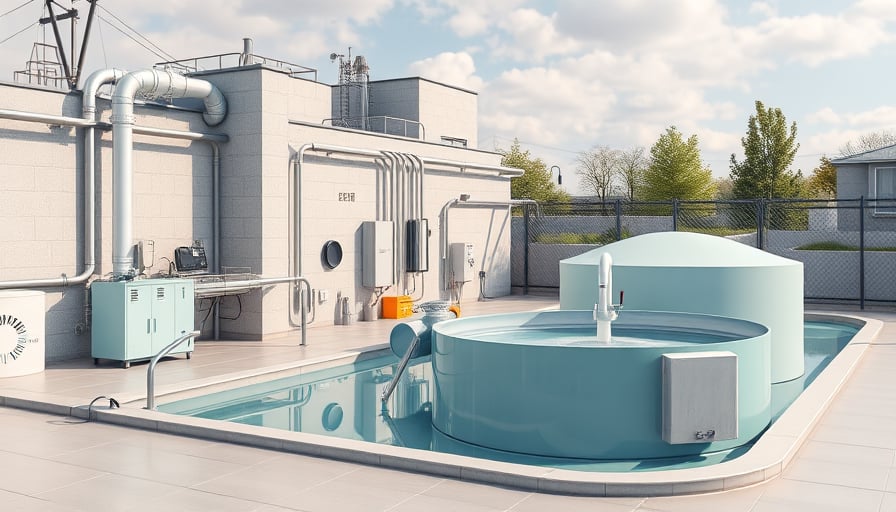
Water utilities face analogous capacity and reliability challenges when scaling treatment plants to accommodate variable demand during peak consumption periods. Both sectors must employ predictive analytics and real‑time control to preempt system stress. For example, American Water’s use of advanced metering infrastructure (AMI) to forecast demand aligns with electric utilities’ deployment of advanced sensors and machine‑learning algorithms to anticipate load fluctuations and adjust generation dispatch accordingly.
3. Infrastructure Investment Requirements
Capital Expenditure (CapEx) in the electric sector often exceeds $100 billion annually, driven by:
- Renewable integration,
- Grid modernization (e.g., HVDC lines, grid‑scale storage),
- Cyber‑security upgrades.
American Water’s projected CapEx for its regulated utilities reflects a similar trajectory:
- Pipeline replacement and line‑haul upgrades,
- Smart‑meter deployment,
- Digital twin modeling for asset health monitoring.
Both sectors must reconcile long‑term investment cycles with short‑term regulatory mandates. For electric utilities, regulatory frameworks such as FERC (Federal Energy Regulatory Commission) and state Public Utility Commissions (PUCs) set performance benchmarks, while rate structures (e.g., time‑of‑use tariffs) incentivize demand response. Water utilities operate under comparable structures—e.g., tiered rates encouraging conservation—and must align CapEx with rate‑payer acceptability.
4. Regulatory Frameworks and Rate Structures
In the electric domain, rate designs (flat vs. tiered vs. real‑time) directly impact revenue streams and investment feasibility. Similarly, American Water’s tiered water rates and service charges influence capital allocation for new treatment technologies and infrastructure renewal.
Regulators evaluate proposals against economic justifications, environmental impact assessments, and consumer protection criteria. For instance, a utility may propose a 5 % rate increase to fund a 30 % increase in renewable capacity. The regulatory body would assess cost‑benefit analyses, environmental benefit metrics, and the potential for cross‑subsidization.
5. Economic Impacts on Utility Modernization
Investment in modernized infrastructure typically yields:
- Reduced operational costs via efficiency gains (e.g., lower pumping energy in water utilities, lower transmission losses in power grids).
- Improved service reliability, translating to fewer outages and higher consumer satisfaction.
- Enhanced market competitiveness, allowing utilities to capture new service segments (e.g., smart home integration, IoT‑enabled monitoring).
Conversely, the financial burden on ratepayers can be mitigated through:
- Rate‑payer‑friendly financing mechanisms (e.g., green bonds, utility‑backed loans).
- Regulatory incentives such as cost‑of‑service (COST) recovery and performance‑based regulation.
6. Implications for Energy Transition and Consumer Costs
American Water’s approach to infrastructure investment and operational efficiencies reflects a broader industry shift toward sustainability and resilience. For the electric sector, this translates into:
- Accelerated deployment of renewable generation,
- Grid resilience enhancements (e.g., microgrids, energy storage),
- Digital transformation (advanced metering, AI‑driven predictive maintenance).
The cumulative effect on consumer costs is twofold:
- Short‑term rate adjustments to fund capital projects.
- Long‑term cost savings from reduced energy usage and improved service reliability.
Regulators must balance these dynamics, ensuring that ratepayers benefit from the transition while utilities maintain the financial health necessary to deliver reliable, sustainable services.
In summary, American Water Works Company’s 2026 Annual Meeting underscores a strategic commitment to robust infrastructure investment, operational efficiency, and regulatory compliance—principles that are equally critical in the electric power sector’s pursuit of grid stability, renewable integration, and consumer‑centered modernization.