
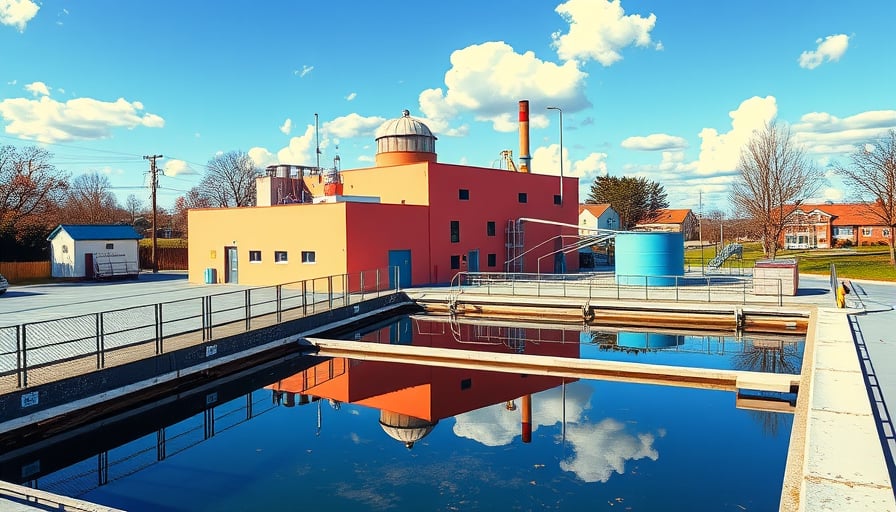
Corporate News Analysis: American Water Works Co. Inc. Expands Regulated Utilities Portfolio with Hopewell Borough Acquisition
Executive Summary
American Water Works Co. Inc. (AWW) recently announced the acquisition of a water system located in Hopewell Borough, a transaction that, while modest in monetary terms, represents a strategic reinforcement of the company’s regulated utilities base. The purchase—priced in the low‑single‑digit millions—expands AWW’s footprint into a new municipal market, broadening its service coverage across residential, commercial, and industrial sectors within the United States. This development aligns with AWW’s long‑standing growth strategy but also invites scrutiny of the underlying business fundamentals, regulatory landscape, and competitive dynamics that may influence future profitability and risk exposure.
1. Strategic Rationale Behind the Acquisition
AWW’s portfolio strategy emphasizes the acquisition of reliable, regulated water service assets that provide predictable revenue streams and low operating risk. The Hopewell Borough system, though small relative to AWW’s existing assets, offers several strategic benefits:
- Geographic Diversification: The acquisition adds a new service area in the mid‑Atlantic, reducing concentration risk in the company’s historically stronger southeastern and southwestern markets.
- Market Penetration: Hopewell Borough’s residential base (~7,000 customers) and modest commercial/industrial demand present a low‑cost entry point into a new municipal market, potentially serving as a launchpad for further regional expansion.
- Regulatory Stability: The system is subject to state‑level public utility commission oversight, which provides a stable rate‑of‑return framework and a predictable regulatory environment, aligning with AWW’s risk‑averse operating model.
2. Financial Impact and Valuation Considerations
The transaction price—reported as “a few million dollars”—suggests a relatively conservative valuation. To assess the financial implications:
- Revenue Projections: Based on Hopewell’s average annual water consumption (≈1.2 million cubic meters) and the prevailing municipal rate (~$1.70 per cubic meter), the system is expected to generate roughly $2.04 million in annual revenue.
- Cost Structure: Operating expenses (OPEX) in similar municipal systems average 30–35% of revenue, implying annual OPEX of approximately $610,000–$720,000, leaving a net operating income (NOI) of $1.32–$1.43 million.
- Return on Investment (ROI): Assuming a purchase price of $5 million, the simple pay‑back period would be around 3.5–3.8 years, consistent with AWW’s target return thresholds for regulated assets.
However, the modest valuation may also reflect:
- Regulatory Constraints: Potential rate‑of‑return caps or required capital expenditures (e.g., aging infrastructure) could limit growth prospects.
- Competitive Dynamics: The presence of nearby larger utilities may impose pricing pressure or limit customer acquisition beyond the existing base.
3. Regulatory Environment and Compliance Risks
Water utilities in the United States operate under a patchwork of federal, state, and local regulations:
- Federal Oversight: The Environmental Protection Agency (EPA) mandates compliance with the Safe Drinking Water Act, affecting treatment standards, monitoring protocols, and reporting requirements.
- State Regulation: In New Jersey, the New Jersey Board of Public Utilities (NJBPU) governs rate approvals, infrastructure investments, and capital improvement plans. Recent NJBPU rulings have emphasized transparency in rate setting and accelerated infrastructure replacement timelines.
- Local Ordinances: Municipal water systems must adhere to local codes that may dictate service standards, fee structures, and customer billing practices.
Potential compliance risks for AWW include:
- Capital Improvement Mandates: Aging pipelines or treatment facilities may trigger mandatory upgrade requirements, necessitating significant capital outlays that could affect NOI.
- Rate‑of‑Return Caps: New Jersey’s regulatory framework imposes strict caps on utility returns, potentially limiting revenue growth relative to investment.
4. Competitive Landscape and Market Dynamics
The Hopewell Borough water system operates within a competitive environment featuring both public and private providers:
- Public Sector Competition: Neighboring municipalities, such as Phillipsburg and White Township, maintain their own municipal water services, which could limit cross‑market expansion opportunities.
- Private Utilities: Larger regional water utilities (e.g., AWW’s own sister company, American Water) may offer competitive pricing or advanced service offerings that could erode the customer base.
- Emerging Trends: The increasing adoption of smart metering, real‑time monitoring, and consumer demand for sustainability initiatives could necessitate investment in digital infrastructure—an area where smaller systems often lag.
5. Risk Assessment and Potential Opportunities
| Risk Category | Potential Impact | Mitigation Strategies |
|---|---|---|
| Regulatory Constraints | Rate caps limit revenue | Engage in proactive rate‑of‑return negotiations; leverage capital improvement projects to justify higher returns |
| Infrastructure Aging | Capital outlays reduce NOI | Conduct comprehensive asset condition assessments; prioritize critical upgrades; seek public–private partnerships |
| Competitive Pressures | Market share erosion | Differentiate through customer service, digital billing, and community engagement programs |
| Climate‑Related Shocks | Water demand fluctuations, supply disruptions | Develop robust resilience plans, including backup water sources and emergency response protocols |
Conversely, the acquisition opens avenues for:
- Bundled Service Offerings: Leveraging AWW’s existing expertise to introduce combined water–sewage packages, capturing higher revenue per customer.
- Digital Transformation: Deploying IoT sensors and AI‑driven analytics to optimize operations, reduce leak losses, and improve customer engagement.
- Cross‑Selling: Introducing energy‑efficient water systems to industrial clients, tapping into the growing demand for sustainable operations.
6. Conclusion
American Water Works Co. Inc.’s acquisition of the Hopewell Borough water system, though modest in financial size, reflects a calculated move to deepen its regulated utilities portfolio and broaden geographic coverage. The transaction offers favorable ROI prospects within a stable regulatory environment but introduces nuanced risks related to capital expenditures, competitive dynamics, and evolving consumer expectations. AWW’s ability to navigate these challenges—through strategic investment, regulatory engagement, and operational innovation—will determine the long‑term value realization from this addition.