
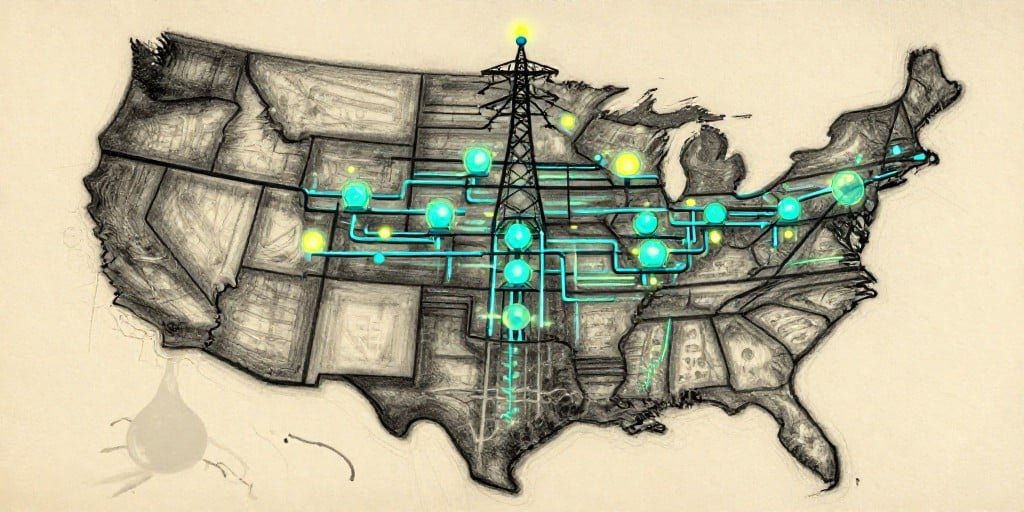
Corporate News – Energy and Utilities Sector
On 1 June 2026, American Water Works Company, Inc. (AWWC) announced the completion of its purchase of water and wastewater systems from Nexus Regulated Utilities, a subsidiary of Nexus Water Group. The transaction added approximately 47,000 customer connections across eight states and brought around seventy employees into AWWC’s operations. The acquisition was executed after all required regulatory approvals were secured, with the last approval received on 21 May 2026.
The purchase price was disclosed as approximately $315 million, with an estimated rate base of about $200 million. AWWC financed the transaction primarily through cash generated by its operating activities and other liquidity resources. The deal aligns with the company’s long‑term strategy of expanding its regulated footprint and enhancing service delivery to new customers.
In addition to the primary announcement, the company issued subsidiary‑level press releases detailing similar completions in New Jersey, Virginia, and Tennessee. Each release highlighted the addition of local customer connections, a small group of employees, and the commitment to a smooth transition for affected communities. AWWC reiterated that the new services would be supported by its established online portals and customer‑service programs.
A set of filings, including a Form 8‑K summarizing the event and accompanying exhibits (purchase agreement, press release, and other related documents), has been submitted to the SEC. Forward‑looking statements in the filings caution that actual outcomes may vary from expectations due to integration costs, regulatory changes, and other market factors.
Technical Context: Power Generation, Transmission, and Distribution in Regulated Water Utilities
While the acquisition involves water and wastewater services, it occurs within a broader ecosystem of regulated utilities that also include electric distribution, natural gas, and broadband services. The integration of new assets brings into focus several engineering and regulatory considerations that are critical for maintaining grid stability, enabling renewable energy integration, and ensuring the economic viability of infrastructure investment.
1. Grid Stability and Power System Dynamics
- Load Flow Management: The addition of new customer connections increases the overall load on local distribution feeders. Engineers must perform updated load‑flow studies to ensure voltage profiles remain within ANSI/IEEE limits (e.g., 0.90–1.10 pu).
- Transient Stability: Sudden changes in load can affect the stability of the transmission system. Dynamic simulations using tools such as PSS®E or DigSILENT PowerFactory are required to assess rotor angle stability and to design appropriate control schemes (e.g., automatic generation control, load‑rate control).
- Protection Coordination: With more connections, the coordination of protective relays (overcurrent, differential, distance) must be revisited to avoid unnecessary tripping while safeguarding equipment.
- Distributed Energy Resources (DER): As utilities expand their footprint, they often encounter increased penetration of DERs (solar PV, storage). Proper management of islanding protection, anti‑islanding detection, and reverse power flow is essential to preserve system integrity.
2. Renewable Energy Integration Challenges
- Curtailment and Capacity Factor: A larger customer base may lead to higher demand during peak renewable production periods, reducing curtailment and improving renewable capacity factors. However, variability must be accommodated through forecasting models and demand response programs.
- Voltage Regulation: Solar PV installations can cause voltage rise issues on distribution circuits. Voltage‑regulating devices (tap changers, on‑load tap changers, voltage‑sourced converters) need to be strategically deployed.
- Frequency Control: While most utilities rely on central plants for primary frequency control, increased renewable penetration can necessitate fast‑acting frequency response services (e.g., synthetic inertia, battery dispatch).
3. Infrastructure Investment Requirements
- Capital Expenditures (CAPEX): Expanding service areas requires upgrades to pumps, treatment plants, and transmission lines. The cost of new equipment (e.g., high‑efficiency pumps, smart meters) is offset by long‑term operational savings.
- Operational Expenditures (OPEX): Maintaining water quality and system reliability increases OPEX. Investment in automated monitoring (SCADA, IoT sensors) can reduce labor costs and improve response times to faults.
- Smart Grid Technologies: Advanced metering infrastructure (AMI), distributed control systems, and real‑time analytics are critical for efficient operation and for providing data to regulators for rate design.
4. Regulatory Frameworks and Rate Structures
- Rate‑Base Accounting: The acquisition added an estimated $200 million to the company’s rate base. Under the Federal Energy Regulatory Commission (FERC) and state Public Utility Commissions (PUCs), utilities must recover the cost of such assets through rates while ensuring a reasonable rate of return.
- Regulatory Approval Process: AWWC obtained all necessary approvals by 21 May 2026, demonstrating compliance with state and federal statutes governing utility acquisitions. The process typically involves environmental assessments, public hearings, and cost‑benefit analyses.
- Rate Design: Transitioning customers to new rate structures may involve time‑of‑use (TOU) rates, demand charges, or flat rates. Engineers must model the impact of these rates on load profiles and revenue projections.
5. Economic Impacts of Utility Modernization
- Cost of Service (COS): Modernization reduces long‑term COS through energy savings, lower maintenance costs, and improved system reliability. However, upfront CAPEX can lead to short‑term rate increases.
- Energy Transition and Consumer Costs: Integrating renewable energy can lower wholesale energy costs, but the distribution grid must adapt to new operational paradigms. The balance between investment in grid resilience and consumer affordability is a key policy objective.
- Economic Development: Enhanced water and power reliability attracts businesses, stimulates local economies, and can lead to job creation—particularly in engineering, construction, and maintenance sectors.
Conclusion
American Water Works Company’s acquisition of Nexus Regulated Utilities’ water and wastewater assets represents more than a simple customer base expansion. It reflects a strategic move to strengthen its regulated utility portfolio in a landscape where power generation, transmission, and distribution systems are undergoing rapid transformation. By aligning its operational and financial strategies with the technical demands of grid stability, renewable integration, and infrastructure investment, AWWC positions itself to deliver reliable, affordable service to a growing customer base while navigating the regulatory and economic challenges inherent to modern utility management.