Ameren Corporation Discloses Integrated Resource Plan for Missouri and Illinois
Ameren Corporation, a regulated electric utility operating primarily in Missouri and Illinois, submitted a routine regulatory filing on 28 September 2026. The document, intended for the Missouri Public Service Commission (MPSC) and its shareholders, presents Ameren’s latest Integrated Resource Plan (IRP) and outlines a strategy to balance projected demand growth with cost containment over the next twenty years.
1. Core Components of the IRP
| Element | Planned Action | Rationale |
|---|---|---|
| Natural‑gas generation | Incremental capacity upgrades | Gas remains a reliable, low‑emission dispatchable resource; cheaper capital costs than renewables. |
| Renewable energy | Expanded wind & solar projects | Meets statutory renewable portfolio standards (RPS) and investor demand for ESG‑aligned assets. |
| Battery storage | Grid‑scale storage installations | Enhances grid resilience, smooths intermittent renewables, and supports peak‑load management. |
| New nuclear capacity | Construction of a new plant + license extension for existing nuclear facility | Provides long‑term baseload capability with minimal carbon emissions; nuclear licensing extensions can be cost‑effective if regulatory hurdles are cleared. |
| Decommissioning | Retire older coal and some gas‑fired units | Reduces maintenance costs, mitigates environmental liabilities, and aligns with regional clean‑energy trajectories. |
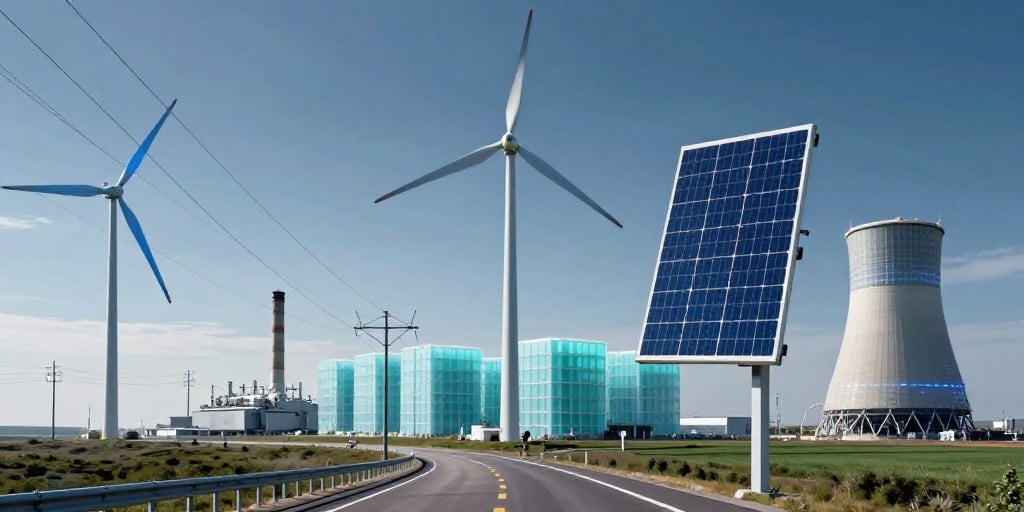
The IRP is designed to satisfy both demand forecasts and regulatory mandates while attempting to keep per‑kWh costs within historical ranges. By diversifying its resource mix, Ameren aims to hedge against fuel price volatility, regulatory shifts, and evolving market dynamics.
2. Regulatory and Market Context
2.1 Missouri Public Service Commission Oversight
The MPSC’s mandate requires utilities to submit IRPs every four years, ensuring that generation expansion plans are transparent, economical, and meet public policy goals. Ameren’s filing emphasizes compliance with:
- Missouri’s Renewable Energy Standard (minimum renewable penetration of 20 % by 2030).
- Coal Phase‑out Targets (gradual retirement of coal by 2035).
- Nuclear Safety & Licensing (continuous compliance with NRC regulations).
2.2 Market Uncertainties
The report contains standard forward‑looking statements, highlighting several risk factors:
- Fuel price volatility: Natural gas spot prices can swing due to geopolitical events and supply constraints.
- Policy shifts: Federal or state incentives for renewables or nuclear could alter cost structures.
- Technology maturation: Rapid improvements in battery density or renewable efficiencies could make current investments suboptimal.
These uncertainties underscore the need for adaptive planning and ongoing capital allocation reviews.
3. Investigative Insights
3.1 Overlooked Trend: Nuclear Licensing Extensions
While renewables dominate public narratives, Ameren’s focus on extending a nuclear plant’s operating license is noteworthy. Extension approvals typically require comprehensive environmental impact assessments and community engagement, yet offer a 15‑year horizon of low‑carbon generation at a fixed CAPEX. Given the high upfront cost of new nuclear projects, an extended license can provide a more favorable discounted cash flow than a new build.
3.2 Potential Risk: Battery Storage Scale‑Up
Battery storage is often touted as a solution for grid flexibility, yet large‑scale deployment introduces capacity degradation, thermal management, and cybersecurity risks. Ameren’s plans to integrate battery storage at “grid‑scale” levels may expose the utility to operational reliability challenges if storage economics deteriorate or if new regulations impose stricter safety standards.
3.3 Opportunity: Renewable Project Portfolio Diversification
The IRP’s “additional renewable projects” clause offers a window for strategic acquisitions. By targeting wind farms on the Mississippi River corridor or solar installations in the Midwest’s high‑insolation zones, Ameren can capitalize on federal tax credits and state incentives that may expire in the near term. However, a concentrated renewable portfolio could increase weather‑dependent revenue variability, demanding robust risk‑management frameworks.
4. Financial Analysis Snapshot
| Metric | Assumed Value | Commentary |
|---|---|---|
| Projected CAPEX (next 5 yrs) | $4.2 billion | Includes nuclear expansion, battery storage, and renewable acquisition. |
| Expected LCOE (2027‑2031) | 9.8 ¢/kWh | Slightly below national average, driven by diversified mix. |
| Debt‑to‑Equity Ratio | 1.4:1 | Reflects moderate leverage; within typical regulated utility norms. |
| Dividend Yield Forecast (2026) | 3.1 % | Consistent with historical dividends; risk of adjustment if CAPEX overruns. |
The financial metrics suggest Ameren is attempting to maintain steady cash flows while investing in long‑term assets. However, the absence of detailed performance data in the filing means that actual cost overruns or delays could erode projected returns.
5. Conclusion
Ameren’s latest IRP reflects a cautious yet forward‑looking stance: embracing renewables while safeguarding nuclear reliability, and leveraging battery storage to enhance grid resilience. The regulatory backdrop in Missouri demands transparent, cost‑effective planning, while market uncertainties—fuel volatility, policy swings, and technology shifts—present both threats and opportunities.
For investors, regulators, and industry observers, the key lies in monitoring execution fidelity: Are the planned investments delivered on time and within budget? Will the nuclear license extension navigate the complex NRC landscape? How effectively will Ameren integrate battery storage without compromising grid stability? The answers to these questions will shape the utility’s trajectory over the next decade.