
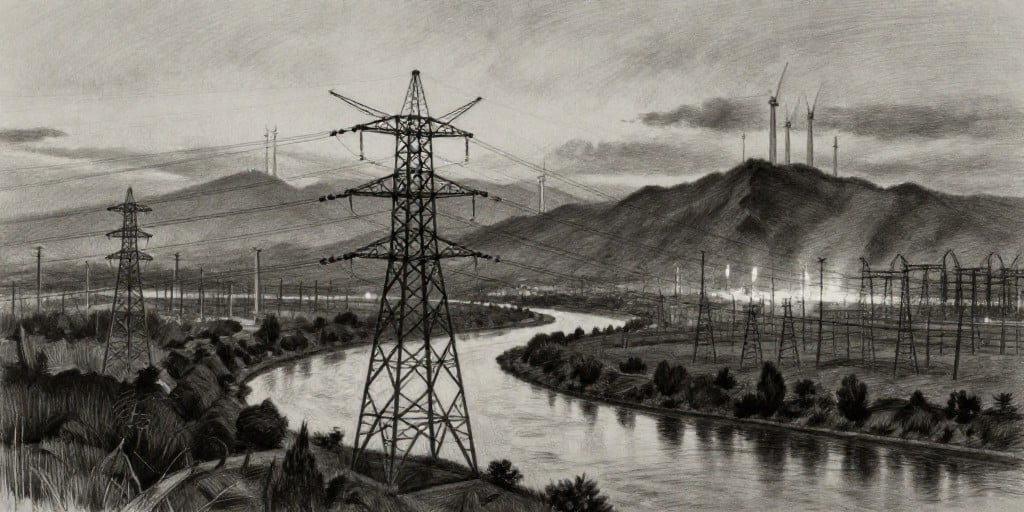
Ameren Corp. Maintains Stability Amidst Growing Demand for Grid Modernization
Amid a market environment where utility stocks often serve as a hedge against volatility, Ameren Corp. has demonstrated a modest yet steady rise in share value over the past year. While the financial performance of the company, as reflected in its market capitalization of a few tens of billions of dollars, offers a reassuring backdrop for investors, it also highlights the underlying technical and regulatory challenges that must be addressed to sustain this stability in the long term.
Power Generation Portfolio: Balancing Base‑Load and Renewables
Ameren’s generation mix continues to be dominated by natural‑gas peaking plants and coal‑retired baseload units. However, the company is aggressively investing in wind and solar farms across the Midwest to meet both regulatory mandates and consumer demand for cleaner energy. The integration of variable renewable generation introduces stochastic fluctuations that must be mitigated through advanced forecasting algorithms and dynamic operating strategies.
From an engineering standpoint, the key to successful integration lies in maintaining the inertia of the grid. Ameren has deployed synthetic inertia solutions—such as inverter‑based storage and grid‑forming converters—to emulate the natural mechanical inertia of traditional synchronous generators. These devices provide rapid frequency support, ensuring that the system can absorb sudden changes in power injection or withdrawal without compromising stability.
Transmission and Distribution Challenges
The expansion of renewable resources necessitates upgrades to the high‑voltage transmission network. Ameren’s transmission corridors in the Midwest are experiencing congestion as solar and wind farms feed power into corridors that were originally designed for point‑to‑point transmission from coal or nuclear plants. The company is implementing high‑capacity FACTS (Flexible AC Transmission Systems) devices—such as series capacitors and static VAR compensators—to improve voltage profiles and increase real‑power transfer capability.
On the distribution side, the proliferation of distributed energy resources (DERs) such as rooftop photovoltaics and electric‑vehicle chargers introduces bidirectional flows that traditional single‑phase distribution systems were not designed to handle. Ameren’s grid modernization plans include the deployment of advanced distribution management systems (ADMS) coupled with real‑time monitoring of voltage and power flow. These tools enable utilities to perform automatic reclosing, load shedding, and voltage regulation in response to real‑time conditions, thereby preserving system integrity.
Regulatory Frameworks and Rate Structures
The United States federal and state regulatory landscape is evolving to support the transition to cleaner, more resilient grids. Ameren’s recent filings with the Public Utility Commission of Illinois (PUC) highlight a shift toward performance‑based tariffs that incentivize reliability and renewable penetration. Under these tariffs, Ameren can recover costs associated with grid upgrades and DER integration, while also offering rate incentives for customers that participate in demand response programs.
From a policy perspective, the Clean Power Plan and the federal Infrastructure Investment and Jobs Act provide both guidance and financial support for utility upgrades. Ameren has leveraged these incentives to secure capital for transmission upgrades and to accelerate the deployment of battery energy storage systems (BESS), which play a pivotal role in smoothing the variability of renewables and providing ancillary services such as spinning reserve and frequency regulation.
Economic Implications for Consumers
While the strategic investments in grid infrastructure are essential for long‑term reliability, they inevitably impact consumer rates. Ameren’s rate design incorporates a “cost‑of‑service” model that ties rate increases to verified capital expenditures and operating costs. The company has articulated that the cost of transitioning to a more flexible grid—particularly the installation of BESS and the deployment of advanced monitoring equipment—is expected to be offset over a 15‑year horizon through improved operational efficiencies and avoided outage costs.
Consumer outreach efforts emphasize the benefits of participation in demand response and DER hosting rights. By allowing customers to receive compensation for reducing consumption during peak periods, Ameren not only enhances grid flexibility but also offers a pathway for consumers to offset higher rates through revenue generation.
Conclusion
Ameren Corp.’s modest share price appreciation over the past year reflects the inherent stability of the utility sector, yet it also underscores the technical and regulatory imperatives that must be addressed to sustain this stability. Through targeted investments in renewable integration, transmission upgrades, and advanced distribution management, Ameren is positioning itself to meet the dual challenges of grid reliability and decarbonization. The company’s regulatory alignment and consumer‑centric rate design further demonstrate its commitment to balancing economic growth with the long‑term interests of stakeholders and the broader energy transition.