Executive Summary
Advanced Micro Devices Inc. (AMD) is poised to deliver its fiscal first‑quarter 2026 earnings, a disclosure that investors and industry analysts view as a critical barometer for the chipmaker’s trajectory amid a rapidly evolving semiconductor arena. The company’s recent insider activity—Chief Technology Officer Mark D. Papermaster’s sale of 3,293 shares—provides a window into internal portfolio management but does not alter the broader strategic narrative. Across the technology landscape, AMD’s continued emphasis on modular chiplet architectures and AI‑accelerated high‑performance computing positions it advantageously against rivals, while macro‑economic stimuli—including geopolitical easing and a temporary reopening of the Strait of Hormuz—have buoyed market sentiment.
1. Earnings Anticipation: A Window into Strategic Health
1.1 Market Context
The S&P 500 and Nasdaq have enjoyed a period of expansion, attributed partly to the alleviation of geopolitical tensions and a brief reopening of the Strait of Hormuz. These macro‑economic developments have lifted investor confidence, creating a receptive backdrop for AMD’s earnings announcement. In the days leading up to the release, AMD’s stock trajectory has mirrored this broader optimism, recording a modest uptick that underscores market expectations of solid performance.
1.2 Internal Signals
Mark D. Papermaster’s Form 4 filing on April 6, 2026—detailing the sale of 3,293 shares—illustrates routine portfolio adjustments rather than strategic divestiture. His holdings now exceed 1.2 million shares, a figure that, while sizeable, represents a fraction of AMD’s total equity base. Analysts interpret this transaction as routine, reflecting senior management’s engagement with personal investment strategy rather than corporate policy.
2. Product Innovation and Market Positioning
2.1 Modular Chiplet Architecture
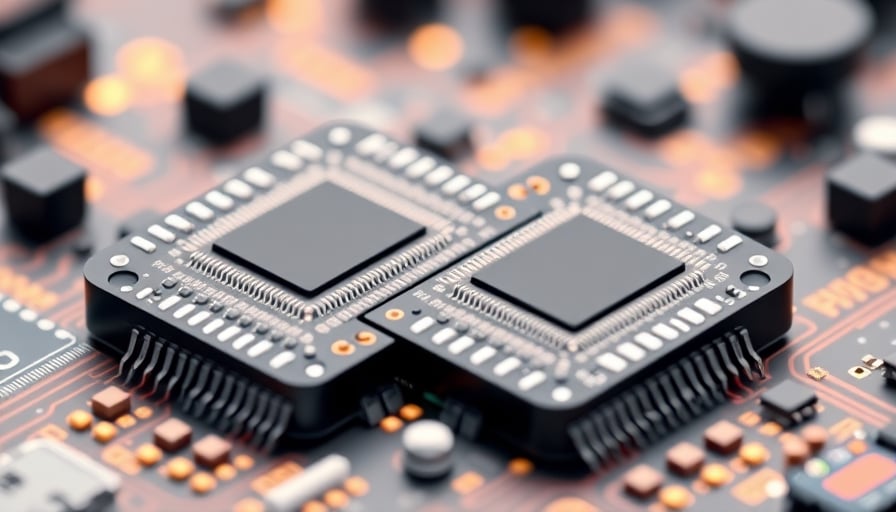
AMD has reaffirmed its commitment to modular chiplet design—a trend that enables rapid iteration, supply‑chain resilience, and cost optimization. By decoupling logic, memory, and I/O onto discrete modules, AMD can mix and match components to meet specific performance targets, thereby accelerating time‑to‑market for both AI and high‑performance computing (HPC) workloads.
2.2 AI‑Accelerated Computing
The company’s latest product releases underscore its focus on AI workloads. Advanced neural‑processing units (NPUs) and high‑bandwidth memory (HBM) integrations are tailored to meet the demands of machine‑learning frameworks and large‑scale inference pipelines. Strategic partnerships with leading cloud providers and research institutions reinforce AMD’s positioning as a key supplier for AI‑centric data centers.
3. Competitive Landscape: Navigating Pressure and Opportunity
3.1 Benchmarking Against Rivals
AMD continues to compete with industry titans such as Intel and NVIDIA, each vying for dominance in both consumer and enterprise segments. While Intel maintains a strong foothold in the x86 architecture and NVIDIA leads in GPU‑based AI inference, AMD’s diversified portfolio—spanning CPUs, GPUs, and APUs—offers cross‑segment leverage. The company’s strategic emphasis on chiplet technology and advanced packaging differentiates it in a market where supply‑chain constraints and cost pressures are intensifying.
3.2 Strategic Partnerships
Collaborations with silicon design firms, memory manufacturers, and system integrators are essential for sustaining competitive advantage. AMD’s partnership ecosystem enables it to co‑develop next‑generation process nodes and to secure access to scarce lithography resources—an imperative in a semiconductor landscape increasingly dominated by capacity scarcity.
4. Strategic Outlook: Challenges and Forward Momentum
4.1 Supply‑Chain Resilience
The semiconductor industry remains vulnerable to geopolitical disruptions and raw‑material shortages. AMD’s modular approach mitigates some risks by allowing it to source individual components from multiple suppliers. Nevertheless, the company must continue to diversify its supply chain and invest in in‑house fabrication capabilities to safeguard against future disruptions.
4.2 Capital Allocation
Internal share‑sale activity by senior executives signals a disciplined approach to capital allocation. However, AMD must balance share repurchases, dividends, and reinvestment in R&D to sustain long‑term growth. Transparent communication of capital‑allocation priorities will be key to maintaining investor confidence.
4.3 Market Expansion
With the AI market projected to grow exponentially, AMD’s focus on high‑performance computing platforms positions it to capture a share of the expanding demand for AI‑accelerated solutions. The company must also explore emerging segments—such as autonomous driving, edge computing, and 5G infrastructure—where its chiplet architecture can deliver differentiated performance.
5. Conclusion
AMD’s forthcoming fiscal Q1 2026 earnings will provide a pivotal data point for assessing its strategic execution in a highly competitive semiconductor environment. While insider share transactions offer only incremental insight into corporate health, the broader narrative—centered on modular chiplet innovation, AI‑centric product development, and strategic partnership cultivation—suggests that the company is well positioned to navigate supply‑chain uncertainties and capitalize on the expanding AI marketplace. Continued focus on operational excellence, capital discipline, and market expansion will be essential as AMD seeks to consolidate its leadership in the high‑performance computing and AI sectors.