Advanced Micro Devices (AMD) Accelerates Innovation Across Product Lines
Strategic Focus on Performance, Power, and Cost
AMD’s latest executive commentary underscores the company’s continued commitment to delivering high‑performance processing solutions for a broad spectrum of workloads—including data‑center, gaming, and artificial‑intelligence (AI) applications. Central to this strategy is a three‑pronged approach that balances performance, power efficiency, and cost:
| Pillar | Key Actions | Expected Business Impact |
|---|---|---|
| Performance | • Rollout of next‑generation Zen 4 and upcoming Zen 5 cores • Integration of advanced process nodes (7 nm, 5 nm) • Deployment of HBM3 memory in server chips | • 20‑30 % IPC gains over current models • Improved throughput for ML inference workloads |
| Power Efficiency | • Fine‑tuned voltage‑frequency scaling • Adoption of power‑gating techniques at the die level • Optimized silicon design for lower static leakage | • 15‑25 % reduction in TDP for comparable performance • Lower operating costs for large‑scale deployments |
| Cost | • Leveraging foundry partnerships to secure volume manufacturing at favorable rates • Modular architecture to enable easier scaling across product tiers | • 10‑15 % lower unit cost for entry‑level CPUs • Higher margins for high‑end server chips |
Expanding Fabrication Capacity and Silicon Design Refinement
AMD is investing heavily in expanding its fabrication capacity. The company has secured additional foundry slots at TSMC’s 5 nm platform and is negotiating for future 3 nm production capacity. By doing so, AMD aims to:
- Meet growing demand for its EPYC and Ryzen processors without compromising delivery timelines.
- Reduce supply chain risk by diversifying manufacturing footprints and material sources.
- Accelerate time‑to‑market for upcoming product families (e.g., Ryzen 8000 series, EPYC 9004).
Silicon design refinements focus on process node shrinkage and layout optimization. The introduction of micro‑architectural enhancements—such as a new branch predictor, larger L3 caches, and improved interconnects—enables higher instruction‑per‑cycle (IPC) performance while keeping power footprints in check.
New Architectures and Packaging Techniques
AMD’s roadmap signals the arrival of new architectures that are expected to deliver enhanced performance margins and address power consumption concerns:
- Zen 5: Targeting 5 nm manufacturing with a 2.7‑GHz base frequency and 4 GHz boost, projected to offer 30 % IPC improvement over Zen 4.
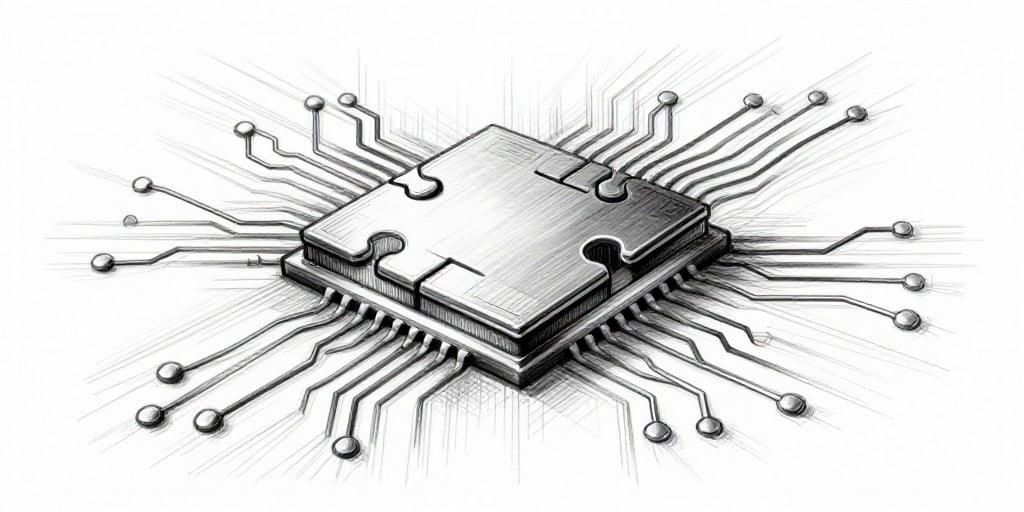
- Chip‑let design: Separating CPU, GPU, and memory controller into distinct chips, then bonding them via silicon‑on‑insulator (SOI) or hybrid bonding techniques. This modularity allows for chip‑density scaling and reduced latency between components.
Packaging innovations, such as Advanced Fan‑in Fan‑out (AFC‑FO) and Co‑Pack technologies, further boost chip density while maintaining yield and reliability.
Strengthening Supply‑Chain Management
AMD has announced a renewed emphasis on supply‑chain resilience:
- Partnerships with key foundries: Deepened collaboration with TSMC, Samsung, and GlobalFoundries to secure priority access to advanced process nodes and mitigate capacity constraints.
- Material supplier agreements: Long‑term contracts with suppliers of high‑purity silicon, high‑k dielectrics, and rare‑earth metals to ensure steady availability of critical raw materials.
- Risk‑management frameworks: Implementation of dual‑source strategies for key components and real‑time inventory tracking across the supply chain.
These measures are designed to support AMD’s production schedules for forthcoming product launches, such as the upcoming EPYC “Naples” server line, and to buffer against potential disruptions in the global semiconductor market.
Industry Context and Expert Perspectives
Industry analysts highlight that AMD’s aggressive investment in R&D and supply‑chain fortification positions it favorably against competitors like Intel and NVIDIA:
- Intel’s recent focus on process‑node slowdown has limited its competitive edge in the high‑end server space.
- NVIDIA continues to dominate the AI GPU market, yet AMD’s integration of GPU‑CPU synergy through its Radeon Instinct line offers a compelling alternative for mixed workloads.
A recent Gartner report predicts that by 2028, data‑center processors will be driven largely by heterogeneous architectures that combine CPUs, GPUs, and AI accelerators on a single system‑on‑chip (SoC). AMD’s chip‑let approach aligns with this trend, potentially delivering a 12‑15 % performance‑per‑watt advantage in AI inference tasks.
Actionable Insights for IT Decision‑Makers and Software Professionals
| Decision Area | Key Takeaways | Recommendations |
|---|---|---|
| Procurement | AMD’s upcoming Zen 5 CPUs will offer superior IPC and lower TDP, improving cost of ownership for cloud workloads. | Evaluate AMD’s EPYC 9004 line for new data‑center clusters, particularly those focused on AI and machine learning. |
| Software Development | The introduction of new SIMD instruction sets and enhanced cache coherence protocols requires updated compiler optimizations. | Allocate budget for porting critical workloads to AMD’s architecture; engage with AMD’s developer tools ecosystem (e.g., ROCm, CXL support). |
| Power Management | Improved power‑gating and dynamic voltage scaling can reduce datacenter energy usage. | Implement workload‑aware power policies that leverage AMD’s power‑efficient cores. |
| Supply‑Chain Resilience | AMD’s dual‑source strategy reduces risk of component shortages. | Incorporate AMD components into multi‑vendor procurement plans to diversify risk. |
Conclusion
AMD’s recent strategic initiatives—spanning expanded fabrication capacity, silicon design refinement, new architectures, packaging innovation, and robust supply‑chain partnerships—demonstrate a clear intent to sustain its competitive advantage. By aligning its product roadmap with emerging industry demands for performance‑efficient, scalable processors, AMD is positioned to support the evolving needs of enterprise, consumer, and cloud‑based customers. IT leaders and software professionals should closely monitor AMD’s product releases and leverage the company’s advanced capabilities to optimize their computing environments for both current and future workloads.