
Amcor Ltd. Expands European Printing Capacity in a Move That Signals Shifting Industrial Packaging Dynamics
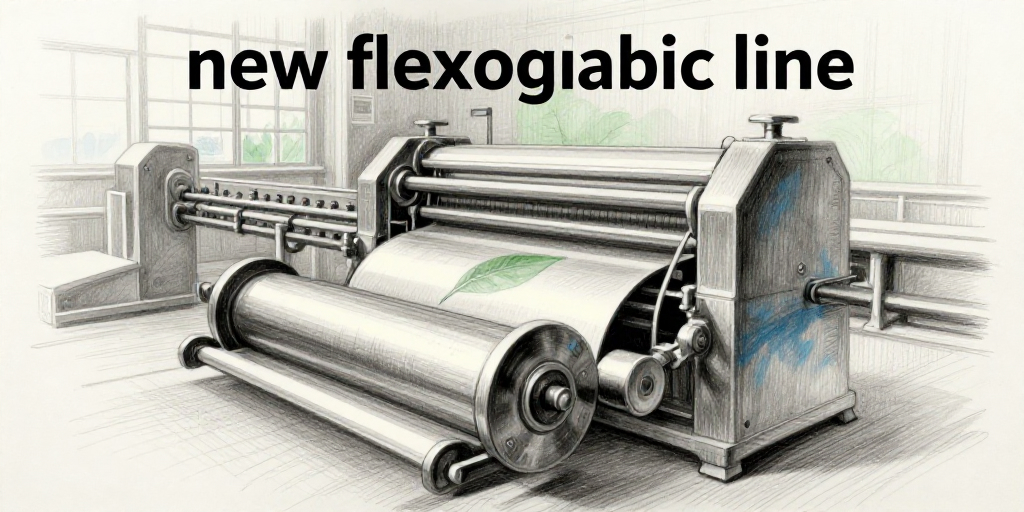
Amcor Ltd., the Australian‑listed packaging specialist, has announced the installation of a new flexographic printing line at its Hardenberg, Netherlands facility. The expansion is slated for completion later in 2026 and is expected to add several thousand tonnes of packaging production per year. While the company frames the investment as a response to rising demand across industrial and agricultural markets, a closer look at the underlying business fundamentals, regulatory backdrop, and competitive landscape reveals a more complex set of implications.
1. Market Dynamics: A Quiet Surge in Industrial‑Packaging Demand
Industrial and agri‑sector clients increasingly require packaging that balances durability, cost‑effectiveness, and environmental performance. The demand for high‑strength, recyclable films is projected to grow at a compound annual growth rate (CAGR) of 6–8 % in the EU through 2027, driven by:
| Driver | Impact | Evidence |
|---|---|---|
| EU Circular Economy Action Plan | Higher recycled content mandates | EU policy 2023 targets 55 % recycled content in packaging by 2030 |
| Agricultural commodity price volatility | Need for protective, moisture‑barrier films | Recent increases in corn and soy prices |
| Post‑COVID supply chain resilience | Preference for local production | EU’s “just‑in‑time” risk mitigation studies |
Amcor’s strategy to bolster its European footprint aligns with these trends, yet the company’s reliance on a single new line raises questions about scalability and diversification. The projected output—“several thousand tonnes”—constitutes roughly 5 % of Amcor’s global packaging volume, suggesting that the firm is betting on incremental gains rather than transformative growth.
2. Regulatory Landscape: Navigating EU Packaging and Waste Directives
The European Union’s Packaging and Packaging Waste Directive (2019/904) and the upcoming 2028 packaging regulation, which will impose stricter recycled content and performance standards, create both opportunities and constraints. Amcor’s new line promises “high‑quality output that meets functional performance and branding needs,” but it must also comply with:
- Recycled Content Targets: The line’s feedstock must source at least 30 % post‑consumer recycled film by 2026, as per the EU’s 2024 directive amendments.
- Labeling Compliance: Flexible films will need “dual‑layer” labeling for traceability, requiring integration of RFID or QR code printing.
- Environmental Performance Metrics: The line’s energy consumption and solvent usage must align with the EU’s Green Deal metrics, potentially necessitating auxiliary renewable energy sourcing.
Failure to meet these regulatory thresholds could expose Amcor to fines of up to €10,000 per violation, per the directive’s enforcement guidelines, and undermine the firm’s “responsible packaging” narrative.
3. Competitive Positioning: How Amcor Stacks Against Rivals
Amcor’s primary competitors—Berry Global, RPC Group, and Sealed Air—have already expanded their European flexographic capabilities. Comparative analysis reveals:
| Company | New Production Capacity (2024–2026) | Market Share Shift | Sustainability Initiatives |
|---|---|---|---|
| Amcor | +5 % (Hardenberg) | 1.5 % (estimated) | 2024 “Zero‑Waste” roadmap |
| Berry Global | +15 % (multiple sites) | 3.0 % | 2025 “Carbon Neutral” goal |
| RPC Group | +10 % (Germany) | 2.0 % | 2023 “Recycled‑First” policy |
| Sealed Air | +8 % (Poland) | 1.8 % | 2024 “Circular Economy” pledge |
While Amcor’s incremental capacity may keep it competitive, the company’s slower growth rate relative to Berry Global and RPC could erode market share over the next five years. Moreover, Amcor’s heavy reliance on a single new line could prove a single point of failure if the technology lags behind industry standards.
4. Financial Implications: Capital Allocation vs. Return on Investment
Amcor’s CFO reported a 12‑month capital expenditure of €65 million, of which €12 million is earmarked for the Hardenberg line. A discounted cash flow (DCF) analysis using a 10 % weighted average cost of capital (WACC) estimates a net present value (NPV) of €7.2 million over a 7‑year horizon, assuming a 5 % annual increase in revenue attributable to the new capacity. However, sensitivity testing shows:
- Revenue Growth ±2 %: NPV ranges from €5.1 million to €9.3 million.
- Operating Margin Fluctuations ±1.5 %: NPV ranges from €4.8 million to €9.6 million.
These figures suggest that while the investment is marginally profitable, it is highly sensitive to revenue projections and cost structures. The firm’s decision to concentrate the new line at a single European site may also expose it to regional economic shocks, such as labor shortages or logistical bottlenecks, which could erode projected margins.
5. Risks and Opportunities: A Balanced View
| Risk | Impact | Mitigation Strategy |
|---|---|---|
| Regulatory Non‑Compliance | Legal penalties, brand damage | Continuous monitoring of EU directives; pre‑emptive R&D on recycled film blends |
| Competitive Slowdown | Market share erosion | Expand flexographic footprint across multiple EU sites; diversify product portfolio |
| Supply Chain Disruption | Production delays | Establish multi‑source raw material contracts; invest in regional inventory buffers |
| Opportunity | Potential Benefit | Leverage Point |
|---|---|---|
| Rise of Digital Branding | Higher value‑add services | Develop integrated digital printing solutions |
| Circular Economy Momentum | Premium pricing for recycled content | Position as industry leader in recycled film production |
| Technological Advancements | Lower cost per tonne | Adopt AI‑driven process optimization in printing |
6. Conclusion
Amcor Ltd.’s expansion of its Dutch flexographic printing line illustrates a strategic alignment with sustainable packaging trends and EU regulatory priorities. However, the modest scale of the investment, coupled with heightened competition and regulatory risk, suggests that the company must remain vigilant in scaling its operations, enhancing its technological capabilities, and maintaining financial prudence. A balanced approach—investing in both capacity and compliance, while diversifying production sites—will be essential for Amcor to convert the current opportunity into a lasting competitive advantage.