
Amazon’s Capital‑Expenditure Surge and the Implications for Heavy‑Industry Manufacturing
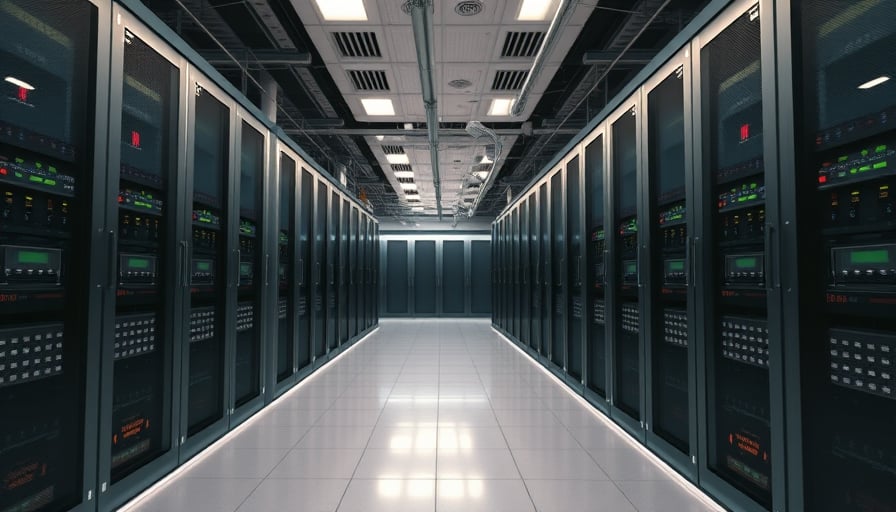
Amazon’s recent quarterly filing revealed a substantial escalation in capital expenditures—projected to exceed a 50 % increase for the current fiscal year—directed toward expanding its artificial‑intelligence (AI) infrastructure. The announcement prompted a sharp decline in the company’s equity price, with after‑hours trading showing a drop of more than ten percent. While the headline news is financial, the underlying shift reflects broader trends in manufacturing processes, industrial equipment deployment, and capital‑investment behavior that are reshaping heavy industry.
1. Productivity Metrics in a Data‑Centric Manufacturing Landscape
Modern manufacturing plants increasingly rely on AI‑driven analytics to optimize throughput, reduce scrap, and forecast equipment failures. Amazon’s investment in AI infrastructure is a strategic response to the same productivity pressures confronting steel mills, semiconductor fabs, and aerospace suppliers. The key metrics that companies track—such as Overall Equipment Effectiveness (OEE) and Mean Time Between Failures (MTBF)—are directly influenced by the quality of data pipelines and edge‑computing capabilities.
- OEE Improvement: By deploying AI models that predict tool wear, manufacturers can schedule maintenance proactively, raising the availability component of OEE. Amazon’s AI centers will provide comparable analytics for its logistics and data‑center operations, thereby reducing downtime across a global supply chain.
- Cost‑Per‑Unit Reduction: Advanced predictive models lower energy consumption and raw‑material waste. For heavy‑industry firms, energy intensity is a critical cost driver; AI‑enabled load‑balancing can cut power usage by 5–10 % in data‑center clusters, translating into billions in annual savings for a company like Amazon.
2. Technological Innovation in Heavy Industry: From Automation to Digital Twins
The manufacturing sector is witnessing a paradigm shift driven by digital twins, autonomous robotic systems, and high‑throughput additive manufacturing. Amazon’s capital allocation to AI infrastructure dovetails with these innovations in several ways:
Digital Twin Adoption: High‑fidelity digital replicas of production lines enable real‑time monitoring of equipment health. The investment in AI data centers allows Amazon to refine predictive models that can be replicated by industrial equipment vendors, accelerating the adoption curve for digital twins in automotive and aerospace plants.
Robotic Process Automation (RPA): AI algorithms can orchestrate complex robotic work cells, coordinating multiple machines simultaneously. Amazon’s expanded AI capacity facilitates the deployment of RPA at scale, thereby reducing labor intensity and improving consistency in repetitive tasks.
Additive Manufacturing Acceleration: AI is critical for optimizing build parameters in 3D printing, especially for high‑stress components used in aerospace. The computational power delivered by Amazon’s new data centers could be leveraged by partners to reduce cycle times and material waste.
3. Capital‑Expenditure Decision Drivers in a Post‑COVID Economic Context
Capital budgeting decisions for heavy‑industry firms now consider several intertwined factors:
| Driver | Explanation | Impact on CAPEX |
|---|---|---|
| Regulatory Shifts | New environmental standards (e.g., EU Emissions Trading System) demand cleaner processes. | Higher upfront costs for carbon‑capture equipment; long‑term savings on compliance fines. |
| Tariff Volatility | Recent tariff changes on steel and aluminum imports increase input costs. | Encourages domestic capacity expansion, boosting CAPEX in local manufacturing hubs. |
| Supply‑Chain Resilience | COVID‑19 exposed fragilities in global logistics. | Firms invest in localized production and inventory buffers, raising CAPEX in downstream facilities. |
| Infrastructure Spending | Public investments in rail, ports, and energy grids reduce transportation and operational costs. | Makes previously remote sites viable, leading to CAPEX in new regional plants. |
Amazon’s announcement underscores the importance of investment in AI as a driver of productivity, which can offset some of the cost pressures introduced by tariffs and regulatory compliance. The company’s leadership notes that pricing pressures may intensify as tariff changes take effect, adding another layer of uncertainty for investors.
4. Supply‑Chain Impacts and the Role of Industrial Equipment
An expanded AI infrastructure does more than enhance Amazon’s own operations; it influences the broader supply chain:
- Real‑Time Demand Forecasting: AI models can predict consumer demand patterns, allowing manufacturers to adjust production schedules. This reduces the bullwhip effect, which traditionally leads to excess inventory and underutilized equipment.
- Dynamic Routing Algorithms: AI-powered logistics platforms can re-route shipments in real time, optimizing fleet utilization and reducing wear on transport equipment.
- Predictive Maintenance of Fleet and Equipment: By ingesting telemetry from trucks, conveyor belts, and robotic arms, AI systems can anticipate failures and schedule maintenance during off‑peak periods, extending asset lifecycles.
5. Regulatory Changes and Infrastructure Spending: A Symbiotic Relationship
Recent policy initiatives—such as the U.S. Infrastructure Investment and Jobs Act—have increased funding for rail, ports, and broadband infrastructure. These investments directly reduce logistical costs for manufacturers and facilitate the deployment of AI‑enabled equipment. Conversely, stricter environmental regulations push firms toward energy‑efficient technologies, often requiring significant capital outlays for retrofitting plants with AI‑controlled HVAC and process monitoring systems.
The interplay between regulation and infrastructure thus shapes capital‑expenditure landscapes:
- Enhanced Connectivity: Improved broadband enables edge AI deployment in remote facilities, allowing manufacturers to integrate IoT sensors and perform real‑time analytics.
- Sustainability Incentives: Grants and tax credits for low‑emission equipment lower the effective CAPEX required for compliance, encouraging firms to invest in newer, AI‑compatible machinery.
6. Market Implications for Industrial Equipment Suppliers
The shift toward AI‑enhanced manufacturing is a boon for industrial equipment vendors specializing in:
- Industrial IoT Sensors: Demand for high‑accuracy, low‑power sensors rises as plants adopt AI for condition monitoring.
- Edge Computing Hardware: On‑premise AI inference requires robust, energy‑efficient processors, creating a niche market for specialized chips.
- Software Platforms: Integration suites that translate sensor data into actionable insights become essential, opening opportunities for SaaS providers.
Conversely, suppliers of legacy equipment may face displacement if their products cannot be retrofitted for AI integration, prompting a potential consolidation in the industrial equipment sector.
7. Conclusion
Amazon’s significant increase in capital expenditures toward AI infrastructure is a microcosm of a larger trend in heavy industry: the pursuit of productivity gains through data‑driven innovation. While the immediate market reaction has been negative, the long‑term effects may include:
- Higher Efficiency Standards across manufacturing supply chains.
- Accelerated Adoption of Digital Twins and predictive maintenance.
- Re‑balancing of Global Production Networks in response to tariff and regulatory dynamics.
Stakeholders—investors, equipment suppliers, and policymakers—must monitor how these capital‑investment decisions ripple through the industrial ecosystem, reshaping productivity metrics, technological adoption, and the competitive landscape in the years to come.