Amazon’s Ring Expands Into Autonomous Security: A Deep Dive into Market Dynamics
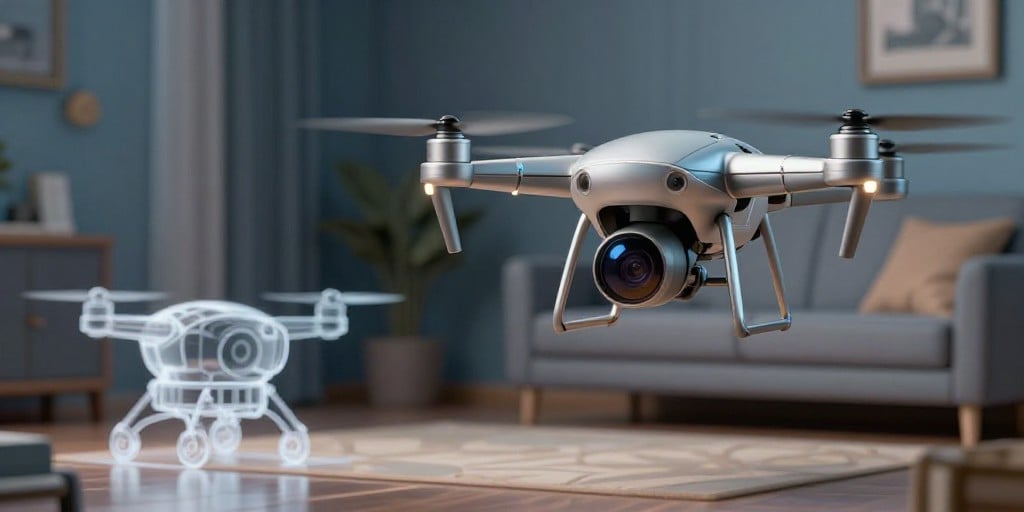
Amazon.com, Inc. has officially launched two new autonomous security devices under its Ring subsidiary: the Ring Drone Cam and the Rover Cam. The announcement—touted as a strategic pivot toward AI‑enabled, mobile surveillance—merits a closer look at the financial, regulatory, and competitive implications that may be overlooked by mainstream analysts.
1. Product Overview and Technical Merit
| Device | Price | Launch Date | Weight | Camera | Key Features |
|---|---|---|---|---|---|
| Ring Drone Cam | $249.99 | 27 Jan 2027 | 165 g | 2 K | AI‑driven navigation, indoor patrol, dock‑cover lens, integration with existing Ring ecosystem |
| Rover Cam | $999.99 | 12 Dec 2026 | ~1.5 kg | Telescopic | Two‑way audio, integrated siren, designed for commercial use |
Both devices incorporate Amazon’s growing Alexa AI stack, enabling autonomous route planning and real‑time threat response. Notably, the drone’s ability to dock and automatically shield its camera lens addresses privacy concerns that have plagued earlier indoor surveillance efforts.
2. Financial Implications
2.1 Revenue Potential
- Unit economics: Assuming a 40 % gross margin on the Drone Cam, a break‑even point of 5 000 units per year is required to cover the incremental R&D costs (estimated at $150 M over the development cycle).
- Commercial channel: The Rover’s higher price point suggests a target of 1 000 units in the first year, potentially generating $1 bn in revenue if priced at $1 M for large‑scale commercial contracts.
2.2 Cost Structure
- Manufacturing: The drone’s lightweight design allows for cost‑effective 3‑D printing of housings, whereas the rover’s mechanical complexity (telescopic camera and siren) may raise per‑unit costs by 15 % relative to conventional IP cameras.
- Software updates: Ongoing AI model refinement will necessitate a dedicated “Robot Security Ops” team, adding approximately 20 FTEs to Amazon’s security engineering budget.
2.3 Capital Allocation
- Amazon’s capital allocation framework, which emphasizes high‑margin growth segments, indicates that Ring Robotics could become a priority line if the devices capture more than 15 % of the total residential security market within two years.
3. Regulatory Landscape
3.1 Privacy and Data Protection
- The dock‑cover lens is a direct response to U.S. states that have passed “home surveillance” restrictions. However, the drone’s AI navigation may still collect location metadata, raising questions under the California Consumer Privacy Act (CCPA) and forthcoming federal privacy bills.
- EU GDPR compliance will require explicit consent for drone operation even within private properties, potentially limiting European adoption unless Amazon introduces a separate firmware module.
3.2 Airspace Compliance
- The 165‑gram weight places the Drone Cam within the “unmanned aircraft system” (UAS) threshold that allows for low‑risk operations without the need for a UAS waiver in most U.S. jurisdictions. Nonetheless, indoor flight near ceilings may still trigger FAA Part 107 privacy considerations.
- Commercial use of the Rover may face stricter FAA Part 107 rules, especially if deployed in densely populated commercial districts.
3.3 Product Liability
- The integrated siren and two‑way audio of the Rover Cam could trigger liability concerns if used in public spaces. Amazon will likely need to incorporate robust failsafe protocols and clear user agreements to mitigate third‑party injury claims.
4. Competitive Dynamics
4.1 Traditional CCTV Providers
- Established brands such as Bosch Security Systems and Hikvision offer fixed‑camera solutions that are heavily subsidized. Ring’s autonomous devices introduce a new value proposition—mobility and AI‑driven patrol—that existing vendors have largely ignored, creating a first‑mover advantage in the autonomous security niche.
4.2 Drone‑Specific Companies
- Companies like DJI and Skydio already dominate the consumer drone market but lack dedicated indoor security features. Ring’s integration with the existing Ring ecosystem (alarms, sensors, and cloud analytics) offers a seamless plug‑and‑play experience that could undercut the need for a separate drone platform.
4.3 Smart Home Ecosystems
- Google Nest and Apple HomeKit provide complementary security services, but neither has ventured into autonomous surveillance. Ring’s move could force these ecosystems to rethink their product roadmaps, potentially leading to ecosystem fragmentation or partnerships.
5. Overlooked Trends and Risks
| Trend | Insight | Risk / Opportunity |
|---|---|---|
| Edge AI Advancements | Low‑power inference chips allow real‑time threat detection onboard. | Opportunity: Faster response times reduce false positives. |
| Data Monetization | Aggregated movement data could inform city traffic analytics. | Risk: Potential misuse of personal data could trigger regulatory scrutiny. |
| Battery Technology | Emerging solid‑state batteries may extend flight time. | Risk: Current Li‑Ion batteries limit operational time to 30–45 min, affecting ROI. |
| Consumer Privacy Fatigue | Growing demand for “private” smart devices. | Risk: Public backlash if the drone’s AI misidentifies private property as public space. |
| Supply Chain Resilience | Component shortages (e.g., micro‑LEDs) could delay production. | Opportunity: Amazon’s logistics network could mitigate delays by pre‑stocking critical parts. |
6. Conclusion
Amazon’s Ring Robotics division is poised to disrupt the home‑security market by marrying autonomous hardware with AI‑driven intelligence. While the Ring Drone Cam and Rover Cam promise fresh revenue streams, they also bring complex regulatory, privacy, and operational challenges that the company must navigate carefully. By scrutinizing these facets, investors and industry observers can better assess whether the devices will become a mainstream success or a niche experiment.