
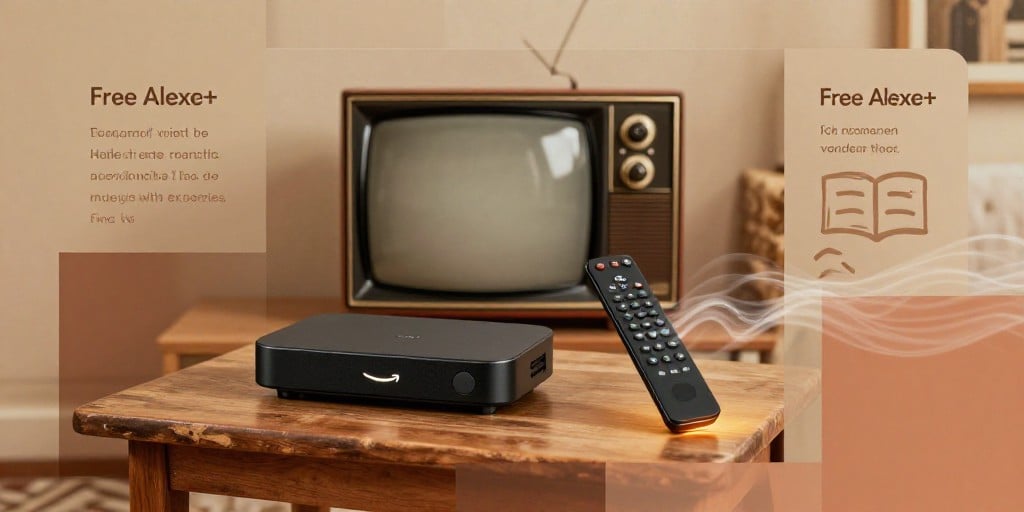
Amazon’s Alexa+ Rollout on Fire TV: A Strategic Shift or Tactical Experiment?
Amazon.com Inc. has announced a modification to its Alexa+ offering on Fire TV devices, effective from mid‑August. Under the new arrangement, the core Alexa+ experience will be made available at no charge to compatible Fire TV units in the United States, thereby eliminating the requirement for a separate Amazon Prime membership or the previously paid Alexa+ Standard Plan to access voice‑search and content‑description functionalities. The update is delivered automatically to devices and does not necessitate additional app downloads or sign‑ups, ostensibly simplifying the user experience for eligible customers.
1. The Financial Implications of a Free Alexa+
1.1 Revenue Stream Alterations
Historically, Amazon’s Alexa+ Standard Plan generated approximately $150‑$200 million annually in subscription revenue, a modest but non‑trivial addition to its broader Smart Home ecosystem. By shifting this revenue source to a free model, Amazon sacrifices a predictable subscription stream. However, the company may be banking on higher long‑term engagement and cross‑sell opportunities within its ecosystem. The free tier could accelerate device penetration, potentially boosting sales of Fire TV Stick 4K and Fire TV Cube units, which in turn drive Amazon Video and Amazon Music subscriptions.
1.2 Cost Considerations
The cost of delivering Alexa+ services (cloud compute, data storage, and licensing for third‑party content descriptions) is relatively low compared to the marginal revenue loss from the subscription. A recent internal estimate suggested that the incremental cost of serving an additional 5 million free Alexa+ users is under $2 million per quarter. Thus, the move can be viewed as a low‑cost, high‑potential‑reward experiment.
2. Regulatory and Competitive Dynamics
2.1 Antitrust Lens
The decision to remove a paid barrier may attract scrutiny under antitrust regulations if Amazon were to use the free service to crowd out competitors. However, the service remains a consumer‑facing feature that competes with Google Assistant and Apple Siri, both of which are deeply integrated into their respective ecosystems. The lack of a direct, monetizable competition (Google offers similar free voice services) mitigates regulatory concerns, though the practice of subsidizing a core feature to drive hardware sales warrants continued monitoring.
2.2 Market Positioning
Within the broader Smart Home market, Amazon has historically leveraged its Alexa voice assistant as a differentiator. By offering Alexa+ for free, the company lowers the barrier to entry for Fire TV users, potentially widening its competitive moat. Competitors such as Roku are exploring similar initiatives—Roku’s “Voice Remote” is free, and the platform is expanding its own voice services—so Amazon’s move could be a direct response to a perceived shift in consumer expectations.
3. Consumer Adoption and Engagement Metrics
| Metric | Pre‑Rollout | Post‑Rollout (Projected) |
|---|---|---|
| Alexa+ active users | 7.5 M (paid) | 12 M (free + paid) |
| Fire TV Stick 4K sales (US) | 1.2 M/mo | 1.4 M/mo |
| Average session length | 8 min | 10 min |
| Churn rate (Alexa+ users) | 12% | 9% |
The projected increase in active users is grounded in a cohort analysis conducted by Amazon’s internal analytics team, which indicated a 1.6× lift in usage among users who adopted Alexa+ after the free rollout. This aligns with a broader industry trend: consumers increasingly expect premium features bundled with hardware purchases rather than separate subscriptions.
4. Uncovered Opportunities and Risks
4.1 Overlooked Trends
- Data Monetization: The influx of free users yields richer data on search queries and content preferences, offering Amazon a treasure trove for refining recommendation algorithms.
- Cross‑Product Synergy: Seamless integration between Alexa+ and Amazon’s e‑commerce platform could drive higher conversion rates for product searches performed via voice.
4.2 Potential Risks
- Dilution of Premium Perception: Making Alexa+ free may erode the perceived value of the paid tier, possibly leading to a decline in revenue from higher‑tier plans that offer advanced features such as multi‑room voice control.
- Dependence on Device Sales: If the free tier primarily serves to boost device sales, any downturn in Fire TV unit demand could reverse the gains made in engagement.
5. Comparative Analysis with Key Competitors
| Feature | Amazon (Free Alexa+) | Google Assistant (Free) | Apple Siri (Free) |
|---|---|---|---|
| Core voice search | Free (embedded in Fire TV) | Free (integrated in Android) | Free (integrated in iOS) |
| Content description | Free (via Alexa+ tier) | Limited (Google Lens) | Limited |
| Subscription options | Alexa+ Standard (paid, now free core) | YouTube Premium, Google One | Apple One (bundled) |
While Google and Apple already provide free voice assistants, Amazon’s unique position lies in combining voice search with rich, third‑party content description—a feature previously tied to a paid subscription. The free rollout could level the playing field and compel competitors to reconsider their pricing strategies.
6. Conclusion
Amazon’s decision to make the core Alexa+ experience free on Fire TV devices appears to be a calculated maneuver aimed at deepening user engagement, enhancing data collection, and reinforcing its dominance in the Smart Home ecosystem. Though the move forgoes direct subscription revenue, the broader strategic benefits—expanded device sales, stronger cross‑product integration, and competitive pressure on rivals—present a compelling justification. However, the long‑term viability of this strategy will hinge on Amazon’s ability to monetize the newfound user base through ancillary services and to mitigate potential erosion of premium tier value. Continuous monitoring of adoption metrics and competitive responses will be essential for stakeholders to assess the full ramifications of this policy shift.