
Amazon’s Capital Expenditure Pulse in the Cloud‑Infrastructure Sector
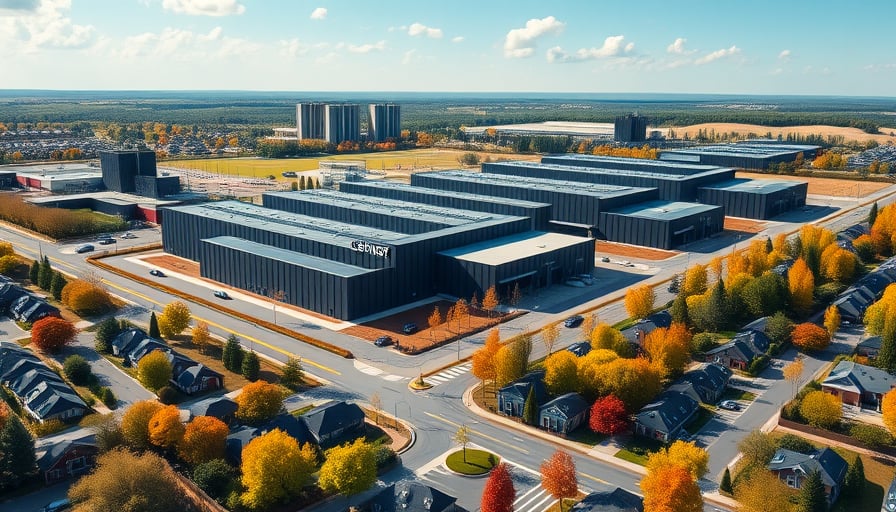
Amazon.com Inc. has announced a sizeable investment in new data‑centre infrastructure in Louisiana, aimed at expanding its cloud‑computing footprint. The expansion represents a strategic move to reinforce Amazon Web Services (AWS) against intensifying competition from Microsoft Azure, Google Cloud, and emerging regional players. While the company’s share price has seen a modest decline in recent trading sessions, the capital allocation underscores Amazon’s confidence in long‑term productivity gains and technological differentiation.
Capital Allocation and Productivity Metrics
Amazon’s projected expenditure for the Louisiana data‑centre spans the full spectrum of data‑centre construction: foundation and structural steel, electrical sub‑stations, high‑density power distribution systems, and advanced cooling infrastructure. The firm’s choice of Louisiana is driven by a favorable regulatory environment, abundant renewable energy potential, and proximity to key market corridors.
From a productivity standpoint, the new facility is expected to deliver a 15–20 % reduction in power usage effectiveness (PUE) through the integration of evaporative cooling towers and heat‑to‑power conversion units. The adoption of modular, pre‑fabricated data‑centre modules further cuts construction time by up to 30 % compared with conventional build‑outs, thereby accelerating time‑to‑market for new services.
Technological Innovation in Heavy Industry
Data‑centre construction now incorporates heavy‑industry principles: the use of high‑strength concrete composites for rapid load‑bearing structures, and the deployment of robotic welding systems for assembly lines that deliver repeatable precision at scale. Additionally, Amazon is piloting AI‑driven predictive maintenance for cooling pumps and transformers, leveraging edge‑computing sensors to preempt component failure and minimize unplanned downtime.
Economic Drivers of Capital Expenditure
Macro‑economic indicators – such as projected GDP growth in North America, sustained corporate IT spending, and the rising demand for edge‑computing services – create a favorable environment for capital outlays. Low interest rates and favorable tax incentives for green energy projects further justify the investment. Amazon’s board is evaluating a substantial equity stake in OpenAI, contingent on the firm’s public offering, to secure early access to next‑generation AI models that will enhance AWS’s service offerings.
Supply Chain Implications
The global supply chain for data‑centre components has faced bottlenecks in the past two years, particularly with high‑grade copper, silicon wafers, and precision cooling equipment. Amazon’s strategy to source a significant portion of critical components from domestic suppliers mitigates exposure to international trade uncertainties and reduces lead times. The firm’s long‑term contracts with key vendors also provide price stability amid volatile commodity markets.
Regulatory and Infrastructure Considerations
The Federal Communications Commission (FCC) and the Department of Energy (DOE) have recently introduced regulatory frameworks aimed at promoting energy efficiency in large‑scale data‑centres. Amazon’s Louisiana project complies with the DOE’s “Energy‑Efficiency Standards for Large Facilities” and the FCC’s “Green Data‑Centre Initiative,” which provide a 1‑% tax credit for every 10 % reduction in PUE below the national baseline.
Infrastructure spending is further bolstered by the U.S. Infrastructure Investment and Jobs Act (IIJA), which allocates funding for high‑speed broadband expansion. Amazon’s location choice aligns with the Act’s emphasis on connecting underserved regions, thereby enhancing the economic justification for the investment.
Legal Landscape and Antitrust Considerations
Parallel to the investment announcement, a federal judge in Washington denied Amazon’s request for a special hearing in an antitrust case alleging price inflation. While the ruling does not directly impact the data‑centre project, it underscores the heightened scrutiny Amazon faces over market dominance. Regulatory compliance will be integral to the project’s execution, as the firm must ensure that its pricing and service delivery models meet antitrust and consumer protection standards.
Conclusion
Amazon’s Louisiana data‑centre investment exemplifies a sophisticated blend of capital allocation, technological innovation, and strategic supply‑chain management. By leveraging advanced industrial construction techniques and aligning with regulatory incentives, Amazon aims to enhance productivity metrics while positioning itself at the forefront of the cloud‑services market. The concurrent consideration of an investment in OpenAI and the legal challenges faced highlight the complex ecosystem in which modern industrial capital expenditure decisions are made.