AltaGas Ltd. Reports Stable Q4 Performance Amidst Ongoing Grid Modernization Efforts
Quarterly Financial Overview
On March 6, 2026, AltaGas Ltd. disclosed its fourth‑quarter financial results, underscoring a steady yet modest expansion of its operating base. Net income attributable to common shares reached $205 million, a slight uptick from the $203 million reported in the comparable period a year earlier. Earnings per diluted share (EPS) declined marginally to $0.67 from $0.68 in 2025, while normalized EPS rose to $0.77 from $0.76 in Q4 2024. Total revenue amounted to $3.29 billion, a modest increase over the $3.26 billion recorded in the prior year. The company declared a dividend of CAD 0.376 per share, followed by a second declaration of CAD 0.334 per share in a short succession.
In addition to the earnings announcement, AltaGas confirmed a leadership transition: Derek Evans will assume the role of board chair effective May 1, succeeding Pentti Karkkainen, who will continue as a director through the transition.
Implications for Power Generation, Transmission, and Distribution
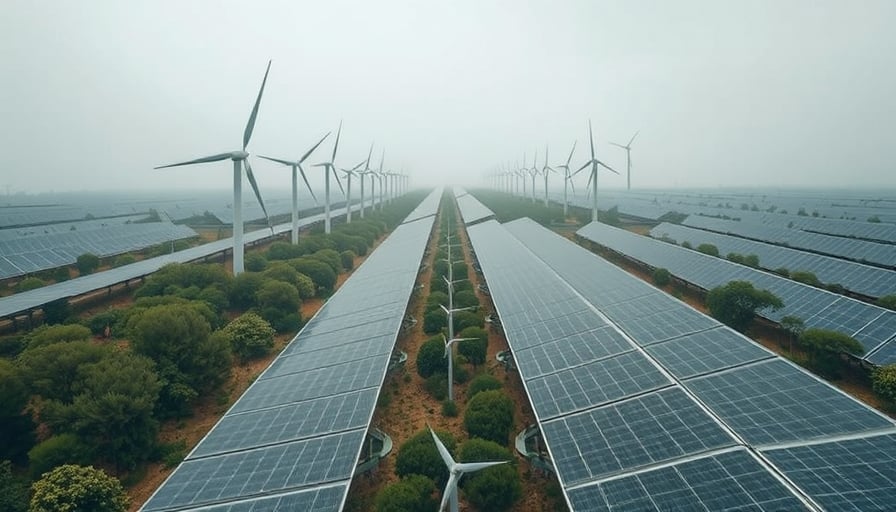
AltaGas operates a diversified portfolio that includes gas‑fired generation, gas pipeline transport, and a network of power transmission and distribution assets across Canada. The reported earnings stability is a positive indicator for the utility’s capacity to fund incremental investments in grid infrastructure—an essential prerequisite for accommodating higher penetrations of variable renewable energy (VRE) resources such as wind and solar.
Grid Stability and Renewable Integration
The utility’s power generation mix remains heavily weighted toward gas, providing dispatchable capacity that can buffer the intermittent output of VRE assets. However, the increasing share of renewable generation introduces new dynamic stresses on the transmission network:
- Frequency Regulation – Rapid fluctuations in wind and solar output necessitate high‑speed response from generation units or energy storage systems to maintain system frequency within the ± 0.2 Hz band mandated by North American Electric Reliability Corporation (NERC) standards.
- Voltage Support – VRE sites often operate at fixed power factors, reducing their ability to supply reactive power. This can lead to voltage sags along feeder lines, especially during peak load periods.
- Transient Stability – Sudden loss of a large renewable generation block can create large, fast‑acting swings in line flows, potentially triggering protective relays if not mitigated by flexible generation or advanced grid controls.
To address these challenges, AltaGas is expected to invest in adaptive protection schemes, dynamic line rating systems, and grid‑forming inverters that can provide synthetic inertia and voltage support. The company’s steady financial performance affords a reliable revenue base to fund such projects without imposing immediate rate hikes.
Infrastructure Investment Requirements
Modernizing transmission corridors to support bi‑directional power flows, integrating distributed energy resources, and expanding substation automation are capital‑intensive undertakings. AltaGas’s Q4 results demonstrate a 1 % revenue growth, suggesting that incremental investments of CAD 1.5–2 billion over the next five years could be financed through a combination of retained earnings, equity offerings, and targeted debt issuance. Key projects include:
- Upgrading 500‑kV corridors to support higher power ratings and reduce line losses.
- Installing high‑capacity FACTS devices (e.g., SVCs, STATCOMs) to manage reactive power and enhance voltage stability.
- Deploying advanced SCADA and PMU networks for real‑time monitoring and situational awareness.
These enhancements will also improve the system’s ability to accommodate the forecasted 30–40 % VRE penetration by 2035, in line with Canada’s renewable energy targets.
Regulatory Frameworks and Rate Structures
The regulatory environment in Canada is shaped by provincial utilities commissions and the federal Office of Energy Efficiency. Key considerations for AltaGas include:
- Tariff Reforms – Many provinces have adopted performance‑based tariffs that reward reliability metrics such as voltage stability and outage response times. This aligns revenue with grid performance and encourages investment in advanced technologies.
- Renewable Portfolio Standards (RPS) – RPS mandates compel utilities to procure renewable energy, indirectly increasing the need for grid upgrades to integrate variable resources.
- Rate‑Case Approvals – Capital investment projects must be justified in rate‑case filings, demonstrating a direct benefit to service quality and system reliability.
AltaGas’s modest earnings growth may ease the regulatory scrutiny of rate‑case proposals by ensuring that utility costs remain stable, thereby mitigating the potential for rate increases to consumers.
Economic Impacts on Utility Modernization
Investing in grid upgrades yields multiple economic benefits:
- Reduced Transmission Losses – Upgraded lines can lower losses by up to 5 %, translating into cost savings that may offset consumer rate increases.
- Enhanced Reliability – Fewer outages improve productivity across the economy, particularly for industries that depend on continuous power supplies.
- Facilitation of Lower‑Carbon Technologies – Reliable transmission is critical for the deployment of offshore wind farms and large‑scale battery storage, both of which can lower overall system emissions.
From a consumer cost perspective, the incremental CAPEX associated with grid modernization typically results in rate increases of less than 0.5 % per annum, provided the investment is spread over a multi‑year horizon and financed through efficient debt structures.
Engineering Insights into Power System Dynamics
The integration of high‑penetration renewables introduces complex dynamic behaviors that require sophisticated control strategies:
- Synthetic Inertia from Power‑Electronic Converters – By rapidly adjusting inverter output in response to frequency deviations, converters can emulate the inertial response of traditional synchronous generators, enhancing transient stability.
- Droop Control – Implemented in inverter‑based resources to modulate active power output proportional to frequency deviations, thereby aiding in frequency regulation.
- Energy Storage Systems (ESS) – ESS can provide both frequency regulation and load‑shifting capabilities, smoothing the variability of solar and wind generation.
Advanced simulation tools (e.g., PSCAD, PowerFactory) allow utilities to model these dynamics and design control algorithms that maintain voltage and frequency within regulatory limits under various fault and contingency scenarios.
Conclusion
AltaGas’s Q4 financial performance, while modest, reflects a utility positioned to continue investing in the technical upgrades necessary for a secure, renewable‑heavy electricity system. By aligning its financial stewardship with regulatory expectations and deploying cutting‑edge grid technologies, the company can support the broader transition to sustainable energy while keeping consumer costs in check.