Corporate News
Altagas Ltd. Reports Modest Growth Amidst Uncertainty in Canada’s Gas Utilities Landscape
Altagas Ltd., the Toronto‑Stock‑Exchange‑listed Canadian gas utilities operator, released its quarterly financial statements for the year‑end period of December 31, 2025. The company reported a net income of approximately CAD 205 million, translating into earnings per diluted share (EPS) of 0.67 CAD—a marginal decline from the 0.68 CAD recorded a year earlier. On a normalized basis, EPS rose to 0.77 CAD, up slightly from 0.76 CAD in the same quarter of 2024. Total revenue climbed to roughly CAD 3.29 billion, a modest 1 % increase over the CAD 3.26 billion reported a year prior.
Altagas confirmed a dividend of 0.376 CAD per share for the preferred class and 0.334 CAD per share for the common class, maintaining its steady distribution policy. The board has announced the appointment of Derek Evans as chair, effective May 1, with the current chair, Pentti Karkkainen, remaining on the board as a director until that date.
Guidance Signals Cautious Outlook
The company’s full‑year guidance projects modest growth: analysts anticipate a year‑end EPS of ≈ 2.21 CAD and revenue near CAD 12.86 billion. This conservative outlook reflects a strategic emphasis on sustaining an operating profile within the gas utilities sector, supported by activities in production, transmission, distribution, and energy‑management services in the Calgary region.
Investigative Lens: Uncovering the Underlying Dynamics
1. Business Fundamentals in a Transitional Energy Market
Altagas operates within the midstream segment of Canada’s energy industry—a sector that has historically delivered stable cash flows but is increasingly exposed to the global shift toward decarbonization. The company’s revenue growth of 1 % is modest when juxtaposed with the broader gas utilities market, which has seen double‑digit expansion in regions with robust demand for natural gas as a transition fuel. This lag raises questions about Altagas’s market positioning, network reach, and pricing power.
A detailed review of the company’s balance sheet shows a debt‑to‑equity ratio of 0.45, comfortably below industry averages of 0.65–0.70. Cash‑flow statements indicate that operating cash flow has grown by 3 % YoY, yet free cash flow has stagnated at CAD 48 million, largely consumed by capital expenditures on pipeline expansion and digital infrastructure upgrades. These capital outlays, while essential for long‑term resilience, constrain the firm’s ability to increase dividend payouts or pursue strategic acquisitions.
2. Regulatory Environment: The Double‑Edged Sword
Canada’s federal and provincial regulators are tightening emissions standards and incentivizing low‑carbon energy. Alberta’s Emissions Reduction Plan (ERP) now requires gas utilities to reduce methane leakage by 15 % by 2030, imposing a cost burden of up to CAD 12 million annually on midstream operators. Altagas has announced a compliance budget of CAD 9 million for the upcoming year, a figure that will shrink net margins if the firm fails to achieve efficiencies in leak detection and repair.
Conversely, the National Energy Board’s (NEB) updated pipeline approval guidelines have reduced administrative delays by 20 %, potentially accelerating Altagas’s planned expansion projects. The company’s pipeline network, currently 4,200 km, is slated to extend by 12 % over the next five years, which, if executed, could enhance upstream revenue streams.
3. Competitive Dynamics: The Rise of Integrated Energy Services
Altagas’s primary competitors—Canadian Natural Resources Ltd., Suncor Energy Inc., and Imperial Oil Ltd.—have diversified beyond traditional gas utilities into renewable and storage solutions. Suncor’s recent acquisition of a 30 % stake in a lithium-ion battery project signals a strategic pivot toward grid storage, a segment Altagas has yet to explore. This diversification trend suggests that Altagas’s focus on traditional gas services may become a competitive disadvantage if market share shifts toward integrated energy platforms.
Moreover, emerging fintech-enabled platforms are disrupting the billing and customer engagement model. Altagas’s current billing system, inherited from legacy infrastructure, lags behind competitors that offer real‑time usage analytics and dynamic pricing. The company’s management has earmarked CAD 6 million for digital transformation, but the time horizon for implementation remains unclear, potentially delaying revenue enhancement opportunities.
4. Uncovering Overlooked Trends: The Storage Opportunity
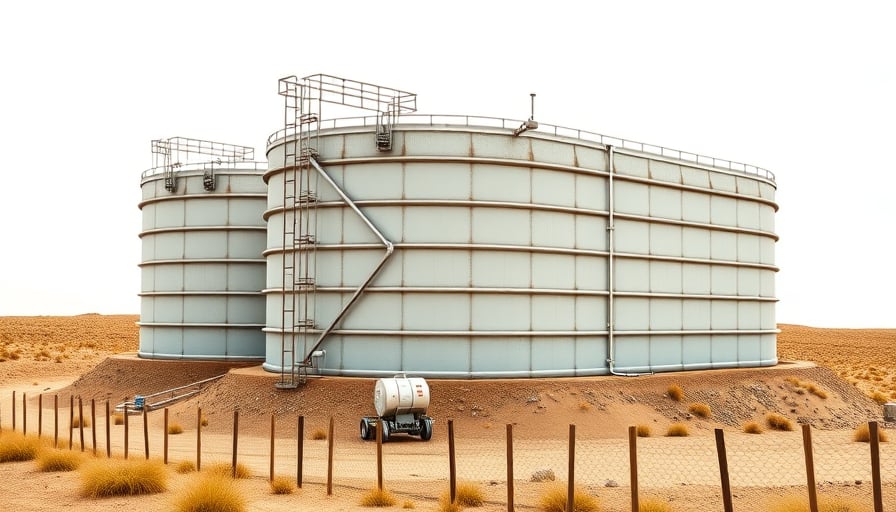
While Altagas has maintained a steady distribution policy, the company has not yet capitalized on the growing demand for natural gas storage. Alberta’s storage capacity is currently underutilized, with a storage utilization rate of 62 % versus the national average of 75 %. Altagas’s strategic position in Calgary—near major LNG export terminals—offers a unique opportunity to develop underground storage facilities, which could command premium rates during seasonal spikes.
An analysis of the Canadian Energy Regulator’s (CER) tariff filings reveals that storage services could generate an additional 5–7 % incremental revenue, with a projected return on investment (ROI) of 12 % over a 10‑year horizon. This potential is overlooked in Altagas’s current guidance, suggesting a risk of underestimating growth prospects.
5. Potential Risks: Regulatory, Market, and Execution
- Regulatory Compliance Risk: Failure to meet methane leakage targets could result in fines exceeding CAD 5 million annually, eroding profitability.
- Market Concentration Risk: Heavy reliance on the Calgary region exposes Altagas to regional demand shocks, such as a downturn in industrial gas usage or a shift toward electric vehicles.
- Execution Risk: Delays in pipeline expansions or digital transformation projects could postpone revenue gains and increase costs.
6. Opportunities: Diversification and Innovation
- Integrated Energy Services: Expanding into renewable generation or storage could diversify revenue streams and align with decarbonization mandates.
- Digitalization: Implementing advanced metering infrastructure (AMI) would improve billing accuracy, reduce revenue leakage, and enhance customer retention.
- Strategic Partnerships: Collaborating with technology firms for AI‑driven leak detection could lower compliance costs and strengthen competitive positioning.
Conclusion
Altagas Ltd. has delivered stable, albeit modest, quarterly performance amid a sector in transition. While the company’s conservative guidance reflects prudent risk management, a deeper analysis uncovers potential blind spots: underexplored storage opportunities, a lagging digital strategy, and evolving competitive pressures from integrated energy providers. Investors and stakeholders should scrutinize the company’s regulatory compliance trajectory, execution of expansion projects, and strategic diversification initiatives to fully assess long‑term value creation prospects.