
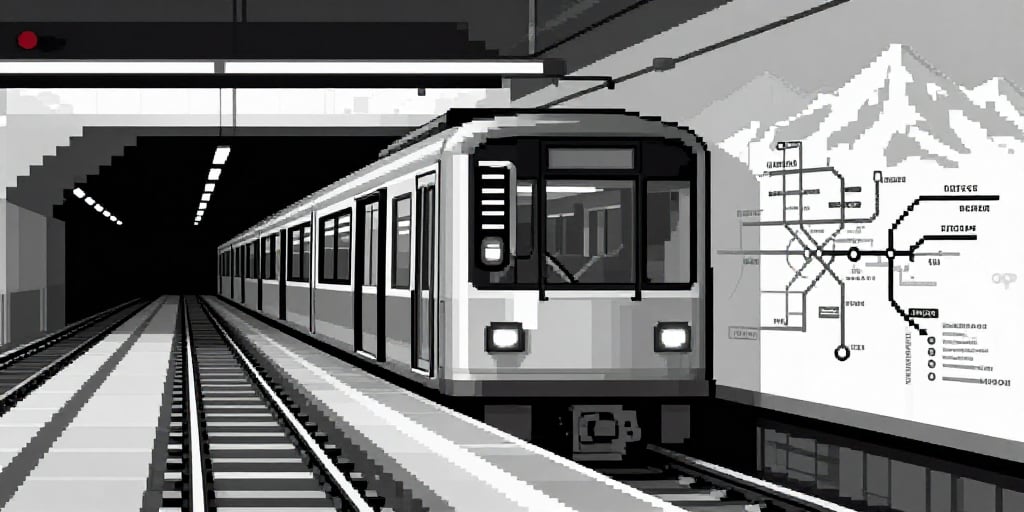
Alstom Secures Major Modernisation Contract for Lausanne M2 Metro Line
Alstom, the global leader in rail and metro equipment, has announced a significant contract to upgrade the Lausanne M2 metro line in partnership with Transports publics de la région lausannoise (TL). The scope of the project combines the installation of a state‑of‑the‑art communications‑based train control (CBTC) system with a comprehensive mid‑life renewal of the existing rolling stock. This dual‑focus approach is designed to boost service frequency, increase passenger capacity, and extend the operational life of the fleet while maintaining stringent safety and reliability benchmarks.
Technical Overview of the CBTC Implementation
- Train‑Centric Architecture: The new signalling solution adopts a train‑centric, on‑board architecture rather than the conventional trackside‑centric model. This paradigm shift reduces the dependency on trackside equipment, allowing for more flexible deployment in constrained tunnel environments and facilitating phased, minimal‑disruption installation.
- Packet‑Based Communication: Utilizing high‑speed, low‑latency radio interfaces, the CBTC system exchanges real‑time data on train location, speed, and braking status. The closed‑loop control loop enables headway reductions to under two minutes, effectively doubling the line’s capacity without the need for additional infrastructure.
- Safety Integrity Level (SIL 3) Compliance: The system meets IEC 61508 and EN 50126 standards, ensuring a high safety integrity level. Built‑in redundancy, fault‑tolerant communication channels, and continuous diagnostic monitoring guarantee operation within acceptable risk parameters.
Mid‑Life Renewal of Rolling Stock
Alstom’s refurbishment programme targets critical onboard subsystems:
- Propulsion and Braking Systems: Replacement of traction motors and regenerative braking controllers with high‑efficiency silicon‑controlled thyristor (SiC‑SCT) units reduces power consumption by up to 15 % and improves reliability.
- Cabin and Passenger Comfort: Upgraded HVAC modules, LED lighting, and Wi‑Fi infrastructure enhance passenger experience while lowering maintenance overhead.
- Structural Reinforcement: Non‑destructive inspection and selective reinforcement of bogie frames extend the structural service life by 20 % without compromising dynamic performance.
The integrated approach ensures that the upgraded fleet remains compatible with the new CBTC network, eliminating interoperability concerns that historically plagued mid‑life programmes.
Capital Expenditure Context
The Lausanne M2 upgrade exemplifies a broader trend in European urban rail systems toward higher capital outlays aimed at digitalisation and asset renewal. According to recent industry reports, capital spending on signalling and rolling‑stock renewal in metropolitan transit systems increased by 12 % year‑over‑year in 2025, driven by:
- Regulatory Mandates: EU directives on accessibility and digital connectivity are compelling operators to modernise infrastructure.
- Economic Stimulus Packages: National budgets in Switzerland and neighbouring countries allocate substantial funds to public‑transport resilience projects, often matched by EU funds.
- Demand‑Driven Capacity Pressures: Post‑pandemic ridership rebounds are creating a need for higher frequency services, which only advanced CBTC systems can deliver efficiently.
These factors collectively justify the investment, as operators project a return on investment (ROI) of 6–8 % over a 15‑year horizon, factoring in reduced energy consumption, lower maintenance costs, and increased revenue from higher passenger throughput.
Supply Chain and Procurement Dynamics
- Component Sourcing: The CBTC solution relies on a mix of European and global suppliers for radio units, processors, and software licensing. Alstom’s established supply chain mitigates lead‑time risks, a critical consideration given the 24‑month delivery window for the signalling equipment.
- Obsolescence Management: Alstom’s role includes managing the obsolescence of key components. By locking in long‑term supply contracts and integrating forward‑compatible firmware, the project guards against future shortages.
- Regulatory Compliance: All components meet the European Union’s CE marking and the Swiss Federal Office for Transport (FOT) specifications, ensuring seamless certification and avoiding costly redesigns.
Infrastructure and System Integration
The implementation plan incorporates phased, non‑disruptive integration to preserve current service levels:
- Parallel Deployment: New CBTC control centres operate alongside existing signalling systems during a transitional period.
- Pilot Runs: Limited‑run tests validate interoperability between refurbished trains and the new signalling network before full deployment.
- Staff Training: Comprehensive training modules for drivers, signal operators, and maintenance personnel ensure smooth operational handover.
These steps are aligned with Swiss transport policy, which prioritises continuous service provision and minimal commuter inconvenience.
Market Implications and Competitive Positioning
Alstom’s successful bid on the Lausanne project reinforces its strategic positioning as a provider of integrated digital signalling and mid‑life renewal programmes. By delivering both the CBTC system and the rolling‑stock refurbishment under a single umbrella, Alstom captures a larger share of the value chain, reduces transaction costs for the operator, and differentiates itself from competitors that offer only component solutions.
Moreover, the project serves as a benchmark for future contracts across Switzerland and the broader European region, where similar urban corridors are exploring comparable upgrades. The demonstrated technical excellence, combined with a proven track record of managing complex supply chains and regulatory compliance, positions Alstom to capture subsequent opportunities in the rapidly expanding market for rail digitalisation and asset renewal.
In summary, the Lausanne M2 metro line modernisation underscores a confluence of technological innovation, capital investment rationalisation, and stringent regulatory adherence—factors that collectively drive the evolution of heavy‑industry infrastructure toward higher efficiency, safety, and passenger experience.